 comparison
TPO vs EPDM Commercial Roofing Systems: 2026 Guide
Table of Contents
- TPO vs EPDM: Quick Comparison Table
- What Is TPO Roofing?
- What Is EPDM Roofing?
- Durability, Puncture Resistance, and Energy Efficiency
- Commercial Roofing Material Lifespan: TPO vs EPDM
- Cost Comparison and Lifecycle Cost Analysis
- Commercial Roof Maintenance Best Practices
- Building Code, Fire Rating, and Retrofit Considerations
- Frequently Asked Questions
Last Updated: October 1, 2026
TPO vs EPDM: Quick Comparison Table
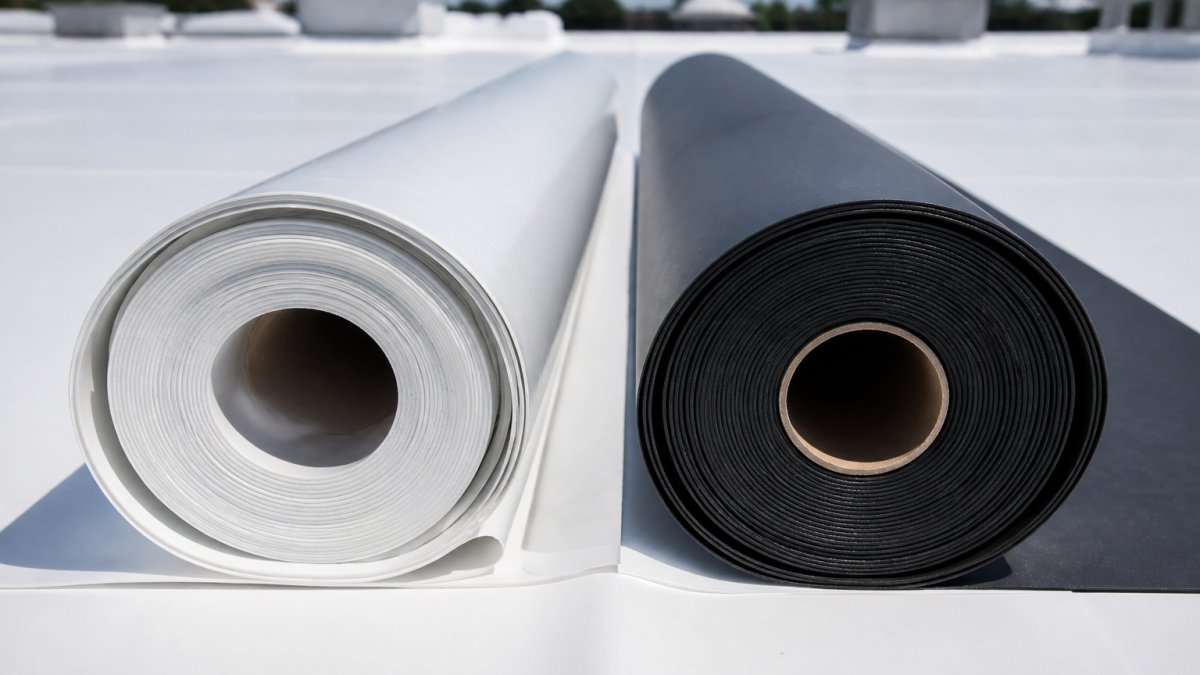
Choosing between TPO vs EPDM commercial roofing comes down to climate, budget, and how long you plan to own the building. TPO (thermoplastic polyolefin) reflects sunlight and welds into a single watertight sheet; EPDM (ethylene propylene diene monomer) is a synthetic rubber membrane that shrugs off extreme cold and hailstorms. At Leitch Roofing, we install and repair both across West Tennessee, and the right pick depends on your building, not on which membrane is trending.
| Feature | TPO | EPDM |
|---|---|---|
| Material | Thermoplastic polyolefin (single-ply) | Synthetic rubber (single-ply) |
| Color | White, reflective | Black (absorbs heat) |
| Seams | Heat-welded, monolithic | Adhered with tape or adhesive |
| Best Climate | Hot, sunny, high cooling loads | Cold, hailstorms, temperature swings |
| Puncture Resistance | Good, varies by thickness | Excellent, flexible |
| Typical Lifespan | 15-25 years | 20-30+ years |
| Maintenance | Moderate | Moderate, seam checks matter |
| Relative Cost | Often lower upfront | Often higher upfront |
What Is TPO Roofing?
TPO roofing is a single-ply thermoplastic membrane made from polypropylene and ethylene-propylene rubber, reinforced with a polyester scrim. It arrives in white or light gray rolls, and installers bond the sheets with hot-air welding that fuses the seams into one continuous surface.
How TPO Performs in Real Conditions
TPO holds up well against UV degradation, and its chemical resistance handles the grease and oils common around restaurants and industrial kitchens. The catch is seam quality: a heat-welded seam is stronger than the membrane around it when done right, but it takes trained crews and calibrated equipment. Poor welding is the number one reason we get called out to fix a TPO roof someone else installed.
What Is EPDM Roofing?
EPDM roofing is a single-ply synthetic rubber membrane, typically black, that has been a staple of low-slope roofing for decades. It resists ozone, weathering, and abrasion, and stays flexible in cold weather when other membranes turn brittle.
Where EPDM Outperforms Other Membranes
EPDM's flexibility is its edge. It handles thermal shock, the repeated expansion and contraction from day-night temperature swings, better than rigid membranes, and it absorbs hail impacts that would puncture a stiffer sheet. In northern climates or regions with wild temperature swings, that resilience translates into a longer service life.
Durability, Puncture Resistance, and Energy Efficiency
Durability favors EPDM on puncture and tear strength; energy efficiency favors TPO. EPDM's rubber compound stretches under impact and recovers, giving it excellent hail resistance and elongation. TPO is stiffer, so its puncture resistance depends heavily on mil thickness and substrate.
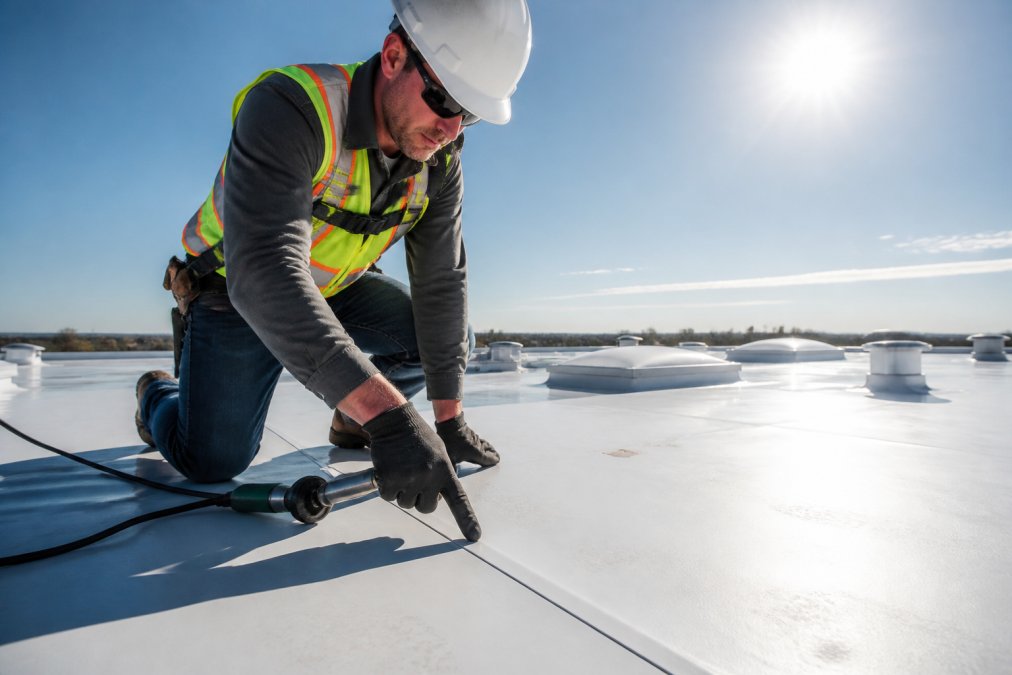
Heat-Welded vs. Adhered Seams: Installation Methods
Seam method is where these systems diverge most: TPO uses heat-welded seams, EPDM uses adhered seams with splice tape or contact adhesive.
- Heat-welded (TPO): Hot air fuses the sheets into one monolithic layer. Strong, but it demands skilled labor and the right equipment.
- Adhered (EPDM): Tape or adhesive bonds the sheets. Faster to learn, but seams can lift over time and need periodic inspection.
- Attachment: Both systems can be fully adhered, mechanically fastened, or ballasted, depending on wind uplift requirements and substrate.
Commercial Roofing Material Lifespan: TPO vs EPDM
For budgeting, assume the roof will need attention long before it fails outright. Knowing the realistic service window helps you plan capital spending instead of reacting to a leak.
Cost Comparison and Lifecycle Cost Analysis
Upfront cost is only part of the picture. TPO generally carries a lower installed cost per square foot because the membrane is cheaper to produce and heat-welding is fast on large, open decks. EPDM usually prices higher upfront, driven by the raw rubber compound, heavier sheet handling, and adhesive or tape consumables. On a simple, wide-open warehouse roof the gap is often modest; on a complex roof with penetrations, curbs, and tight corners it widens because TPO detailing takes more labor.
- Roof size and layout: Large, unobstructed decks favor TPO's fast welding. Chopped-up roofs with many penetrations favor EPDM's large sheets and fewer field seams.
- Membrane thickness: 45-mil TPO is the budget option; 60-mil and 80-mil cost more but last longer. EPDM commonly runs 45-mil to 90-mil, with 60-mil the workhorse for commercial low-slope.
- Insulation and cover board: Higher R-value insulation and a cover board add cost on both systems but improve puncture resistance and energy performance.
- Tear-off vs. overlay: A full tear-off adds disposal and labor. An overlay saves money but only if the existing substrate is dry and sound.
- Attachment method: Fully adhered costs more in adhesive but performs better in high-wind zones. Mechanically fastened is cheaper but adds fastener penetrations. Ballasted is economical on large roofs but adds structural load.
Running the 20-Year Numbers
A useful framework, not a quote, looks like this:
| Cost Category | TPO (typical pattern) | EPDM (typical pattern) |
|---|---|---|
| Installed cost | Lower per sq ft on simple roofs | Higher per sq ft, narrower on complex roofs |
| Routine maintenance | Twice-yearly inspection, seam checks | Twice-yearly inspection, seam and splice checks |
| Repair frequency | Seam-related repairs if welding was poor | Splice and flashing repairs as adhesive ages |
| Energy impact | Reflective surface lowers cooling load in warm markets | Dark surface raises cooling load; lighter EPDM narrows the gap |
| Expected service life | 15-25 years | 20-30+ years |
| Replacement timing | Sooner on thin membranes | Later on thick, well-maintained systems |
Three variables swing the math most:
- Installation quality. A heat-welded TPO seam done right is stronger than the membrane around it. Done wrong, it is the first thing to fail. Labor quality moves the lifecycle number more than membrane brand.
- Maintenance discipline. Twice-yearly inspections, cleared drains, and prompt seam repairs are the cheapest dollars you will ever spend on either roof. Skipping them shortens life on both systems.
- Energy savings. In a warm market with high cooling loads, a reflective TPO surface can offset part of its cost through lower cooling bills. In a cold market, that advantage shrinks, and EPDM's dark surface can help with heat retention in shoulder seasons.
Because pricing depends on roof size, membrane thickness, insulation, attachment, and tear-off, we quote every project individually. Leitch Roofing provides a free estimate so you can compare real numbers instead of rules of thumb.
Commercial Roof Maintenance Best Practices
- Inspect the roof twice a year, plus after any major storm
- Clear drains, scuppers, and gutters so water never ponds
- Check seams and flashing for lifting, cracking, or separation
- Remove debris, tools, and anything that can abrade the membrane
- Log every inspection and repair to build a maintenance history
- Keep foot traffic on designated walkway pads
Documentation also matters at claim time. A maintenance log showing regular care strengthens an insurance claim and supports warranty coverage.
Building Code, Fire Rating, and Retrofit Considerations
Building code and fire rating compliance shape which system you can legally install, and this is where most TPO vs. EPDM articles go quiet. The rating that matters is not the membrane's, it is the entire roof assembly's. Insulation type, cover board, attachment method, and membrane thickness all combine into the classification, and swapping any one component can void it.
Fire Ratings, in Plain Terms
Roof assemblies are tested and classified for external fire exposure as Class A, B, or C, with Class A the most resistant. Both TPO and EPDM membranes are routinely used in Class A assemblies, but the membrane alone does not earn the rating, the assembly of membrane, insulation, and attachment is what gets tested and listed. If your contractor substitutes insulation or switches from adhered to mechanically fastened without re-checking the listing, the Class A rating may no longer apply.
Insurance and Code Angles Most Owners Miss
Two practical consequences follow from the assembly rating:
- Insurance premiums. Some carriers offer credits for Class A assemblies or for documented maintenance programs. The membrane choice matters less than the assembly rating and the maintenance record you can produce at claim time.
- Local amendments. Many jurisdictions adopt model codes with local amendments covering cool-roof reflectivity, hail resistance, or wildfire-zone requirements. In a warm market, a cool-roof requirement can push you toward white TPO. In a hail-prone or wildfire-prone area, the local amendment may favor a heavier, more impact-resistant assembly regardless of membrane.
Confirm local code requirements before you spec the membrane, not after installation.
Retrofit vs. New Construction: Tear-Off or Overlay?
This decision often matters more than TPO vs. EPDM.
Overlay (retrofit over an existing roof) saves on tear-off labor and disposal and works with either membrane, provided the existing substrate is dry, structurally sound, and compatible with the new attachment method. The risk is trapping moisture: if the existing assembly is wet, covering it hides the problem and the new roof fails early from the inside out.
| Situation | Better Path | Why |
|---|---|---|
| Dry, sound existing roof, single layer | Overlay | Saves disposal and labor; either membrane works |
| Wet insulation or multiple prior overlays | Tear-off | Prevents trapped moisture and premature failure |
| High-wind or wildfire zone | Tear-off or engineered overlay | Assembly rating must be re-verified either way |
| Tight budget, short hold period | Overlay | Lower upfront cost, but plan for earlier replacement |
| Long hold period, capital available | Tear-off | Cleaner substrate, longer service life |
Frequently Asked Questions
What is the primary difference between TPO and EPDM roofing?
TPO is a thermoplastic polyolefin membrane with heat-welded seams and a reflective white surface, while EPDM is a synthetic rubber membrane with adhered seams and a dark surface. TPO reflects sunlight to cut cooling costs; EPDM handles temperature swings and resists hail and UV degradation. Your climate and energy goals decide which wins.
Which is more energy-efficient: TPO or EPDM?
TPO typically wins on energy efficiency because its white surface reflects solar radiation, reducing cooling loads in warm climates. EPDM's dark membrane absorbs heat, which can raise cooling costs in southern states. However, in northern climates where heating dominates, EPDM's heat absorption can slightly offset winter heating demand. A cool roof rating and local climate determine actual savings.
What is the expected lifespan of TPO versus EPDM roofing systems?
Commercial roofing material lifespan varies by thickness and maintenance. EPDM systems regularly exceed 30 years, with some lasting 40 or more. TPO typically lasts 20 to 30 years, though newer formulations are closing the gap. Both benefit from annual inspections and prompt repairs to reach their full service life.
How do the installation costs of TPO and EPDM compare?
Installation labor depends on roof size, substrate, and whether the system is ballasted, mechanically fastened, or fully adhered. Request a project-specific quote from a licensed contractor to compare total installed costs accurately.
How does puncture resistance differ between TPO and EPDM?
EPDM offers superior puncture resistance and flexibility, making it a strong choice for roofs with foot traffic or hail exposure. TPO provides good puncture resistance, especially in reinforced versions, but its seams are the critical weak point if heat-welding is done poorly. Both membranes resist tears and chemicals when installed correctly and maintained regularly.