 blog
Roofclaim vs FMF Roofing: Local Contractor Comparison
Table of Contents
- Roofclaim vs FMF Roofing: How These Two Models Compare
- Residential Roof Replacement Cost Guide: What Drives Your Estimate
- Roof Insurance Claim Process Steps: From Adjuster to Approval
- How to Choose a Roofing Contractor: Red Flags and Must-Haves
- Warranty Coverage and Post-Installation Support
- Storm Damage, Repairs, and Preventative Maintenance
- Making the Final Decision: Which Roofing Approach Fits Your Home
- Frequently Asked Questions
Last Updated: September 12, 2026
Roofclaim vs FMF Roofing: How These Two Models Compare
The Roofclaim vs FMF Roofing comparison comes down to business model: Roofclaim is a national roofing network coordinating contractors across the country, while FMF Roofing is a regional contractor serving specific markets. This local contractor comparison matters because your experience, timeline, and warranty support differ dramatically depending on which approach you choose.
At Leitch Roofing, we've watched homeowners navigate both models after storm damage. National networks offer standardized processes and brand recognition; regional contractors offer accountability and local knowledge. Neither is automatically better, but one will fit your situation better.
Below, we break down how each model works, what drives your estimate, and how to protect yourself when choosing any contractor.
Residential Roof Replacement Cost Guide: What Drives Your Estimate
Most homeowners focus on the wrong number: a single price per square. Roofing estimates vary based on factors unrelated to markup, and the gap between two bids on the same house usually comes down to scope, not price gouging.
Roof replacement cost is determined by material selection, roof complexity, labor requirements, and local code compliance. Four factors drive most of the variation:
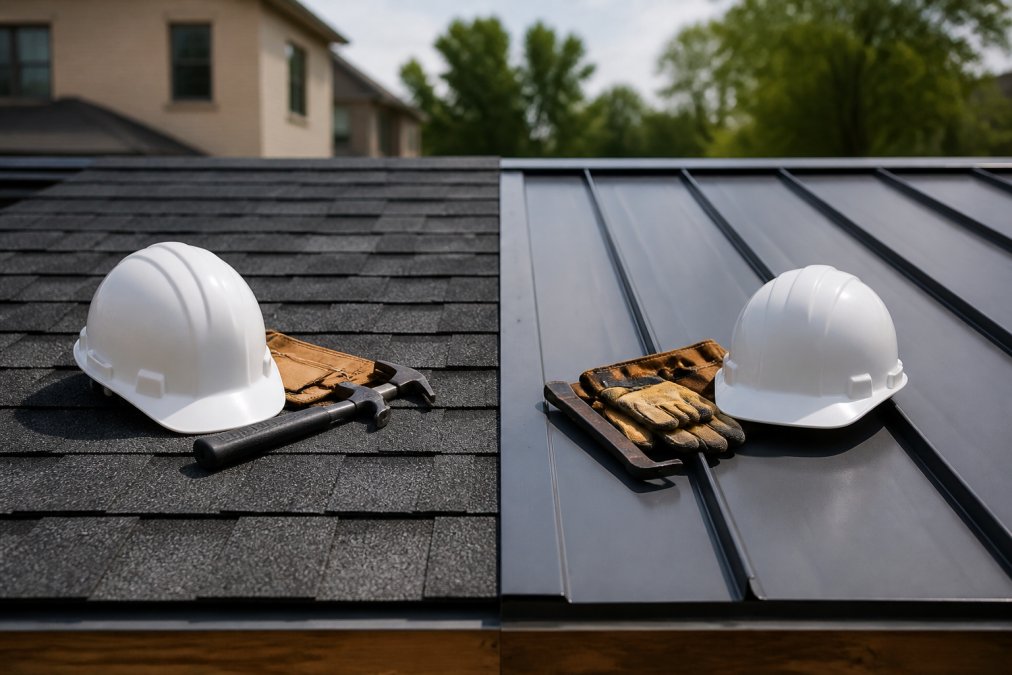
- Roofing materials: Asphalt shingles cost less than standing seam metal or synthetic slate. Material choice alone can double your project estimate.
- Roof pitch and complexity: Steep slopes, multiple valleys, and dormers increase labor costs and require additional safety measures.
- Underlayment and flashing: Proper weatherproofing requires quality underlayment and correctly installed flashing. Cutting corners here causes leaks within years.
- Labor costs and material overhead: Regional labor markets and material availability affect pricing significantly.
A common mistake is comparing bids without comparing scope. One contractor may quote a tear-off and full replacement; another may propose a layover. Those aren't the same job.
A Standardized Rubric for Comparing a National Network Bid to a Regional Bid
"Get three quotes" is useless if the three quotes describe three different jobs. Use the same six-line rubric on every bid, national network or regional, and the real differences surface immediately.
| Line Item | What to Record | Why It Changes the Price |
|---|---|---|
| Squares and pitch | Total squares, predominant pitch, number of planes | Drives material quantity and labor hours |
| Tear-off vs. layover | Layers removed, disposal method | Tear-off adds labor and dumpster cost but reveals decking problems |
| Decking allowance | Price per sheet of replacement OSB or plywood | The single most common change-order line |
| Underlayment and ice/water barrier | Product name and coverage area | Synthetic vs. felt and full-deck vs. eave-only change both cost and warranty eligibility |
| Flashing and penetration work | Chimney, skylight, vent, and valley detail | Rework here is where most leaks originate |
| Warranty terms in writing | Workmanship duration and material coverage | Determines who pays when something fails |
Line up a national-network estimate against a regional one on this rubric and the pattern is usually one of two things: the network bid is higher because it bundles project management and standardized warranty administration, or the regional bid is lower because it excludes decking allowance and disposal. Neither is automatically the better deal, but you can only see which one you're looking at when the scope is itemized the same way.
Where the Money Actually Goes
A useful sanity check is asking what share of the bid is material versus labor. On a typical asphalt shingle replacement, material and labor each account for a large share, with the remainder split among disposal, permits, and overhead. If a bid is dramatically below the others, one of those buckets is missing, usually decking allowance or disposal. If it's dramatically above, ask what the premium buys: a longer workmanship warranty, a dedicated project manager, or manufacturer certification that unlocks an enhanced material warranty. Those are legitimate reasons to pay more, but they should be named, not implied.
Roof Insurance Claim Process Steps: From Adjuster to Approval
The roof insurance claim process steps follow a predictable sequence, but knowing each stage helps you avoid delays and denials.
The insurance claim process begins with filing a claim, progresses through adjuster inspection, and ends with approval, denial, or a supplemental claim. Here's how it typically unfolds:
- File your claim: Contact your insurer and provide policy information and damage details.
- Adjuster inspection: An insurance adjuster visits your property to document damage and estimate covered repairs.
- Claim decision: The insurer approves, denies, or partially approves your claim.
- Supplemental claim (if needed): If the initial estimate misses damage, a contractor can file a supplemental claim with documentation.
The tension point is almost always the adjuster's assessment. Adjusters work for the insurer, not for you, and may classify damage as wear and tear rather than storm damage, shifting the cost to you.
Understanding replacement cost value versus actual cash value matters here. Replacement cost value pays to replace your roof at current prices; actual cash value deducts depreciation. Most policies default to actual cash value unless you've purchased replacement cost coverage.
How to Choose a Roofing Contractor: Red Flags and Must-Haves
The biggest mistake homeowners make is choosing on price alone. The lowest bid often reflects skipped steps you won't discover until the first heavy rain.
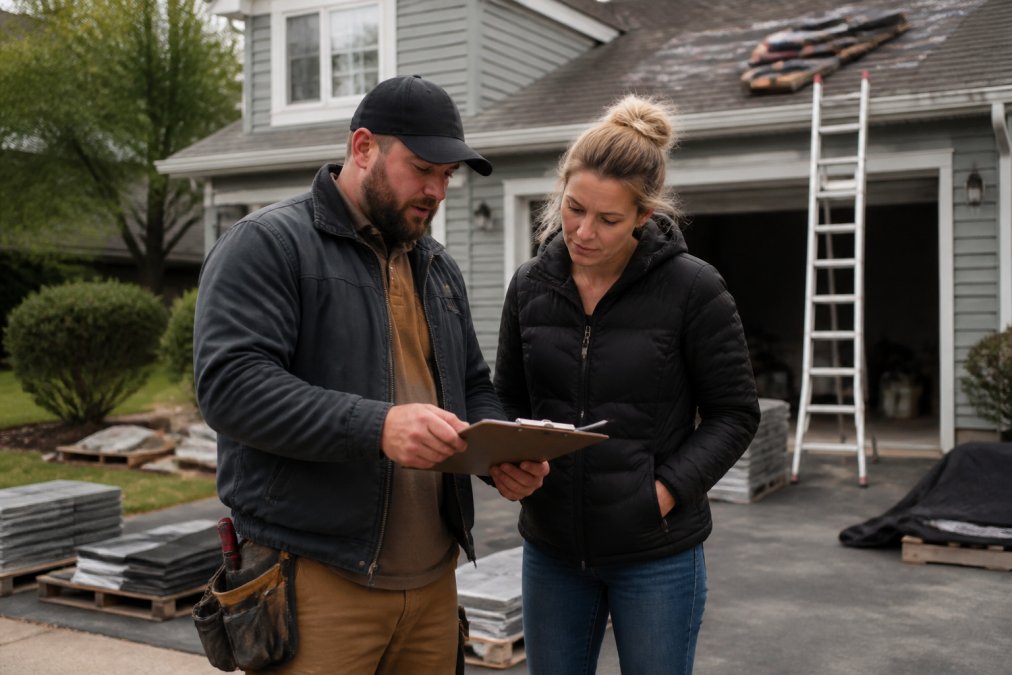
A qualified roofing contractor carries proper licensing, provides written estimates with itemized scope, maintains liability insurance, and offers both workmanship and material manufacturer warranties. Verify these before signing anything.
Red flags that should end the conversation:
- No physical address or local presence: Storm chasers appear after every major weather event and disappear before warranty claims.
- Pressure to sign immediately: Legitimate contractors don't demand same-day decisions.
- Requests for full payment upfront: Standard practice involves a deposit and progress payments.
- No written contract or vague scope: If it isn't in writing, it isn't enforceable.
Must-haves for your shortlist:
- Contractor licensing verified through your state or local licensing board
- Proof of general liability insurance and workers' compensation
- Written project estimate with line-item scope
- Clear warranty terms covering both workmanship and materials
Contractual Red Flags Most Guides Skip
The red flags above are the ones every article lists. The clauses below actually cost homeowners money, and they rarely get mentioned because they require reading the contract rather than the sales pitch.
Assignment of benefits (AOB). An AOB transfers your right to pursue an insurance claim to the contractor. Once signed, the contractor can negotiate directly with your insurer, file suit in its own name, and bill for the work, sometimes at a price you never agreed to. Many states have restricted or banned residential AOB agreements, but rules vary, so read the contract for "assignment of benefits" or "assign" and, if present, ask why it's there. A contractor who won't remove it is telling you something.
Contingency-fee or "we waive your deductible" language. A contractor offering to absorb your deductible is committing insurance fraud in most states and is putting your policy at risk (insurance.wa.gov). Deductibles are your responsibility under the policy; a bid that erases them is either inflating the claim or planning to cut scope.
Direction-to-pay and lien rights. Some contracts include a direction-to-pay clause letting the contractor collect directly from your insurer, and most include a mechanic's lien provision. Lien rights are normal, but if the contractor doesn't pay its material supplier, the supplier can file a lien against your home even after you've paid in full. Ask for a lien waiver at final payment.
Cancellation and arbitration clauses. Look for the three-day right to cancel that most states grant on home-improvement contracts, and check whether disputes are forced into binding arbitration. Arbitration isn't inherently bad, but it removes your ability to sue in court, so it should be a conscious trade-off, not a buried line.
Post-Installation Support: The Question That Separates Contractors
Most comparison pages focus on the sale. The real differentiator shows up two years later, when a flashing detail fails and you need someone to come back.
Ask every contractor on your shortlist these questions and write down the answers:
- Who handles warranty claims, the salesperson, a service department, or a call center? A named service contact beats a general phone number.
- What is the response window for a leak after installation? Get a number, not a promise.
- Does the company perform follow-up inspections, and at what interval?
- If the company is acquired or closes, who honors the workmanship warranty? Material warranties usually survive because manufacturers back them; workmanship warranties often don't.
- Can you provide two references from jobs completed at least two years ago? Recent references show salesmanship; older references show service.
This is where the national-network versus regional-contractor distinction becomes concrete. A national network may route your warranty call through a centralized system and dispatch whichever affiliated crew is available. A regional contractor may send the same crew that installed the roof, or may have gone out of business. Neither model guarantees better service; the questions above reveal which one you're dealing with before you sign.
Warranty Coverage and Post-Installation Support
Warranty coverage splits into two categories, and confusing them costs money.
A workmanship warranty covers installation errors, while a material manufacturer warranty covers defects in the shingles or materials themselves. Most manufacturers require installation by certified contractors for their warranty to remain valid.
What to verify before signing:
| Warranty Type | What It Covers | Typical Duration | Who Honors It |
|---|---|---|---|
| Workmanship | Installation defects, leaks from poor labor | Varies by contractor | The installing contractor |
| Material manufacturer | Product defects, premature failure | Set by manufacturer | The manufacturer |
| Post-installation support | Follow-up inspections, minor repairs | Varies | The installing contractor |
The limitation most homeowners discover too late: if your contractor goes out of business, your workmanship warranty disappears. Material warranties survive because manufacturers back them, but they won't cover labor to remove and replace defective shingles.
This is why post-installation support matters as much as the initial bid. Ask: Who handles warranty claims? How quickly do they respond? Do they perform follow-up inspections?
Storm Damage, Repairs, and Preventative Maintenance
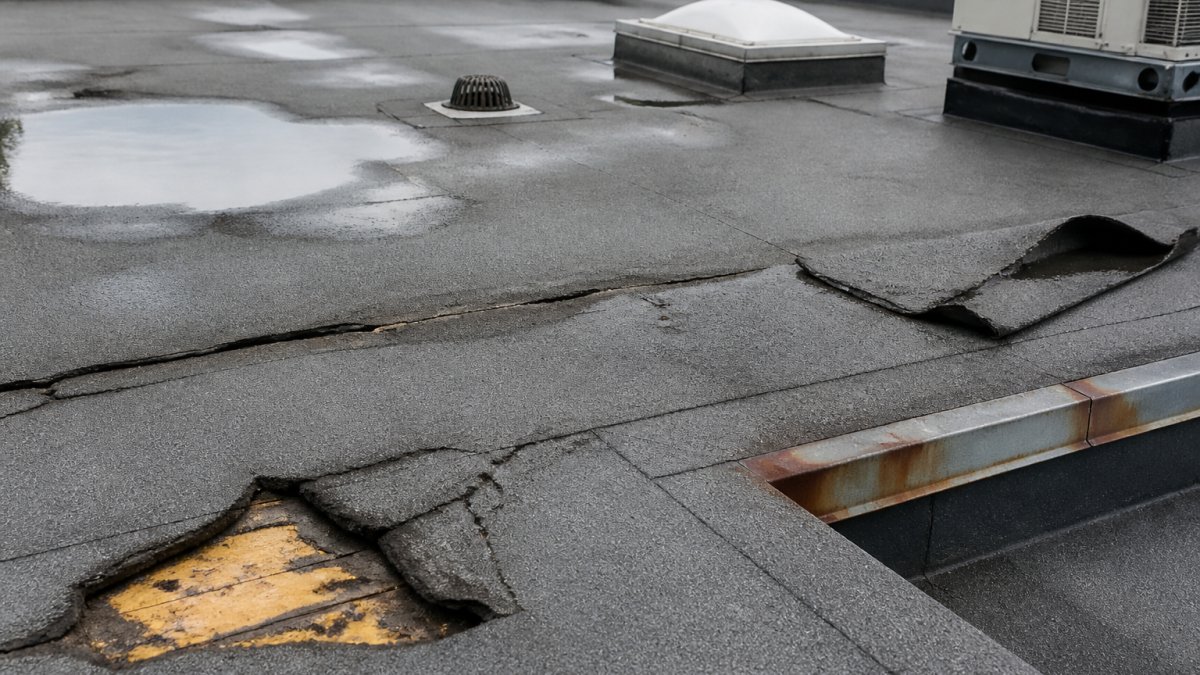
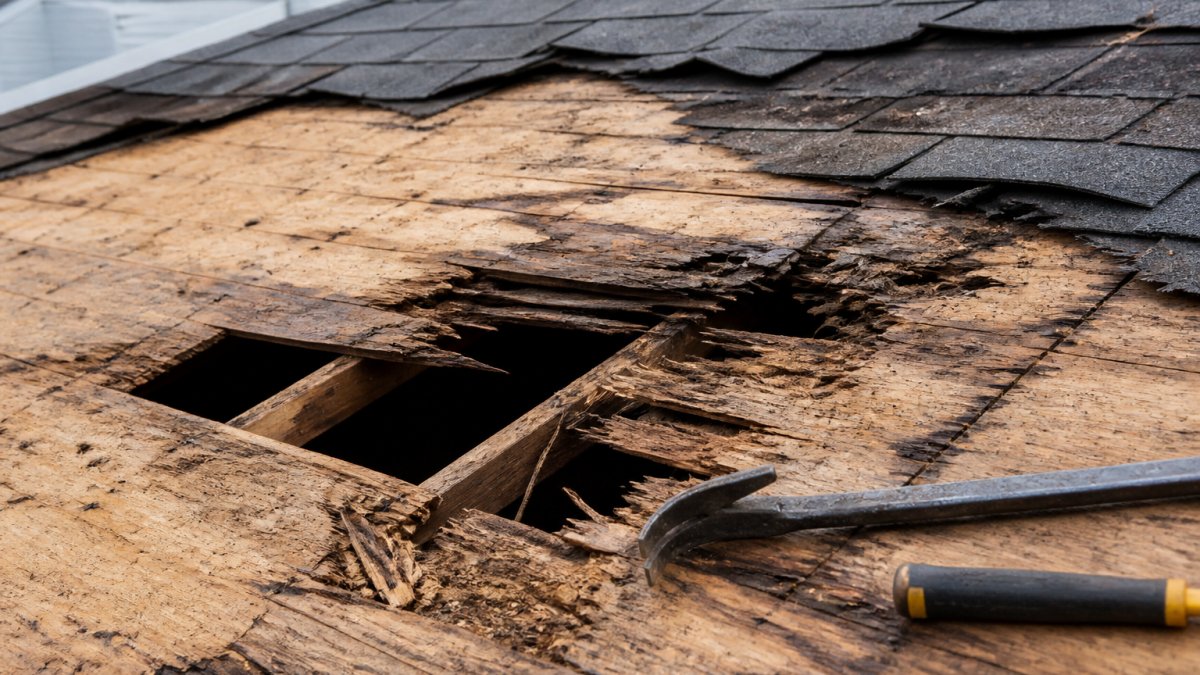
Storm damage rarely announces itself. Hail may leave granules in your gutters without obvious shingle cracks; wind may lift flashing without tearing shingles.
Signs of storm damage include granule loss, dented gutters or vents, cracked shingles, and interior water stains. After any significant hail or wind event, a professional roof inspection catches damage that isn't visible from the ground.
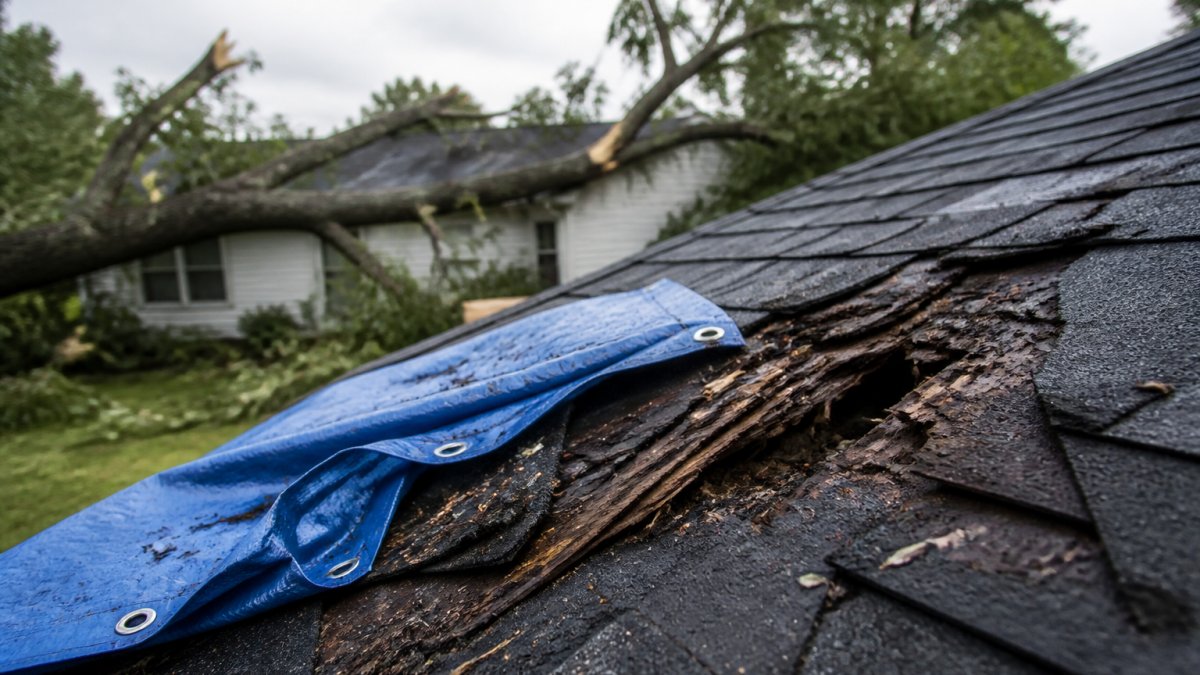
Emergency tarping prevents further damage when leaks are active. Most contractors offer it, and your insurance may reimburse the cost as part of your claim.
Preventative maintenance extends roof lifespan and prevents small issues from becoming structural problems:
- Clear debris from valleys and gutters twice yearly
- Inspect flashing around chimneys and vents annually
- Replace cracked or missing shingles promptly
- Trim overhanging branches that abrade shingles
- Schedule professional inspections every two to three years
Roof lifespan varies by material. Asphalt shingles typically last 15-30 years depending on quality and climate (nrcan.gc.ca). Metal roofing can exceed 50 years (nrcan.gc.ca). The maintenance you perform determines where you fall in those ranges.
Making the Final Decision: Which Roofing Approach Fits Your Home
Choosing between a national network and a regional contractor isn't about brand size. It's about who answers the phone when something goes wrong.
Choose a national network if you value standardized processes and brand recognition. Choose a local contractor if you value accountability, local code knowledge, and direct communication. For most homeowners dealing with insurance claims and needing responsive service, the local model wins.
Here's what most guides miss: the business model matters less than the specific crew doing your work. Ask who will actually be on your roof, for references from recent local jobs, and how they handle problems after final payment.
Leitch Roofing provides expert residential and commercial roofing services with insurance claim assistance to simplify the process. Our team uses quality materials and skilled crews, and we offer free estimates so you can make an informed decision without pressure. If you're in West Tennessee and need roof inspection, repair, or replacement, we can help.
Frequently Asked Questions
What should you look for when comparing roofing contractors?
Check licensing, insurance, and local references first. Ask for a written project estimate that lists roofing materials, underlayment, flashing, and labor costs separately. Confirm whether the workmanship warranty is transferable and how long it lasts. A local contractor comparison should also weigh how each company handles insurance adjuster meetings, supplemental claims, and post-installation support. Get at least three bids and compare line items, not just the bottom line.
Does Roofclaim handle insurance claims differently than local contractors like FMF Roofing?
Roofclaim operates as a national platform that connects homeowners with a network of contractors, often coordinating directly with your insurance company. FMF Roofing and similar local companies typically send their own estimator to document storm damage, meet your insurance adjuster on site, and file supplemental claims if the initial payout misses covered items. The key difference is who advocates for you during the claim: a call center or the crew that will actually install your roof.
How do I know if I need a roof repair or a full replacement?
A roof inspection will tell you. If damage is isolated to a few shingles or one flashing point, a repair usually works. If you see granule loss across large sections, sagging, or leaks in multiple rooms, replacement is likely more cost-effective. The 25% rule is a common guideline: if roughly a quarter of the roof area is damaged, many contractors recommend full replacement. Age matters too, since a roof near the end of its lifespan rarely justifies repeated repairs.
What is the 25% rule for roofing?
The 25% rule is an informal industry guideline that says if about 25% or more of your roof is damaged or needs repair, a full replacement is often the better investment. The reasoning is simple: patching a quarter of the roof leaves the remaining 75% aging at a different rate, which can lead to mismatched shingles, repeated leak detection calls, and a shorter overall roof lifespan. Some local building codes also trigger replacement requirements once damage crosses a certain threshold.
Storm damage doesn't wait, and neither should your decision about who fixes it. Leitch Roofing offers professional repair and replacement services, insurance claim expertise to help you navigate the process, and a free estimate to get started. Get started with Leitch Roofing and protect your home with roofing work that's done right the first time.