 blog
5 Signs of Roof Decking Damage You Shouldn't Ignore
Table of Contents
- What Is Roof Decking and Why It Matters
- Sign 1: Water Stains and Ceiling Discoloration
- Sign 2: Soft Spots and Weakened Roof Decking
- Sign 3: Sagging, Bowing, or Uneven Roof Surfaces
- Sign 4: Mold, Mildew, and Musty Odors
- Sign 5: Visible Shingle Damage and Lifted Shingles
- How to Inspect Your Roof Safely After a Storm
- When Rotted Roof Decking Requires Professional Assessment
- Frequently Asked Questions
Last Updated: October 14, 2026
What Is Roof Decking and Why It Matters
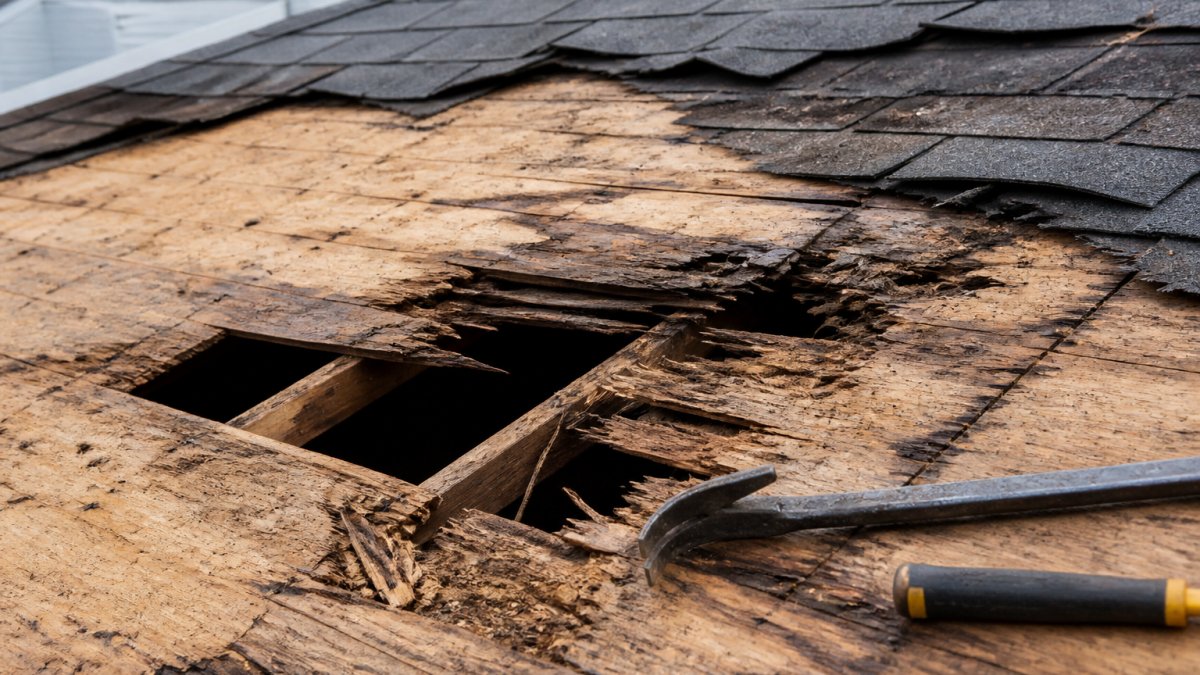
Roof decking is the structural layer beneath your shingles or roof panels, typically plywood or OSB (oriented strand board). Shingles are the protective skin; roof decking is the skeleton. If the skeleton weakens, the skin can't do its job.
Most homeowners never think about roof decking until something goes wrong, but catching roof decking damage early can save thousands. Catching roof decking damage early can save thousands. Here's how to spot them.
Sign 1: Water Stains and Ceiling Discoloration
Water stains on your ceiling are a red flag. They usually appear as brown, yellow, or rust-colored marks on drywall or plaster, meaning water is already getting through your roof and into the decking, often for weeks or months.
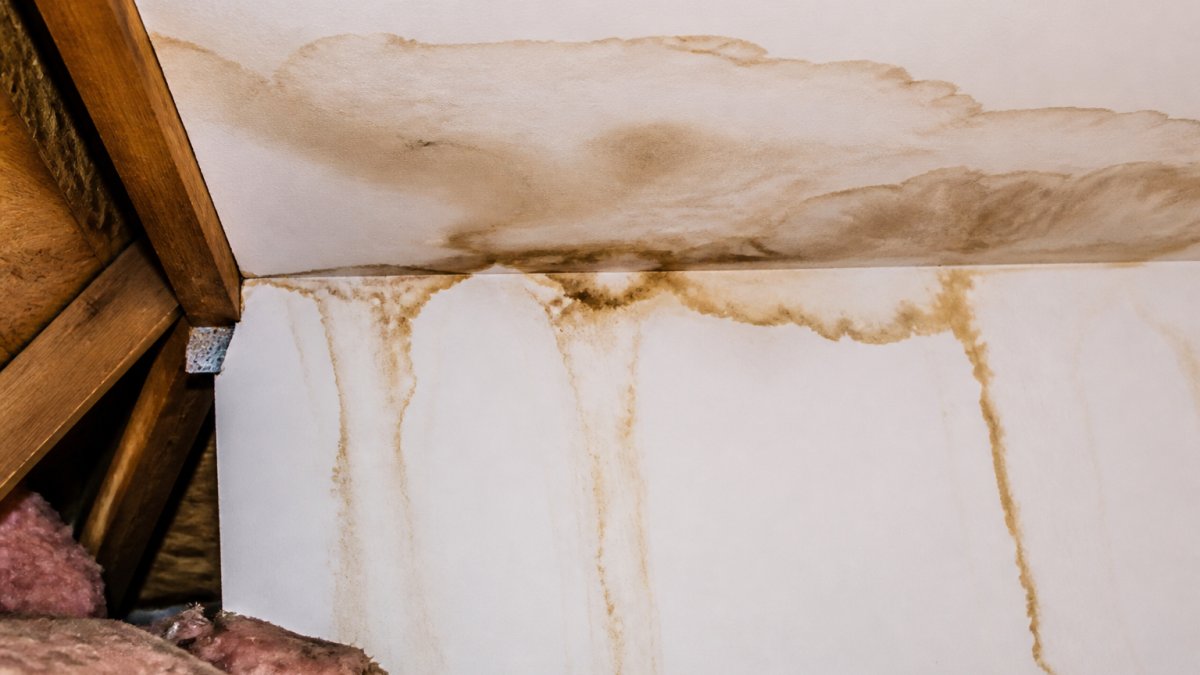
Where to look for these stains:
- Ceilings directly below the attic
- Interior walls near the roofline
- Corners where walls meet the ceiling
- Around light fixtures and vents
If you see stains, act fast. Wet plywood or OSB loses strength within days, and mold can start growing in as little as 48 hours. Call a professional roofer to find the leak source, a small repair now beats a decking replacement later.
Sign 2: Soft Spots and Weakened Roof Decking
Soft spots are the most decking-specific sign on this list. Unlike a stain, which can come from a plumbing leak or condensation, a spongy area points directly at the wood panel itself, and that changes what the repair looks like.
What is actually happening in the wood. Plywood is layers of wood veneer glued in alternating directions; OSB is compressed wood strands bound with resin. Both rely on that glue and on the wood fibers staying dry.
Why decking softness is different from a shingle problem. A lifted or cracked shingle is a surface failure; the panel underneath may still be sound.
How to check from inside the attic, safely. Do this during daylight with a flashlight. Stay on the joists or walk boards, do not step between them onto the drywall ceiling. Look at the underside of the roof deck, not the tops of the rafters. Look for:
- Discoloration in rings or tide lines. Water leaves a darker perimeter as it dries, so old leaks often show as a brown outline with a lighter center.
- Dark streaking along panel seams. Water follows the lowest point, which is usually the joint between two panels.
- A spongy feel under light finger pressure. Press with two fingers, not your palm. If the wood gives more than a millimeter or two, note it.
- Delamination at the edges. Plywood layers separating or OSB strands flaking off at a cut edge is a strong sign of long-term moisture.
- Rusty or stained nail heads. Fasteners corrode when the panel stays wet, and rust stains bleed into the wood around them.
Do not test soft spots by walking on the roof. A panel that feels spongy from below can fail under a person's weight with no warning. A common pattern is that the area around a chimney, skylight, or roof valley is the softest, because those are the spots where flashing most often fails first.
What soft decking means for the repair. A small, isolated soft spot, say, one panel around a vent boot, can often be cut out and replaced with a matching panel, then re-shingled.
The takeaway. A soft spot is not a stain you can paint over or a shingle you can swap. It is the deck telling you it has lost the ability to hold the roof together.
Sign 3: Sagging, Bowing, or Uneven Roof Surfaces
Walk around your house and look at your roofline. Does it look straight and level, or does it sag or dip? A sagging roof is a warning sign: the decking has weakened and can't support the weight above it anymore.
You might notice:
- A visible dip or sag in the roofline
- Uneven or wavy roof surfaces
- Bowing that wasn't there before
- Sections of the roof that look lower than others
Sagging is serious. It affects not just the roof but the entire structure of your home, and water pooling in the sagging areas makes it worse as the decking gets heavier. This is not a DIY fix, a roofer can determine how much decking needs replacing and whether interior framing has been affected.
Sign 4: Mold, Mildew, and Musty Odors
Mold and mildew thrive in damp environments. If your attic smells musty, mold is likely growing on the roof decking or rafters. Mold appears as dark spots or fuzzy growth on wood; mildew is lighter and powdery. Both indicate moisture problems and spread quickly.
A musty smell is the first warning that moisture levels are high enough for mold to grow, from roof leaks, blocked ventilation, attic humidity, or unrepaired water damage.
Mold weakens wood, breaking down the decking and making it soft and brittle, and it poses health risks for people with allergies or respiratory issues. If you smell mold or see growth, get professional help: a roofer can identify the moisture source, and fixing the leak stops the mold from spreading. In severe cases, decking replacement is necessary.
Sign 5: Visible Shingle Damage and Lifted Shingles
Shingle damage is the sign homeowners notice first, and the easiest to misread. Shingles fail for many reasons, age, hail, wind, poor installation, and most have nothing to do with the deck.
A decking-specific checklist. Use this to separate deck-driven shingle damage from ordinary surface wear.
- Damage that follows a line or a rectangle. Shingle problems caused by the deck tend to track the panel seams or the shape of a single sheet of plywood or OSB. Wind or hail damage is random and scattered. If lifted or buckled shingles form a straight line or a blocky patch, suspect the panel below.
- A ridge or hump under the shingles. Run your eye along the roof plane from the ground with binoculars. A raised line or a soft mound usually means a swollen panel edge. Swollen decking pushes shingles up and breaks the seal between courses.
- Shingles that pop loose again after being re-nailed. If a roofer has already re-secured shingles in one area and they lift again within a season, the fasteners are not holding because the wood is soft.
- Nail pops. When decking swells and shrinks, it can push nail heads up through the shingle. A scatter of raised nail heads in one area is a deck signal, not a shingle signal.
- Damage concentrated around penetrations. Chimneys, skylights, vents, and valleys are where flashing fails first. Shingle damage clustered there often means water has been reaching the deck at that point for a while.
- A sag or dip visible in the roof plane. This overlaps with Sign 3, but it belongs here too: shingles over a sagging deck will look wavy or uneven even if no individual shingle is torn.
Why the deck drives the shingle, not the other way around. Shingles are fastened to the deck, and the deck holds those fasteners.
What a roofer checks before deciding whether shingles can stay. A common approach is to lift a shingle or two in the damaged area and look at the deck directly. If the wood is sound and dry, the shingles can often be replaced and the deck left in place.
The pattern matters more than the count. Ten scattered lifted shingles after a windstorm is a shingle problem. Five lifted shingles in a straight line over one panel is a decking problem. When in doubt, have a roofer lift a shingle and look at the wood before authorizing any repair.
What to do next. Photograph the damaged area from the ground before anyone touches it, and note whether the damage follows a line, a patch, or a penetration. That helps a roofer quote accurately and documents an insurance claim if the damage came from a storm.
How to Inspect Your Roof Safely After a Storm
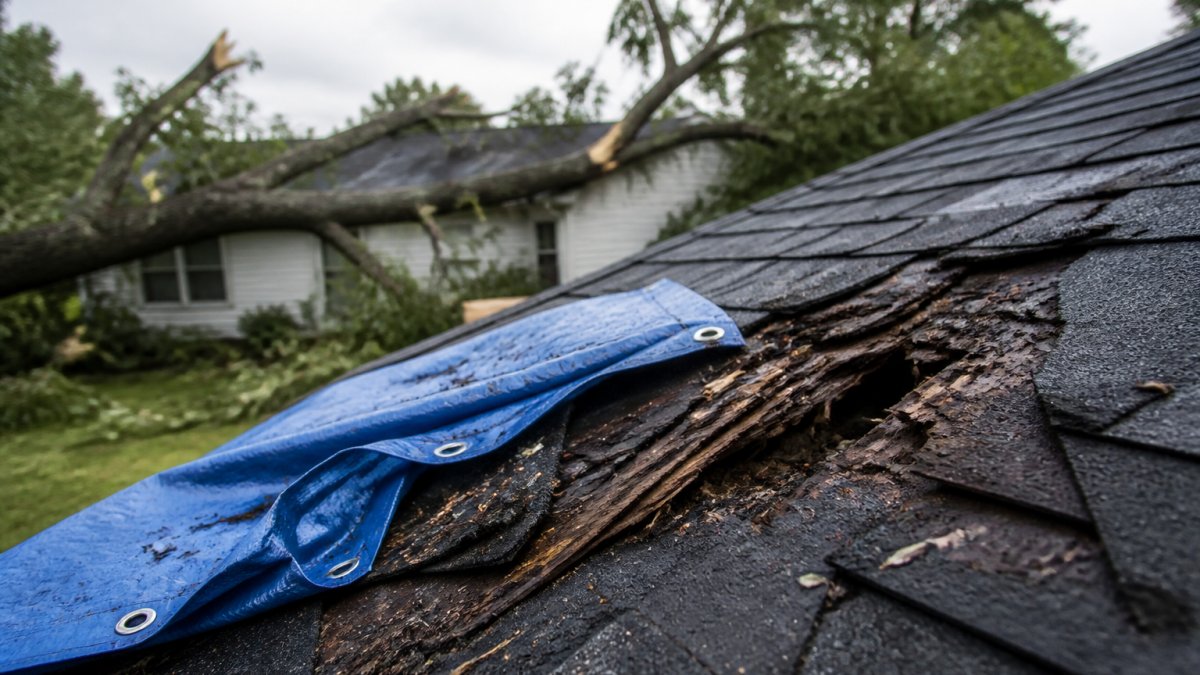
After a storm, you'll want to check for damage, but roof inspections can be dangerous. Here's how to do it safely.
Stay off the roof. This is the most important rule. Wet or damaged roofing is slippery, and weak decking can collapse under your weight. Let a professional handle it.
Inspect from the ground. Use binoculars to look for missing shingles or anything out of place, and take photos.
Check your attic. This is safe and often reveals more than a roof inspection. Go in during daylight with a flashlight and look for water stains, soft spots, mold, or light coming through the decking.
Document everything. Take photos and notes on what you see and where, which helps when you call a roofer or file an insurance claim.
Call a professional. After a major storm, have a licensed roofer inspect your roof within a few days. They can spot damage you might miss and help with insurance claims.
When Rotted Roof Decking Requires Professional Assessment
Not all roof decking damage is obvious. Some hides inside the roof structure, which is why professional assessment matters.
A roofer will:
- Check decking moisture levels with specialized tools
- Look for hidden rot or water damage
- Test the structural integrity of the decking
- Identify the source of any leaks
- Recommend repair or replacement options
How professionals confirm decking damage:
They use moisture meters to detect water in the wood before it's visible, probe the decking for soft spots you can't feel from below, and trace staining patterns to find where water is coming from.
Repair scope and replacement process:
Small damaged areas can sometimes be patched: a roofer removes the affected section, replaces it with new plywood or OSB, and seals it before new shingles go on.
Cost factors that affect your repair:
The size of the damaged area matters most: a small repair costs less than replacing half the roof. The type of decking (plywood vs. OSB) and accessibility also affect pricing, an easy-to-work-on roof costs less than one in a difficult location.
At Leitch Roofing, we provide free estimates so you know exactly what repairs will cost. We work with insurance companies to help simplify the process for our clients. Our team handles the entire process, from assessment to completion.
Frequently Asked Questions
How do I know if my roof decking is rotted?
Rotted roof decking typically shows soft, spongy areas that feel weak when pressed gently. You may notice sagging ceilings, persistent water stains that return after drying, or a musty odor in the attic. The wood may appear darkened or discolored. However, accessing your roof safely requires caution, professional roofers use proper equipment and training. If you suspect rot, contact a qualified contractor for inspection rather than attempting to diagnose it yourself from the attic.
Can roof decking be repaired, or does it need to be replaced?
Minor damage to small sections of roof decking can sometimes be repaired by replacing just the damaged area. However, extensive rot, water damage affecting multiple sections, or structural weakness typically requires full roof decking replacement. A professional inspection determines the extent of damage and whether repair is sufficient. Attempting a patch on widespread decking damage often leads to recurring problems and higher costs later, making full replacement the more reliable long-term solution.
How much does it cost to replace roof decking?
Roof decking replacement costs depend on the roof size, extent of damage, material type (plywood vs. OSB), labor rates in your area, and accessibility. A professional assessment is essential for an accurate quote. Contact Leitch Roofing for a free estimate, our team will evaluate the specific damage and provide transparent pricing based on your roof's actual needs and condition.
What causes roof decking to rot?
Roof decking rot results from prolonged moisture exposure. Common causes include roof leaks from missing or damaged shingles, poor ventilation trapping humidity in the attic, ice dam backups forcing water under shingles, clogged gutters and downspouts, and damaged flashing around vents or chimneys. Storm damage that punctures or lifts shingles accelerates water intrusion. Addressing these root causes, fixing leaks, improving ventilation, and maintaining gutters, prevents future decking damage.
Roof decking damage spreads fast. Water stains, soft spots, sagging, mold, and shingle problems are all warning signs. Catching them early saves money and protects your home's structure. If you've noticed any of these signs, don't wait. Get a professional inspection from Leitch Roofing. We offer free estimates and specialized insurance claim assistance to make the process simple. Contact us today to schedule your roof assessment and protect your investment.