 blog
10 Things to Do After Roof Storm Damage
Table of Contents
- 1. Prioritize Personal Safety and Avoid Unsafe Areas
- 2. Check for Roof and Property Damage from the Ground
- 3. Look for Missing Shingles, Holes, Sagging, and Visible Roof Damage
- 4. Inspect Gutters, Siding, and Your Yard for Storm Debris
- 5. Check Ceilings and Interior Rooms for Leaks and Water Intrusion
- 6. Document Roof Damage for Insurance with Photos and Notes
- 7. Contain Leaks and Protect Your Belongings Immediately
- 8. Make Temporary Roof Repairs After Storm Damage
- Frequently Asked Questions
Last Updated: October 9, 2026
1. Prioritize Personal Safety and Avoid Unsafe Areas
Your safety comes first. Before inspecting anything, confirm the area is safe to enter, the first hour after a storm is when most preventable injuries happen.
Downed power lines and electrical hazards
Don't go near downed power lines, they can kill you. Stay at least 35 feet away. If you see sparks, arcing, or lines touching trees, fences, or buildings, call the utility company immediately and keep everyone, including pets, inside.
Never drive over a downed line or try to move one with a broom, board, or branch. Lines can be energized even when they look dead.
Inside the home, water and electricity are the second hazard. If you see water near outlets, appliances, or a breaker panel:
- Do not stand in the water.
- Do not touch the panel with wet hands.
- If you can reach the main breaker from a dry spot, shut it off. If you can't, leave it alone and call an electrician.
Structural hazards
Check for structural damage from a safe vantage point:
- Cracked walls or foundations
- Sagging rooflines or ceilings
- Tilted chimneys
If your home looks structurally unsafe, leave and call a professional. Don't re-enter until a licensed engineer or contractor says it's okay. After high-wind events, a roof can look intact from the street while the sheathing underneath has separated, only an on-roof inspection confirms that.
Interior hazards
Watch for interior hazards too: broken glass, exposed nails, wet outlets, and standing water. Wear sturdy shoes, gloves, and long sleeves. If you smell gas, leave immediately and call your gas utility from outside, don't flip switches or use your phone indoors.
What not to do in the first hour
- Don't enter a room with a sagging ceiling.
- Don't turn on lights or appliances in a flooded area.
- Don't use a generator, grill, or camp stove indoors or in a garage, carbon monoxide kills.
2. Check for Roof and Property Damage from the Ground
Start your damage assessment from the ground, you can see most of what you need without climbing.
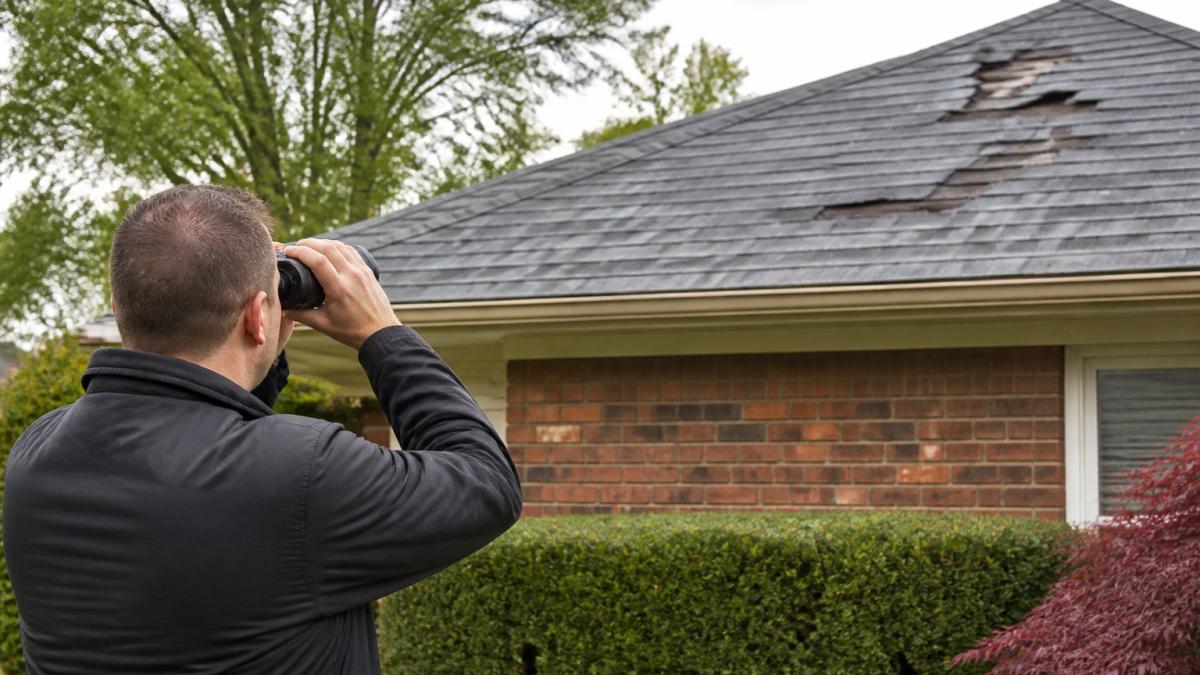
Look at your roof's overall shape. Sagging, dips, or valleys signal structural problems that need immediate attention.
Check gutters from the ground too.
Scan your yard and driveway. Storm debris tells you what fell from above:
- Shingle pieces and granules
- Broken branches
- Chunks of fascia or trim
If you see lots of roofing material in your yard, your roof took damage. This is your first sign that you need a professional inspection.
3. Look for Missing Shingles, Holes, Sagging, and Visible Roof Damage
Missing shingles are the clearest sign of roof storm damage.
What you're looking for:
- Bare patches of plywood or felt showing through
- Shingles that are curled, bent, or torn
- Shingle edges that are lifted or peeling
Granule loss is easy to miss but important, granules protect shingles from UV damage and weathering.
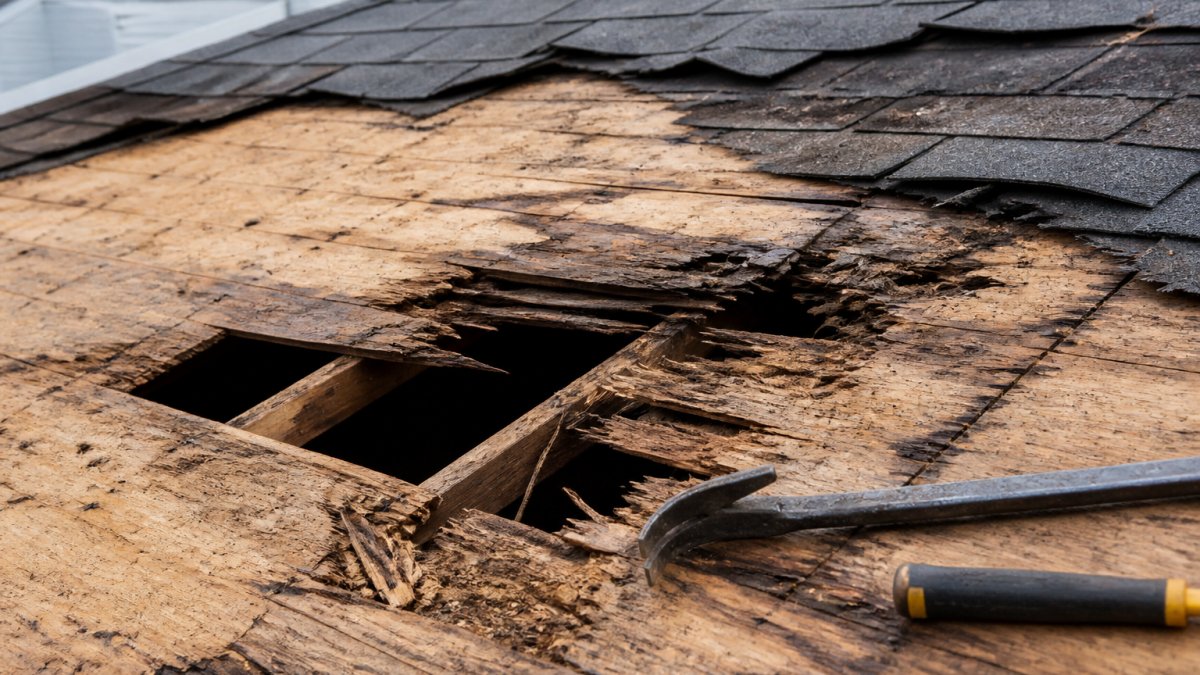
Sagging is serious: it usually means water has reached the wood underneath and caused rot. A sagging roof needs emergency repairs.
Holes are an emergency, even small ones let water into your attic and walls, and damage spreads fast.
4. Inspect Gutters, Siding, and Your Yard for Storm Debris
Gutters channel water away from walls and foundations, so storm damage to them creates bigger problems downstream.
Look for:
- Gutters pulled away from the house
- Dents or crushed sections
- Separated seams where gutter pieces connect
Clogged gutters back up water that pools on your roof, seeps into walls, and damages foundations.
Check your siding too, wind and hail damage it just like roofs. Look for:
- Dents or cracks in vinyl or metal siding
- Holes punched through siding
- Siding panels that are loose or peeling
Damaged siding lets water into your walls, causing hidden mold and rot that costs thousands to fix later.
Your yard holds clues about what hit your home. After a storm, walk your property and look for:
- Shingle pieces and granules
- Broken branches from trees
- Debris from gutters or trim
Take photos of everything. Document where debris landed. This helps insurance adjusters understand the storm's path and intensity.
5. Check Ceilings and Interior Rooms for Leaks and Water Intrusion
Water damage inside your home starts in the attic. Look for:
- Water stains on wood beams or plywood
- Wet insulation
- Mold or mildew spots
Don't touch wet insulation, mold grows fast on it and disturbing it spreads spores.
Check ceilings on every floor. Water stains, dark patches, rings, or discoloration, show where water is leaking through.
Check walls too, especially corners and where walls meet ceilings, water travels down and pools there.
Check light fixtures and ceiling fans, water often drips around these openings.
Open closets and check inside, water damage often hides there.
6. Document Roof Damage for Insurance with Photos and Notes
Insurance companies need proof of damage, so start documenting right away with photos and written records.
Take photos of:
- Missing shingles and holes
- Sagging roof sections
- Debris in your yard
Take close-ups, then wider shots showing damage in context from multiple angles to show the full extent of the problem.
Write down what you see. Include:
- Date and time you discovered the damage
- What type of damage (hail, wind, water)
- Which areas of your home are affected
Be specific: "Missing shingles on the south side of the roof, approximately 8 feet by 6 feet" beats a vague "roof damage."
Document the storm itself. Note:
- Date and time the storm hit
- Wind speed (if you know it)
- Whether hail fell
Keep all photos, notes, and receipts in one folder for your insurance claim and contractor estimates.
7. Contain Leaks and Protect Your Belongings Immediately
Water damage spreads fast, so contain leaks right away.
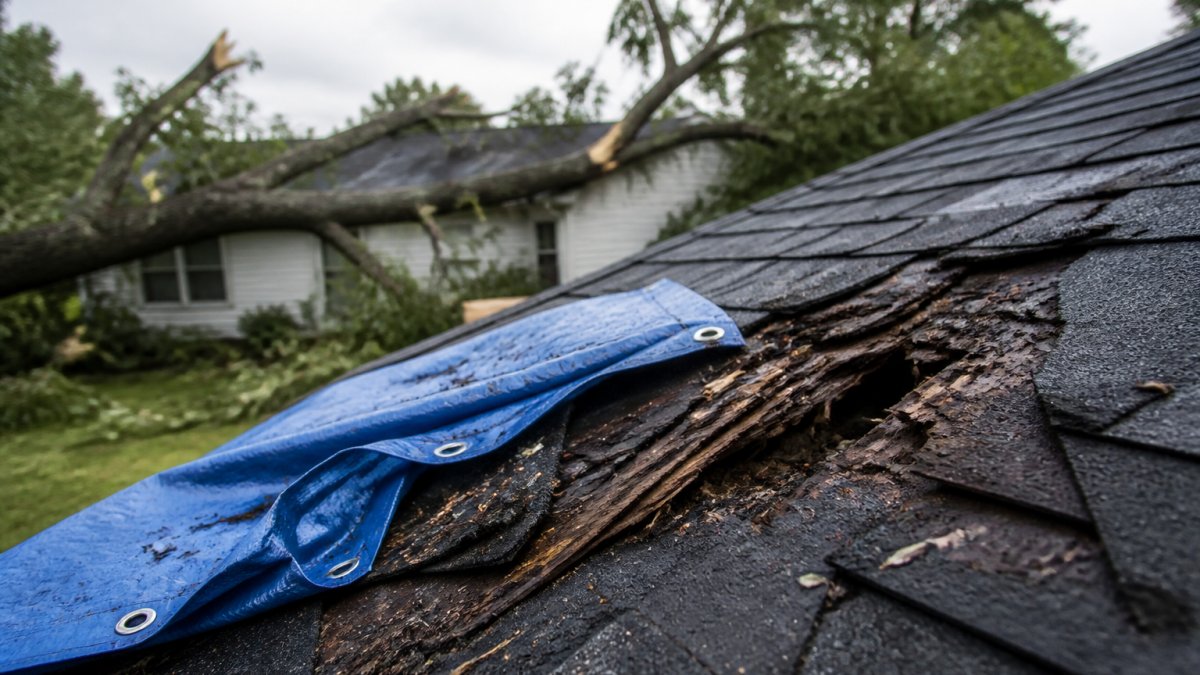
For larger leaks, use tarps or plastic sheeting.
Move furniture and belongings away from wet areas. Water damage ruins:
- Electronics
- Photographs
- Documents
Get these items out of the wet zone immediately.
Cover what you can't move with plastic sheeting to slow water absorption.
If water damage is severe, turn off HVAC, it can spread moisture and mold.
Photograph wet belongings and water-stained furniture to support personal property claims.
8. Make Temporary Roof Repairs After Storm Damage
Temporary repairs buy time while you arrange permanent fixes and stop water from getting worse. Most insurers treat emergency mitigation as a reimbursable step, not a substitute for a permanent repair.
Who should actually do the work
For most homeowners, the safest answer is a licensed roofing contractor, not you. Climbing a wet, damaged roof is the most common way people get hurt after a storm, if you have any doubt about your balance, ladder, or decking, stay off the roof.
If you do decide to handle a small, ground-accessible patch yourself, limit it to:
- Sealing a small gap with roofing cement from a ladder placed on stable, dry ground
- Placing a tarp over a damaged area you can reach without stepping on compromised shingles
- Moving buckets and towels inside to manage drips
Anything beyond that, walking the roof, nailing down shingles, removing debris from the roof surface, belongs to a professional.
How to tarp correctly (if a pro isn't available yet)
If you're tarping before a contractor arrives:
- Use a heavy-duty tarp, 6-mil polyethylene or thicker.
- Size it to cover the damaged area plus 2-3 feet on every side.
- Run it up and over the ridge so the top edge is above the water flow line.
- Secure it with furring strips or boards screwed into solid decking, not the damaged shingles.
- Make sure the low edge drains away from the house.
- Photograph the tarp in place with a date reference.
A properly installed tarp holds for a few weeks, but wind, sun, and rain degrade it, check and re-secure after every storm.
Who pays for temporary repairs
Most homeowners policies cover "reasonable and necessary" emergency measures, mitigation, even before the adjuster visits. Save every receipt for tarps, plastic sheeting, fans, dehumidifiers, and labor; photograph the damage before you tarp and the tarp after; and keep a written log of dates, times, and who did what.
Insurers typically reimburse mitigation up to policy limits only if the work was reasonable and documented. Ask your adjuster: "Is emergency tarping covered under my policy, and what documentation do you need?"
Choosing and verifying a contractor
Storm events attract out-of-town "storm chasers" who collect deposits and disappear. Before hiring anyone:
- Verify a state or local license number with the issuing authority.
- Ask for a certificate of insurance showing general liability and workers' compensation.
- Get a written estimate listing materials, labor, and timeline, not a verbal quote.
When to call a professional immediately
Contact a licensed roofer the same day if you see:
- Active water entering the home
- A hole larger than a few inches
- Sagging or soft spots in the roof deck
- Missing flashing around chimneys, vents, or skylights
At Leitch Roofing, we understand that storm damage is stressful. We offer free inspections to assess your roof and help with insurance claims. Our team can provide temporary tarping if needed while we arrange permanent repairs. Contact us today to receive a free estimate and experience our commitment to professional roofing excellence.
Frequently Asked Questions
How do I tell if my roof is damaged after a storm?
Look for missing shingles, exposed wood, holes, sagging sections, and granules in your gutters or yard. Check from the ground first using binoculars, do not climb onto the roof. Water stains on ceilings, discoloration, or dripping water inside indicate roof damage. If you see any of these signs, contact a professional for a thorough inspection before filing an insurance claim.
What should I document before filing a roof insurance claim?
Take photos and videos of all visible damage from the ground and interior, including close-ups of missing shingles, holes, and water stains. Write detailed notes with dates, times, and weather conditions. Document the extent of storm debris on your property. Keep receipts for any temporary repairs or emergency measures you take. This documentation strengthens your claim and protects you if the adjuster disputes the damage.
How long do you have to claim roof damage after a storm?
Most insurance policies require you to file a claim within one to three years of the damage, but do not wait. File immediately after documenting the damage to prevent further deterioration and to establish the timeline of the storm event. Contact your insurance company within 24-48 hours if possible. Delays can complicate claims and may result in denial if additional damage occurs.
What should I do if my roof insurance claim is denied?
Review the denial letter carefully to understand the reason. Common denials cite wear and tear or maintenance issues rather than storm damage. Hire a professional roofing contractor to provide a detailed damage assessment and written report distinguishing storm damage from age-related wear. Submit this report to your insurer as an appeal. If the denial stands, you can file a complaint with your state's insurance commissioner or consult an attorney about your options.
After a storm hits your home, the first 24 hours determine how much damage spreads. Acting fast stops water from getting into walls and foundations. Document everything for your insurance claim. Then call a professional roofer to handle permanent repairs. Temporary fixes work for a few days, but your roof needs expert attention to prevent costly problems down the road. Get a free estimate from Leitch Roofing today and protect your home from further storm damage.