 comparison
Roof Repair vs Patch Repair Cost: Which Saves More?
Table of Contents
- Roof Repair vs Patch Repair Cost: A Side-by-Side Comparison
- What Drives Patch Repair Cost and Full Repair Cost
- Signs of Roof Storm Damage That Change the Repair Scope
- Homeowners Insurance Roof Repair Coverage: What Gets Paid
- The Diminishing Returns Threshold: When Patching Stops Saving Money
- Material Compatibility and Post-Repair Maintenance
- Frequently Asked Questions
Last Updated: October 1, 2026
Roof Repair vs Patch Repair Cost: A Side-by-Side Comparison
Roof repair vs patch repair cost comes down to one question: are you buying time or buying a fix? A patch is a small-area repair that seals a localized problem, while a full repair addresses the underlying system across a larger section. This guide from Leitch Roofing breaks down what drives each price, when patching stops making financial sense, and how insurance coverage changes the math.
Most homeowners assume the cheaper option is always the smarter one. That assumption costs people money every storm season, because a patch that fails in eight months turns a small bill into a much larger one. Below, we'll show you exactly how to tell the difference before you sign anything.
| Factor | Patch Repair | Full Section Repair |
|---|---|---|
| Typical scope | One small area, under ~1 square | Multiple areas or a full slope |
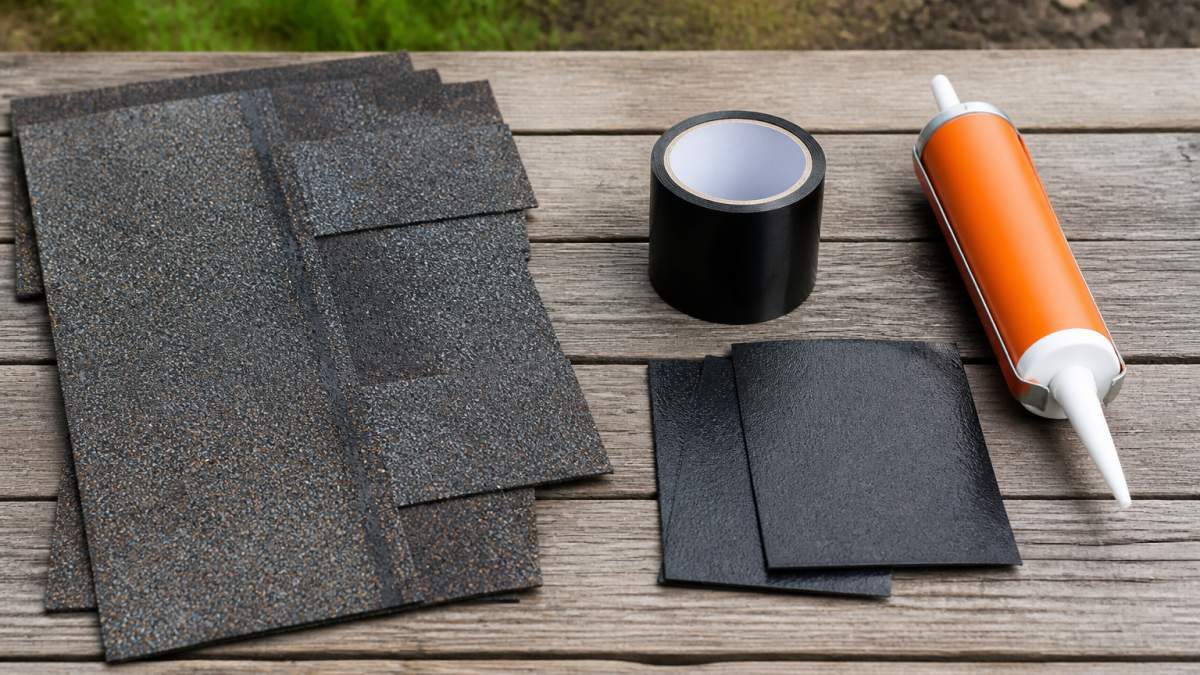
| Materials needed | Shingles, sealant, maybe flashing | Shingles, underlayment, flashing, decking |
| Labor time | A few hours | One to several days |
| Best for | Isolated, recent damage | Widespread or recurring damage |
| Lifespan added | Short-term | Long-term |
| Insurance likelihood | Lower | Higher with covered peril |
What Drives Patch Repair Cost and Full Repair Cost
Patch repair cost is driven by four variables: damage size, roof pitch, material type, and how easily crews can access the damaged area. A small puncture on a low-slope asphalt shingle roof takes far less labor than the same damage on a steep, multi-story roof with limited staging room.
Damage Size, Roof Pitch, and Material Type
Roofing work is priced by the roofing square, which covers 100 square feet of roof surface. A patch touching a fraction of one square uses minimal material. Once damage crosses into multiple squares, you're paying for shingle bundles, underlayment, and disposal.
Pitch matters more than most homeowners expect. Steep roofs slow crews down and require extra safety setup, which pushes labor costs up regardless of how small the patch is.
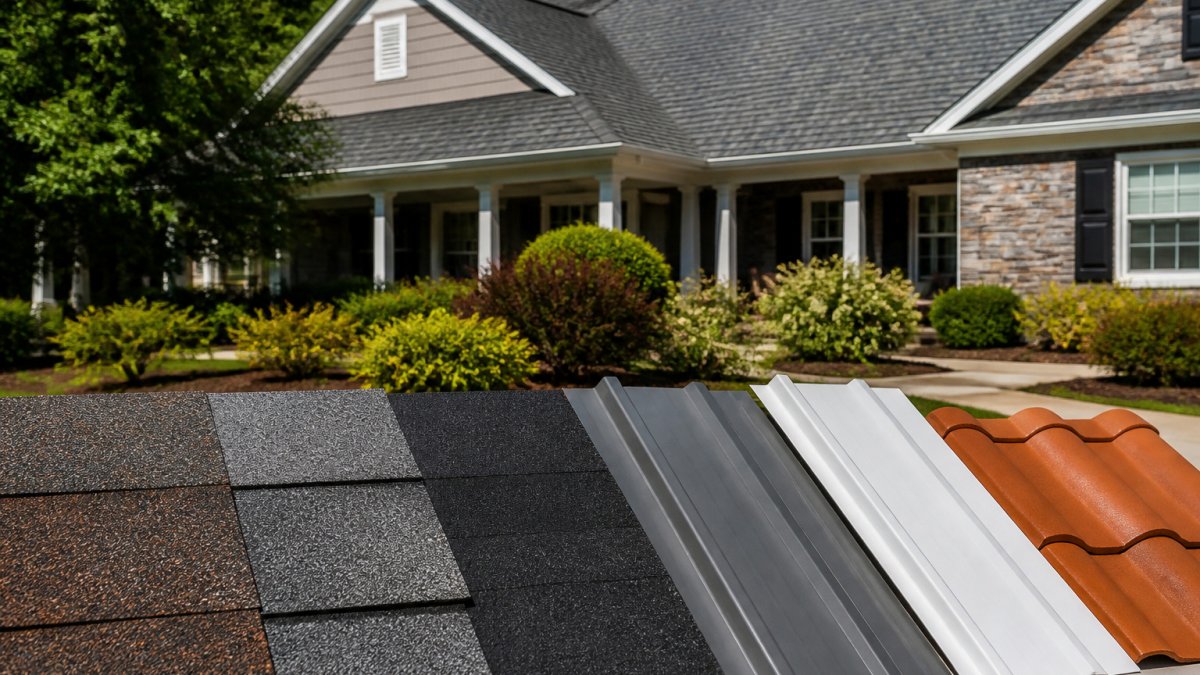
Material choice sets the floor. Asphalt shingles are the most common and generally the least expensive to match. Metal, tile, and slate repairs cost more because the material itself is pricier and matching an existing profile takes skill.
Regional Labor Variance and Access Challenges
Labor rates swing widely by market, and that variance often matters more than the damage itself. Contractors in high-demand metro areas charge more per hour than those in rural markets, even for identical work.
Access is the hidden multiplier. A patch reachable from a single ladder is quick. The same patch behind a steep dormer, a chimney, or landscaping that blocks equipment takes longer and costs more.
Signs of Roof Storm Damage That Change the Repair Scope
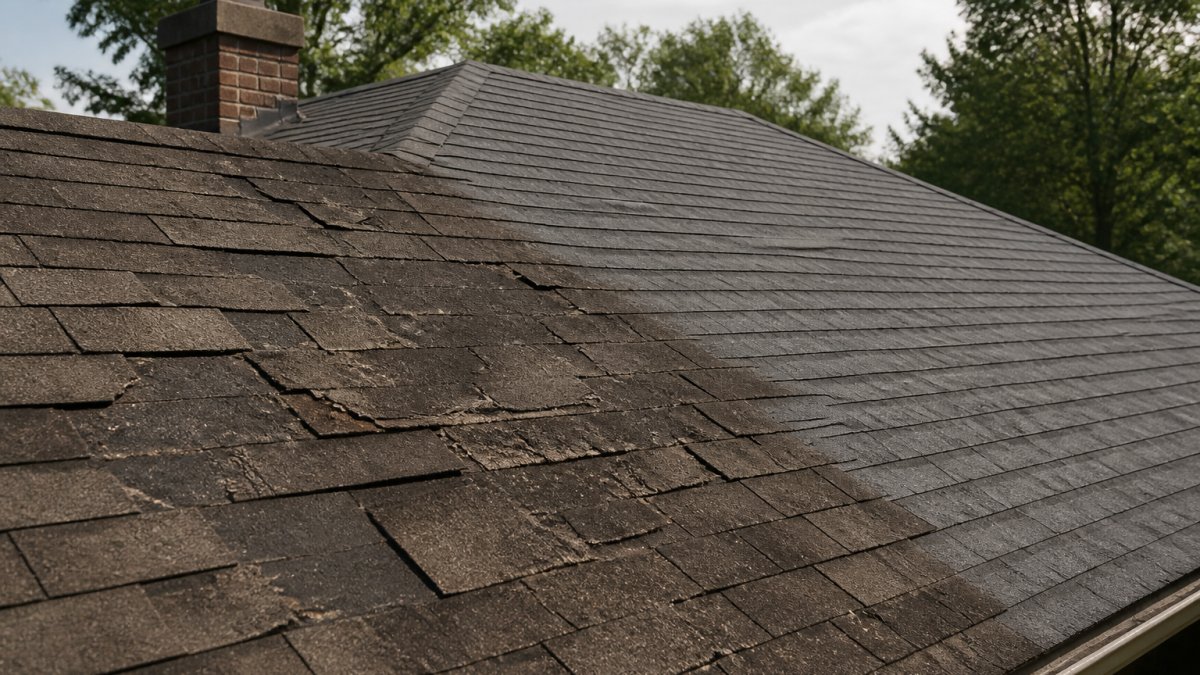
Signs of roof storm damage determine whether you're looking at a patch or a full repair. Missing shingles, granule loss, dented flashing, and soft spots in the decking all point to damage that likely extends beyond what you can see from the ground.
A common mistake is judging damage by what's visible from the driveway. Wind lifts shingles at the edges, and water travels sideways under them. The visible tear is often the smallest part of the problem.
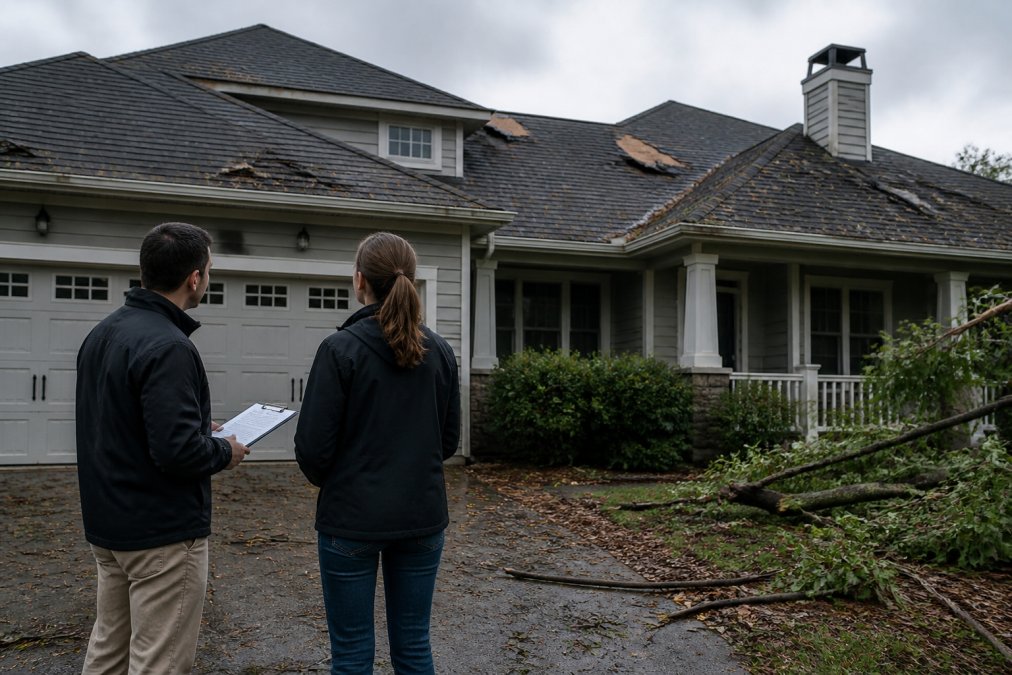
Walk your property after any major storm and look for:
- Shingles in the yard or gutter, which signal wind uplift
- Dark streaks or granule buildup in gutters, which signal wear
- Dented or bent flashing around vents and chimneys
- Water stains on attic rafters or ceiling drywall
- Sagging spots that suggest wet roof decking
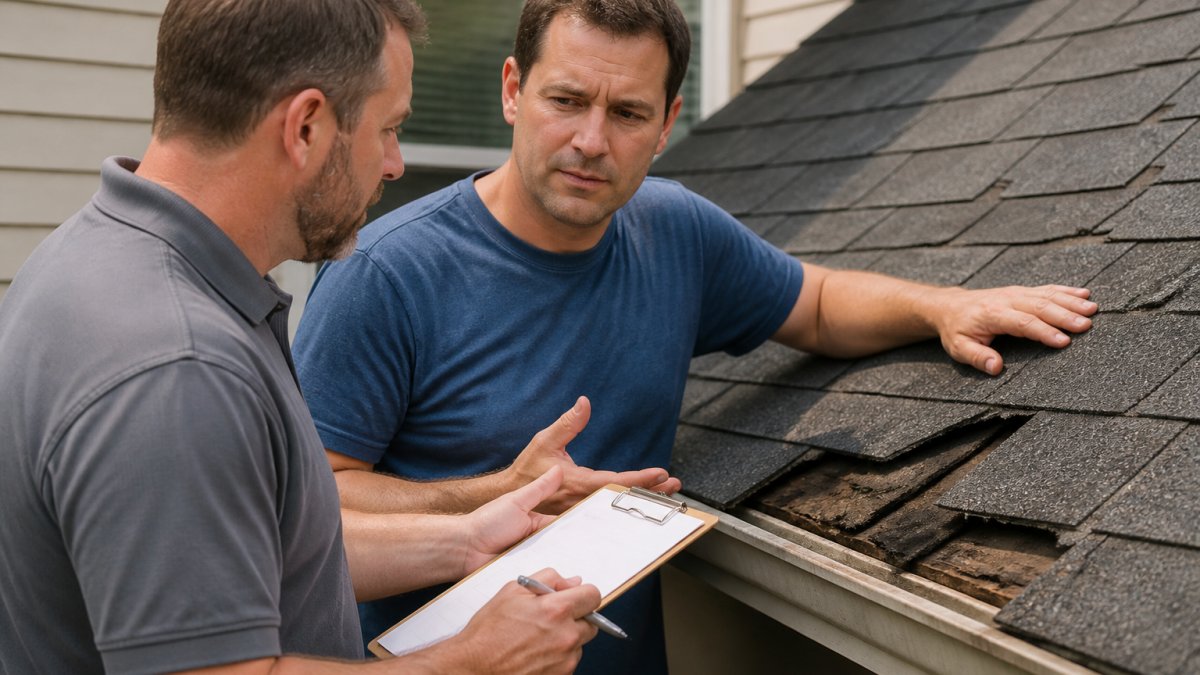
Two or more of these together usually means the repair scope is bigger than a single patch. The FEMA guidance on roof damage after storms recommends documenting damage with dated photos before any temporary repairs, which helps both insurance claims and contractor estimates.
Homeowners Insurance Roof Repair Coverage: What Gets Paid
Homeowners insurance roof repair coverage typically pays for sudden, accidental damage from a covered peril like wind, hail, or a fallen tree. It generally does not pay for wear and tear, poor maintenance, or aging materials.
That distinction decides most claim outcomes. An adjuster who classifies damage as wear and tear will deny the claim, even when a storm made the existing problem worse.
What usually gets covered:
- Wind and hail damage to shingles and flashing
- Impact damage from debris
- Water intrusion that follows a covered event
- Interior damage caused by that intrusion
What usually does not:
- Gradual deterioration from age
- Damage from neglected maintenance
- Repairs below your deductible
The National Association of Insurance Commissioners homeowner insurance resources explains how policy language varies by state and insurer, so read your declarations page before assuming a claim will be approved.
The Diminishing Returns Threshold: When Patching Stops Saving Money
The diminishing returns threshold is the point where the cumulative cost of patching exceeds the cost of a full section repair or replacement. Most guides list prices and stop there. What they never give you is the math, so homeowners keep paying for patches that quietly cost more than the fix they were avoiding.
Three signals you are past the threshold:
- You have patched the same general area more than twice
- The roof is past two-thirds of its expected lifespan
- New leaks appear in different spots after each storm
Material Compatibility and Post-Repair Maintenance
What most guides miss is that a patch is only as good as what is underneath it. If the moisture barrier is compromised, the patch seals the surface while water keeps working on the roof decking below. That is how a small repair becomes a decking replacement.
- Schedule a roof inspection within six months to confirm the repair held
- Re-inspect after the first major storm of each season, since new seams are the most likely failure point
- Clear debris from valleys and behind chimneys after storms
- Check attic ventilation, since trapped heat accelerates material degradation
- Trim overhanging branches that scrape shingles
- Photograph the repaired area at each inspection so you have a dated record if a warranty claim becomes necessary
Frequently Asked Questions
Is patching a roof worth it?
Patching makes sense when damage is isolated to a small area, the roof is under 10 years old, and the surrounding shingles are still in good condition. If damage covers more than 25 to 30 percent of the roof or the shingles show widespread granule loss, a patch repair cost may only delay a replacement you will pay for anyway. Ask a roofing contractor to assess whether the patch will outlast the rest of the roof.
What is the 25% rule in roofing?
The 25% rule is a common insurance guideline: if storm damage affects more than a quarter of your roof's surface, many insurers pay for a full replacement rather than a partial repair. The exact threshold varies by policy and state. Because patch repair cost is lower upfront, some homeowners request patching even when damage exceeds the threshold, but that choice can leave them covering the remaining repairs out of pocket later.
Will homeowners insurance cover a roof repair?
Homeowners insurance roof repair coverage typically applies when damage comes from a covered event like hail, wind, or a fallen tree. Wear and tear, age, and poor maintenance are usually excluded. Your deductible applies before the insurer pays. If an adjuster labels the damage as normal aging, a contractor experienced with insurance claims can document storm indicators such as bruised shingles or dented flashing and request a reinspection.
How do I know if my roof needs a patch or a full repair?
Look at three things: how much of the roof is affected, how old it is, and whether water has reached the decking. A single torn section on a young roof usually calls for a patch. Widespread lifted shingles, sagging, or interior water stains point to a full repair or replacement. A professional roof inspection with leak detection gives you a definite answer before you commit to either option.
Does a roof patch affect my home's resale value?
A well-documented patch that matches surrounding shingles and passes inspection has little effect on resale value. A visible, mismatched patch or one that hides ongoing water damage can lower curb appeal and raise red flags during a buyer's roof inspection. Keep receipts and warranty coverage paperwork so you can show buyers the repair was done correctly and remains under warranty.
Storm damage rarely announces whether it needs a patch or a full repair, and guessing wrong costs homeowners real money. Leitch Roofing handles both, with skilled crews, quality materials, and dedicated insurance claim assistance that takes the paperwork off your plate. We start with a free estimate, so you know the scope and the options before you commit. Get a free estimate today and let us tell you honestly whether you need a patch or a repair.