 ultimate-guide
Roof Insurance Claim Denial Reasons 2026: What to Know
Table of Contents
- Why Roof Insurance Claims Get Denied: The 7 Most Common Reasons
- Signs of Storm Damage vs Wear and Tear: What Adjusters Look For
- How to Fight a Roof Insurance Denial
- Documenting Roof Damage for Insurance: A Step-by-Step Guide
- Roof Insurance Claim Appeal Letter Template (and How to Use It)
- The Appraisal Clause: A Powerful Option Most Homeowners Ignore
- Frequently Asked Questions
Last Updated: September 10, 2026
Why Roof Insurance Claims Get Denied: The 7 Most Common Reasons
A roof insurance claim denial almost always traces back to one of seven causes: wear and tear, pre-existing damage, deferred maintenance, improper installation, excluded perils, missed filing deadlines, or thin documentation (iii.org). Identifying which applies to your case is the first step toward fighting it.
The denial letter sounds final. It isn't.
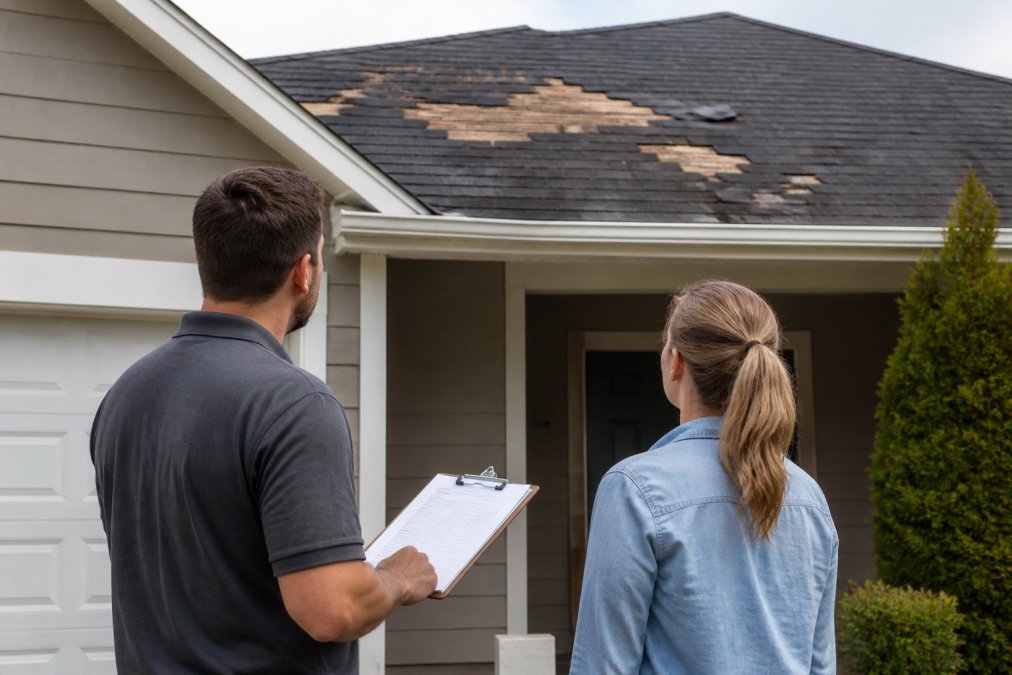
The seven reasons adjusters cite most often:
- Wear and tear, normal aging that policies exclude
- Pre-existing damage, problems that predate your policy or a prior claim
- Deferred maintenance, neglected repairs the insurer says you should have made
- Improper installation, workmanship issues, not storm damage
- Excluded perils, events your policy simply doesn't cover
- Missed filing deadlines, waiting too long after the storm
- Insufficient documentation, no proof of when or how damage occurred
Most denials hinge on the first three.
Wear and Tear vs. Storm Damage
Wear and tear is gradual deterioration from age, sun, and weather. Storm damage is a sudden, identifiable event like hail, wind, or a fallen limb. Insurers cover the second and exclude the first (insurance.ca.gov).
The distinction decides whether you get a check. Granule loss, curling shingles, and surface cracking read as wear. Bruising, fresh impact marks, and lifted or missing shingles after a dated storm read as damage.
Pre-Existing Damage and Deferred Maintenance
Pre-existing damage is any roof problem that existed before the storm you're claiming. Deferred maintenance is the repairs you put off. Insurers treat both as reasons to reduce or deny a payout.
Don't assume your insurer won't check. They pull permit history, prior claim records, and sometimes satellite imagery (naic.org). If your roof was already failing, that shows up.
Signs of Storm Damage vs Wear and Tear: What Adjusters Look For
Adjusters look for datable evidence: impact marks, granule deposits in gutters, torn or creased shingles, and damage concentrated on one slope. Wear and tear shows up evenly, with no single event to point to.
Here's how the two compare in practice:
| Indicator | Storm Damage | Wear and Tear |
|---|---|---|
| Pattern | Concentrated on one slope | Even across the roof |
| Timing | Tied to a dated event | Gradual over years |
| Shingle condition | Bruised, torn, creased | Curled, brittle, granule loss |
| Debris evidence | Granules in gutters, dents | None |
| Hail marks | Visible soft spots | None |
Wind and hail damage leave physical signatures an experienced inspector can photograph. A professional roof inspection report gives the adjuster something concrete to evaluate instead of a verbal claim.
How to Fight a Roof Insurance Denial
You fight a roof insurance denial by reading the denial letter closely, matching the cited reason to your policy language, building an independent evidence file, and choosing the correct dispute track: appeal, appraisal, or legal action. The wrong track wastes months.
The most useful document in the process is the denial letter itself. Most homeowners read the first paragraph and stop. Read all of it.
Reading the Denial Letter Like an Adjuster
A denial letter is structured, and each part tells you how to respond:
- The cited policy provision. The letter should name the specific section and exclusion it relies on. If it cites "wear and tear" but your policy's wear-and-tear exclusion is worded around "deterioration," that mismatch is your opening.
- The cause-of-loss determination. Insurers assign a cause of loss code (wind, hail, water, and so on). If the letter says the damage is "not storm-related," the insurer is disputing causation, not coverage, and that changes your strategy.
- The date of loss. Compare it to the storm date you reported. A wrong date is a common clerical error that can be corrected without a full appeal.
- The scope of the inspection. Some letters reveal the adjuster never went on the roof, relying instead on a drive-by or aerial review. That is a factual weakness you can attack with your own inspection report.
- The reservation of rights language. If the letter "reserves rights" rather than issuing a clean denial, the insurer has not made a final determination. Treat that as an open negotiation, not a closed door.
Choosing the Right Dispute Track
Match the dispute to the track:
| What the insurer disputes | Correct track |
|---|---|
| Whether the damage is covered at all (exclusion, causation) | Written appeal, then legal action |
| How much a covered loss is worth | Appraisal clause |
| A clerical error (wrong date, wrong policy number) | Written correction request |
| Bad-faith handling (missed deadlines, no investigation) | State department of insurance complaint, then counsel |
Filing an appraisal demand when the real dispute is coverage gets you nowhere, and appealing a pure valuation dispute wastes the appeal window. Diagnose first.
Deadlines You Cannot Miss
Two clocks usually run at once: the appeal or reconsideration window in your policy or denial letter, often short, and your state's statute of limitations for breach of contract or bad-faith claims, measured in years. Missing the first can foreclose the second. Calendar both the day the denial arrives.
Building the Evidence File
Your appeal is only as strong as the record behind it. Assemble, in one place:
- The denial letter and the full adjuster's report
- Your complete policy, including endorsements and the declarations page
- A dated photo log of the damage, tied to the storm date
- Local weather records (hail reports, wind gusts) for the date of loss
- A written inspection report from a licensed roofing contractor
- Receipts for any emergency mitigation, such as tarping
- A written proof of loss if your policy requires one
Send the appeal by a method that produces proof of delivery, and keep copies. If the insurer does not respond within your state's timeframe, that silence is itself evidence of a claim-handling problem you can raise with the department of insurance.
A public adjuster can run this process for a percentage of the settlement. For a single disputed exclusion, many homeowners handle the appeal themselves and save that fee. For a large loss with a contested cause, professional representation often pays for itself.
Documenting Roof Damage for Insurance: A Step-by-Step Guide
Documenting roof damage for insurance means creating a dated, photographed record tying specific damage to a specific event. Do this before any repairs begin.
- Photograph the roof from the ground and up close, with timestamps
- Capture wide shots showing the damaged slope's location
- Photograph granules in gutters and downspouts
- Save weather reports and storm dates for your area
- Keep every receipt for emergency tarping or mitigation
- Get a written roof inspection report from a licensed contractor
- Log the date you first noticed the damage
Mitigation matters. If you tarp a leaking roof to prevent further damage, keep the receipt. Insurers often reimburse reasonable emergency repairs, but only with documentation.
Roof Insurance Claim Appeal Letter Template (and How to Use It)
A roof insurance claim appeal letter template gives you a formal structure to dispute the denial. Fill in the bracketed fields, attach your evidence, and send it with proof of delivery.
[Date]
[Insurance Company Name] [Claims Department Address]
RE: Appeal of Denied Claim, Policy #[Policy Number] Claim #[Claim Number] | Date of Loss: [Date]
To Whom It May Concern,
I am formally appealing the denial of my roof damage claim dated [Denial Date]. The denial cited [reason cited in denial letter].
I dispute this determination for the following reasons:
- [Specific evidence, e.g., "An independent inspection dated [date] documented hail impact marks on the [slope] consistent with the storm on [date]."]
- [Additional evidence, e.g., "Granule deposits were photographed in the gutters on [date]."]
- [Policy reference, e.g., "Section [X] of my policy covers wind and hail damage."]
Enclosed please find: [list attachments, photos, inspection report, weather records, receipts].
I request a reconsideration of this claim and a written response within [30] days.
Sincerely, [Your Name] [Policy Number] | [Phone] | [Email]
Send it certified mail or through a portal that logs receipt. Keep copies of everything.
The Appraisal Clause: A Powerful Option Most Homeowners Ignore
The appraisal clause lets you and your insurer each hire an independent appraiser when you disagree on the amount of a covered loss. It does not decide whether damage is covered, only what it is worth. Here is how it works.
What Appraisal Can and Cannot Do
Appraisal is a valuation tool, not a coverage tool. If your insurer agreed the loss is covered but the payout is far below local repair estimates, appraisal is often faster and cheaper than a lawsuit. If the insurer denies coverage outright, appraisal will not help and can waste appeal time.
How the Appraisal Process Actually Runs
The mechanics are defined by your policy, but the common sequence looks like this:
- You invoke the clause in writing. The policy usually requires a formal demand. Send it the same way you would an appeal, with proof of delivery.
- Each side selects a competent, disinterested appraiser. "Disinterested" means no financial stake in the outcome. Your appraiser should know your roof material and local replacement costs.
- The two appraisers try to agree on the loss amount. If they agree, that figure typically binds both sides.
- If they cannot agree, they select a neutral umpire. The umpire is usually chosen from a list, and both sides may have input. If the appraisers cannot agree on an umpire, the policy often provides a method, such as each naming one and drawing lots.
- The umpire decides the disputed figure. In many policies, agreement by any two of the three (your appraiser, the insurer's appraiser, and the umpire) sets the amount.
What Appraisal Costs
Each side pays its own appraiser, and the two sides typically split the umpire's fee. Your cost is your appraiser's fee plus half the umpire's, if needed. For a large roof loss, that is often a fraction of litigation and usually resolves faster. Ask your appraiser for a written fee estimate before you commit.
When Appraisal Is the Wrong Move
Appraisal is a poor fit when:
- The insurer denies coverage rather than disputing value
- The dispute is about causation (storm versus wear and tear)
- Your policy has no appraisal clause, or it excludes the type of loss at issue
- A coverage lawsuit or a department of insurance complaint is already the better path
Read the appraisal clause in your own policy before invoking it. Wording varies, and some clauses limit which disputes qualify.
Why Roof Material Changes the Math
Replacement cost figures differ sharply by material. Asphalt shingles, metal, and tile carry very different per-square costs, and an appraiser who does not know your material will underprice the loss. Your policy also states whether it pays replacement cost value or actual cash value, which can swing the number significantly. Give your appraiser the material specs, square count, and any contractor estimates.
State Rules Still Apply
Appraisal clauses are contracts, but state regulations shape how they are enforced. Some states require insurers to acknowledge and respond to claim communications within set timeframes, and bad-faith standards vary widely. Check your state department of insurance for the rules that apply, and confirm the statute of limitations for contract disputes, which runs independently of the appraisal process.
Frequently Asked Questions
What are the most common reasons a roof insurance claim is denied?
The most common reasons include wear and tear, pre-existing damage, deferred maintenance, damage from improper installation, and policy exclusions. Insurers may also deny claims if damage falls below your deductible or if you missed the filing deadline. Understanding these reasons helps you build a stronger case from the start and avoid common pitfalls that lead to denials.
What should I do if my roof insurance claim is denied?
First, request a copy of the denial letter explaining the specific reason. Then gather your own documentation: photos, receipts, and a roof inspection report from a licensed contractor. You can file an appeal, invoke the appraisal clause if your policy includes one, or hire a public adjuster. Acting quickly matters, since most policies have a one-year deadline to file suit after denial.
Can I appeal a denied roof insurance claim in 2026?
Yes. You can appeal a denied roof insurance claim by submitting a formal letter to your insurer with new evidence, such as an independent roof inspection report or a contractor's assessment. If the insurer still refuses, your policy's appraisal clause lets you and the insurer each hire an appraiser. In some cases, you may need to consult an attorney if the denial appears to be in bad faith.
How do I document roof damage for insurance?
Take dated photos of all damage from multiple angles, including close-ups of missing shingles, hail hits, and water stains. Keep receipts for any temporary repairs. Get a written roof inspection report from a licensed roofing contractor that clearly distinguishes storm damage from wear and tear. This documentation strengthens your claim and is critical if you need to appeal a denial.
What not to say to a roof insurance adjuster?
Avoid saying the damage is 'old' or that you 'noticed it a while ago,' as this can be used to argue pre-existing wear. Don't speculate about the cause or offer opinions on what should be covered. Stick to facts: when you first noticed the damage, what you observed, and any repair receipts. Let your contractor handle technical explanations with the adjuster.
Does homeowners insurance cover roof replacement due to age?
No. Standard homeowners insurance policies exclude damage caused by normal wear and tear or aging. Coverage applies only to sudden, accidental damage from covered perils like wind, hail, or fire. If your roof is simply old and deteriorating, the claim will likely be denied. However, if a covered storm event damages an already-aged roof, the claim may still be partially covered based on its actual cash value.
What is the appraisal clause and how does it help with a denied claim?
The appraisal clause is a provision in many homeowners policies that lets you and your insurer each hire an independent appraiser when you disagree on the amount of loss. The two appraisers then select an umpire. If they can't agree, the umpire decides. This process is faster and cheaper than a lawsuit and can resolve disputes over roof damage valuation without going to court.