 ultimate-guide
Commercial Roof Warranty: What It Covers and What It Doesn't
Table of Contents
- What Is a Commercial Roof Warranty
- Manufacturer vs Contractor Roof Warranty: Key Differences
- Types of Commercial Roof Warranties and Coverage Options
- What Commercial Roof Warranties Cover
- What Voids a Commercial Roof Warranty
- Roofing Workmanship Warranty Duration and Terms
- Filing a Warranty Claim: Process and Documentation
- Warranty Transferability and Property Sales
- Frequently Asked Questions
Last Updated: October 8, 2026
What Is a Commercial Roof Warranty
A commercial roof warranty is a contractual guarantee protecting your building against manufacturing defects, installation failures, and material degradation over a specified period. The catch is understanding what actually goes wrong in the eyes of your warrantor.
Most property owners think a warranty covers everything. It doesn't. A commercial roof warranty addresses two areas: the materials (manufacturer coverage) and how they were installed (workmanship coverage). These are often sold separately, which is where confusion starts.
Warranty periods vary dramatically: 10, 20, or even 35 years. But length alone doesn't tell you what's covered. A 35-year warranty excluding weather damage is less valuable than a 15-year warranty covering most failure modes. This matters when evaluating proposals or filing a claim.
Understanding your commercial roof warranty before problems emerge puts you in control. It determines whether a leak is your problem or the contractor's, whether a material failure costs you thousands, and whether you can transfer protection to the next owner.
Manufacturer vs Contractor Roof Warranty: Key Differences
The manufacturer and contractor are different entities with different obligations, and their warranties protect different things.
A manufacturer warranty covers defects in the roofing materials themselves: membrane, insulation, fasteners, and components as manufactured. If the membrane fails due to a manufacturing flaw within the warranty period, the manufacturer typically pays for replacement materials, but not labor or removal of the failed material.
A contractor workmanship warranty covers installation: how materials were applied, fastened, sealed, and integrated. If the contractor failed to flash a penetration, seal a seam, or fasten components correctly, the workmanship warranty should cover correction.
Here's the practical difference: a membrane fails after three years. The manufacturer warranty covers the cost of the new membrane. The contractor workmanship warranty covers the cost of removing the old one and installing the new one. Without both, you're paying out of pocket for half the repair.
Many contractors offer single-source warranties combining manufacturer and workmanship coverage under one agreement, simplifying claims because you contact one party. Others sell only workmanship coverage and let the manufacturer's warranty stand alone. Know which model you're getting before you sign.
Types of Commercial Roof Warranties and Coverage Options
Commercial roof warranties come in three primary structures.
Single-Source Warranties
A single-source warranty bundles manufacturer and workmanship coverage into one agreement issued by the roofing contractor or a third-party warrantor. You have one contact, one claim process, and one entity responsible.
Single-source warranties simplify administration. When a problem emerges, you don't determine whether it's a manufacturing defect or installation error; you report it and the warrantor investigates, reducing finger-pointing between manufacturer and contractor.
The trade-off: single-source warranties are often more restrictive. Bundled coverage may exclude conditions or require specific maintenance protocols. Read the fine print, because a single-source warranty requiring quarterly inspections is more demanding than a split warranty that doesn't.
Manufacturer Coverage Only
Some contractors sell roofing systems without their own workmanship warranty, relying entirely on the manufacturer's coverage. You receive the manufacturer's warranty directly and are responsible for any installation defects.
This is cheaper upfront because the contractor isn't backing their work, but it shifts risk to you. If installation problems emerge, you have no contractual recourse against the contractor, only the manufacturer, who didn't install the roof and may deny the claim as an installation issue.
Manufacturer-only coverage suits buildings you'll sell within a few years, or highly reputable contractors whose reputation is your real warranty. For long-term ownership, it's a false economy.
Split Coverage Models
Some contractors offer the manufacturer's warranty separately and sell their own workmanship warranty as an add-on. You hold two documents with different terms, claim processes, and parties to contact.
Split coverage gives you flexibility. You can choose the workmanship warranty term, 10 years if you plan to sell or 25 if you're keeping the building, and shop the manufacturer warranty independently if the contractor offers multiple material options.
The disadvantage is administrative complexity. Determining whether a failure is a manufacturing or installation defect becomes your responsibility. If the manufacturer blames the contractor and vice versa, you're caught in the middle.
What Commercial Roof Warranties Cover
Understanding coverage requires reading the specific warranty document, but most commercial roof warranties address two failure modes.
Manufacturing Defects
A manufacturing defect means the material itself is flawed: inadequate membrane thickness, insulation that lost R-value, premature fastener corrosion, or sealants failing due to production error. The manufacturer warrants the product will perform as specified for the term if installed correctly.
Most manufacturer warranties cover replacement materials. Some include labor for removal and reinstallation, but many do not. A warranty covering materials but not labor can still leave you with significant out-of-pocket costs.
Manufacturer coverage typically applies only to the failed component, not the entire roof system. If one section of membrane fails, the manufacturer replaces that section, not the whole roof, which can create color or performance inconsistencies.
Workmanship and Installation Defects
Workmanship coverage addresses failures caused by installation: improper flashing around penetrations, inadequate seam sealing, incorrect fastener spacing, insufficient material overlap, and failure to follow manufacturer specifications.
Workmanship warranties typically cover both materials and labor because the contractor caused the defect. A workmanship warranty that doesn't cover labor is essentially worthless, shifting correction costs to you.
The scope of workmanship coverage varies widely. Some warranties cover any installation error; others exclude conditions like "ponding water" or "traffic damage" if the roof wasn't designed for them. Read the exclusions carefully.
What Voids a Commercial Roof Warranty
Your warranty remains valid only if you meet the warrantor's conditions. Violating these conditions can eliminate your coverage entirely, even if the failure isn't related to the violation.
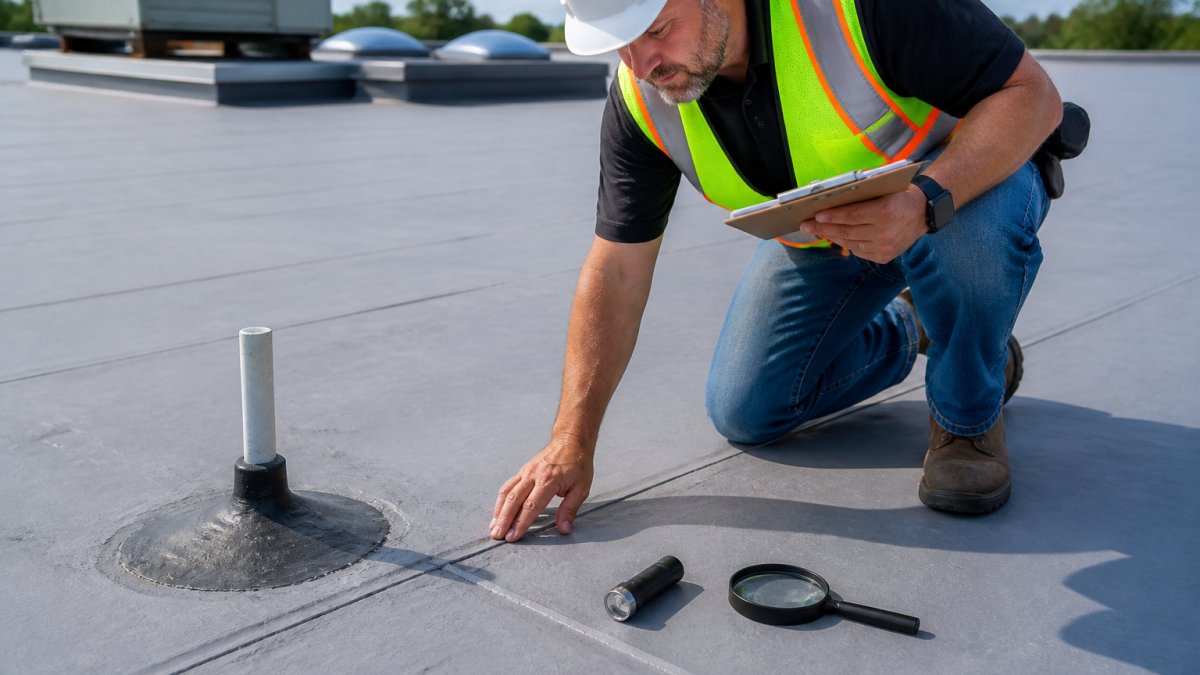
Most commercial roof warranties require regular maintenance and inspections. Typical requirements include annual inspections, removal of debris, drainage system cleaning, and prompt repair of minor damage.
Modifications to the roof void coverage for the modified area. If you add equipment, install additional insulation, or change the roof membrane without the contractor's approval, you lose warranty protection in that section.
Improper repairs by other contractors also void coverage. If you hire a different roofer to patch a leak and the patch fails or causes secondary damage, your original warranty may not cover the consequences.
Certain environmental exposures exceed warranty scope. Extreme weather events, hail, high winds, or exposure to chemicals or corrosive atmospheres may be excluded.
Traffic on the roof, whether foot traffic or equipment placement, often voids coverage if it wasn't anticipated in the design. If your roof wasn't designed for regular foot traffic and maintenance workers walk on it, damage from foot traffic may not be covered.
Roofing Workmanship Warranty Duration and Terms
Workmanship warranty terms range from 5 years to 25 years, with 10 years being common for standard installations and 20 years for premium systems.
Longer terms sound better, but they come with higher costs and more stringent maintenance requirements. A 25-year workmanship warranty may require quarterly inspections and documented maintenance. A 5-year warranty may require only annual inspections. Consider your building's actual maintenance capacity before choosing a longer term.
Some warranties are prorated, meaning coverage decreases over time. A prorated workmanship warranty might cover 100% of repair costs in years 1-5, 75% in years 6-10, and 50% in years 11-15.
Transferability affects the warranty's value if you sell the building. Some workmanship warranties transfer to the new owner for the remaining term. Others are non-transferable and expire when you sell. Transferable warranties increase your building's value and appeal to buyers.
The warranty term typically begins on the date of substantial completion, not the date you sign the contract. Clarify this timing with your contractor. If there's a gap between contract signing and roof completion, your warranty clock doesn't start until the roof is finished.
Filing a Warranty Claim: Process and Documentation
When a failure occurs, your ability to recover depends on proper documentation and timely action.
Start by documenting the damage with photographs and written description. Note the date you discovered the problem, weather conditions preceding it, and any prior maintenance or repairs.
Review your warranty document and identify the warrantor, the manufacturer, contractor, or third-party warrantor named in the coverage agreement. Contact them in writing (email or certified mail) with your documentation.
The warrantor will likely send an inspector to evaluate the claim. Cooperate fully and provide access to the roof.
Expect a decision within 30 days of the inspection, though some warranties allow longer timeframes. The warrantor will either approve the claim, deny it with written explanation, or request additional information before deciding.
If the claim is approved, the warrantor will typically issue a repair authorization and arrange for repair. If they deny the claim, you have the right to dispute the denial.
Document all communication with the warrantor. Keep copies of emails, inspection reports, repair authorizations, and invoices. This trail protects you if disputes arise later about what was covered or what was repaired.
Warranty Transferability and Property Sales
When you sell your building, the buyer may inherit some or all of your roof warranty coverage, depending on the warranty's terms.
Transferable warranties pass to the new owner for the remaining term. This is valuable because the new owner doesn't need to obtain new coverage, they assume your existing protection.
Non-transferable warranties expire when you sell or are forfeited by the new owner. This means the new owner has no manufacturer or workmanship coverage from your roof installation.
Some warranties are partially transferable.
Transferability often requires notification to the warrantor. You may need to provide the new owner's information and contact details so the warrantor can update their records. Failure to notify the warrantor could void transferability.
If you're buying a building with an existing roof, ask the seller for a copy of the warranty document and confirm transferability before closing. This warranty becomes part of your property's value.
At Leitch Roofing, we help property owners understand warranty terms before installation and assist with claim documentation if problems emerge. Our team can review warranty language and explain what you're actually protected against.
A commercial roof warranty is only valuable if you understand what it covers before you need it. If you have questions about an existing warranty or need help filing a claim, Leitch Roofing offers expert guidance to simplify the process. Get a free estimate today and let our team review your roof's warranty coverage with you.
Frequently Asked Questions
What does a commercial roof warranty typically cover?
A commercial roof warranty covers manufacturing defects in roofing materials and workmanship defects in installation. Coverage typically includes roof leaks caused by faulty materials or poor installation, roof membrane failure, and defects in components like fasteners and seams. However, warranties exclude damage from weather events, lack of maintenance, improper repairs by unauthorized contractors, and normal wear and tear. The specific coverage depends on whether you have a manufacturer warranty, contractor workmanship warranty, or combined single-source warranty.
How long is a roofing contractor liable for their workmanship?
Roofing workmanship warranty duration typically ranges from 5 to 10 years, though some contractors offer extended terms up to 15 years. The warranty period begins on the date of installation completion. During this time, the contractor is responsible for repairing defects caused by poor installation, improper material application, or failure to follow manufacturer specifications. After the workmanship warranty expires, you are responsible for repairs. Always confirm the exact duration and coverage details in your contract before work begins.
What common actions void a commercial roof warranty?
Common actions that void a commercial roof warranty include failing to perform required maintenance, making unauthorized repairs using non-approved materials or contractors, allowing standing water or debris to accumulate on the roof, and ignoring manufacturer maintenance schedules. Walking on the roof without proper precautions, using incompatible roofing products, and delaying repairs after damage occurs can also void coverage. Additionally, alterations to the roof system, improper penetration sealing, and failure to address leaks promptly may result in warranty denial. Always review your warranty terms to understand specific exclusions.
What is the difference between a manufacturer warranty and a contractor warranty?
A manufacturer warranty covers defects in the roofing materials themselves, such as membrane failure, manufacturing flaws, or component degradation. It typically lasts 10 to 35 years depending on the product. A contractor workmanship warranty covers installation defects, including improper sealing, incorrect fastening, and failure to follow installation specifications. It usually lasts 5 to 10 years. Some contractors offer single-source warranties that combine both coverages under one agreement, simplifying the claim process and providing comprehensive protection for both materials and labor.