 ultimate-guide
Roof Inspection for Home Buyers: What to Expect
Table of Contents
- Why a Roof Inspection for Home Buyers Is Non-Negotiable
- Roof Inspection vs. Standard Home Inspection: Know the Difference
- Signs of Roof Damage for Buyers to Watch For
- What a Professional Roof Inspector Examines
- Roof Inspection Cost: What Buyers Should Budget
- How to Use the Report to Negotiate Roof Repairs After Inspection
- Your Next Step After the Roof Inspection
- Frequently Asked Questions
Last Updated: September 4, 2026
Why a Roof Inspection for Home Buyers Is Non-Negotiable
A roof inspection for home buyers is the single most effective way to protect your largest investment from an unexpected and expensive failure. Your offer may be accepted based on a glowing interior walkthrough, but the condition of the roof system determines whether you face a repair bill within months or enjoy years of trouble-free shelter.
Replacing an entire roof system ranks among the most costly home repairs a homeowner will ever encounter, and the expense lands entirely on you once the deed transfers. A pre-purchase roof inspection shifts that risk back to the seller during the negotiation window. This guide walks you through what a professional assessment covers, what it costs, and how to use the findings to negotiate fairly.
Roof Inspection vs. Standard Home Inspection: Know the Difference
A standard home inspection is not a substitute for a dedicated roof inspection. General home inspectors perform a visual check of the roof from the ground or eaves, noting obvious issues like missing shingles or visible sagging. They rarely climb onto the surface, and they do not assess the internal condition of the decking, underlayment, or flashing.
A licensed roofing contractor performs a more thorough evaluation. They walk the roof surface, inspect the attic for moisture and ventilation problems, and document the remaining useful life of the materials. This distinction matters because many defects are invisible from the ground.
| Inspection Type | What It Covers | Best For |
|---|---|---|
| Standard home inspection | Visual check from ground level, obvious defects | General condition of the property |
| Professional roof inspection | Full surface walk, attic assessment, material lifespan | Buyers needing negotiation use |
Signs of Roof Damage for Buyers to Watch For
Before the inspector arrives, you can conduct your own DIY visual inspection to flag potential problems. Walk the perimeter of the home and look for these common warning signs of roof damage:
- Curling or buckling shingles that lift at the edges, leaving the underlayment exposed
- Granule loss evident as dark streaks in gutters or bald patches on asphalt shingles
- Missing or broken shingles after major storm damage
- Sagging rooflines that suggest decking or structural issues
- Damaged flashing around chimneys, vents, and skylights
- Gutter condition, including rust, separation, or debris buildup that blocks drainage
- Soffit and fascia showing rot, peeling paint, or water stains
For a roof age check, ask the seller for documentation or permits. Most asphalt shingle roofs last 20 to 30 years with proper maintenance, so a roof approaching that range warrants extra scrutiny (asphaltroofing.org).
What a Professional Roof Inspector Examines
A professional roof inspector evaluates the entire roof system, not just the shingles you can see from the street. The assessment covers the roofing material, flashing around penetrations, underlayment, and attic conditions that affect the roof's lifespan.
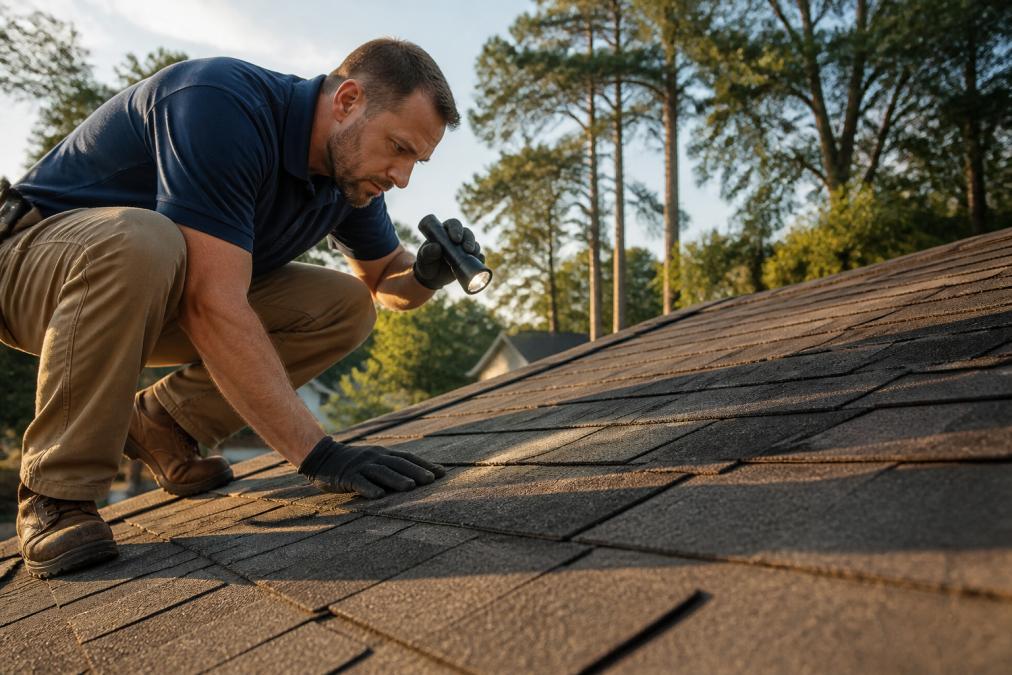
The attic inspection is where many hidden problems surface. Inspectors check for proper ventilation, signs of water damage on the decking, and evidence of leaks that have already caused rot or mold.
The final deliverable is a detailed report documenting the roof's condition, its remaining useful life, and any repair estimates needed. This documentation becomes your negotiation tool.
Roof Inspection Cost: What Buyers Should Budget
A dedicated roof inspection for home buyers typically costs between $150 and $600, with the national average landing near $350 for a standard single-family home (angi.com). The final price depends on several factors: roof size (measured in squares, where one square equals 100 square feet), pitch steepness, number of stories, and accessibility. A steep, multi-story roof with complex valleys and penetrations will push the price toward the upper end of that range.
For context, a standard home inspection runs $300 to $500, but it does not include a hands-on roof surface walk or an attic-level assessment. Paying an additional $150 to $600 for a dedicated roof inspection is a small premium for a system that costs $9,000 to $25,000 to replace on a typical 2,000-square-foot home with asphalt shingles.
Some roofing contractors offer free estimates that include a basic condition assessment from the ground or a quick surface look. These are useful for screening a property before you make an offer, but they are not a substitute for a paid, documented inspection. A free estimate rarely includes attic inspection, ventilation measurements, or a written report with photos and remaining-life projections.
A growing number of buyers also face insurance-driven roof inspections. Many homeowners insurers now require a roof inspection or certification before issuing a policy on homes with roofs older than 10 to 15 years (iii.org). Some carriers use aerial imagery to assess roof condition and may decline coverage or impose higher premiums if the roof shows signs of aging or damage. If your insurer requires a certification, the inspection cost becomes a mandatory closing expense, not an optional safeguard.
When budgeting, also factor in the cost of a follow-up repair estimate if the inspection reveals issues. A licensed roofer may charge $50 to $150 for a detailed bid on specific repairs, though many will provide one free if you hire them for the work. Having a written repair estimate in hand strengthens your negotiation position.
Compare inspection fees against the cost of common roof repairs: replacing a section of flashing runs $200 to $500, repairing a leak around a chimney costs $400 to $1,000, and fixing widespread shingle damage can run $1,500 to $4,000. The inspection fee is the cheapest insurance you can buy during a home purchase.
How to Use the Report to Negotiate Roof Repairs After Inspection
Most guides tell you to "negotiate repairs" but never show you what to say. This section gives you the scripts and the strategy. The inspection report is your leverage, but only if you translate its findings into a specific, dollar-based request.
Step 1: Quantify Every Finding
Go through the report line by line and assign a dollar figure to each defect. Use the inspector's repair estimates or get bids from two licensed roofing contractors. Common figures to work with:
- Missing or damaged shingles: $300 to $800 per small section
- Flashing replacement around chimney or vents: $400 to $1,200
- Leak repair with decking replacement: $800 to $2,500
- Full roof replacement on a 2,000-square-foot home: $9,000 to $25,000
Do not round down. The seller will negotiate, so start with the full estimated cost of making the roof whole.
Step 2: Choose Your Ask Based on Severity
Scenario A, Minor repairs under $1,500: Request a closing credit equal to the repair estimate. This is the easiest ask because it does not delay closing and the seller can write the credit into the settlement statement. Use this script when you email or call the seller's agent:
"Our inspection found curling shingles and damaged flashing around the chimney, with a repair estimate of $1,200 from a licensed roofer. We would like a closing credit of $1,200 to handle this after purchase. We are happy to share the estimate and the inspector's photos."
Scenario B, Moderate damage between $1,500 and $5,000: Ask for a credit or a price reduction, but be prepared to meet in the middle. Sellers often counter at 50% of your request. Start at 100% of the estimate and settle at 70% to 80% if needed.
Scenario C, Roof at end of life or with major structural issues: This is a $10,000-plus problem. Your options are a full replacement credit, a significant price reduction, or walking away. Many sellers will not replace a roof before closing because it delays the timeline and costs them upfront. Instead, they may offer a credit of 50% to 70% of replacement cost.
Step 3: Use Insurance Requirements as Leverage
If your homeowners insurer requires a roof certification or refuses to bind coverage on a roof with less than 3 years of remaining life, you have a concrete, non-negotiable reason to demand action. The seller cannot close the deal if you cannot get insurance. Use this script:
"Our insurance carrier will not issue a policy on this home without a roof certification showing at least 3 years of remaining life. The inspection report indicates the roof has approximately 2 years left. We need either a certified repair that extends the roof's life or a credit sufficient to cover the replacement cost. Without insurance, we cannot proceed to closing."
This shifts the conversation from "we want a discount" to "this is a condition of the sale." Sellers who want the deal done will often concede more.
Step 4: Get Everything in Writing
Whatever the seller agrees to, document it in the purchase agreement amendment before closing. Specify:
- The exact dollar amount of the credit or price reduction
- If repairs are agreed to, the name of the licensed roofing contractor and the completion date
- That you receive the warranty documentation and final invoice before closing
- That the repairs meet current building code requirements
Step 5: Know When to Walk Away
If the roof needs full replacement and the seller refuses to budge beyond a token credit, run the numbers. A $15,000 replacement on a home you are buying for $300,000 means you are effectively paying $315,000 for a house with a failing roof. If comparable homes sell for $300,000 with newer roofs, the deal is not worth it. Your inspection contingency gives you the right to walk away without losing your earnest money.
:::takeaway The inspection report is only as powerful as the request you make with it. Quantify every defect, anchor your ask to the full repair estimate, and use insurance requirements as a closing-condition lever. Sellers respond to specific dollar figures and deadlines, not to vague concerns about roof age.
A roof certification from a licensed contractor can also strengthen your position. This document confirms the roof has a specific remaining useful life, which can satisfy your insurer and lender.
Your Next Step After the Roof Inspection
The roof inspection report tells you exactly where you stand. A clean report with years of remaining useful life means you can proceed to closing with confidence. Minor issues might warrant a request for small credits. Significant damage or an aging roof approaching the end of its service life justifies a more substantial negotiation or, in extreme cases, reconsidering the purchase entirely.
Roof inspection for home buyers is not about finding reasons to walk away from every deal. It is about understanding the true condition of the property so you can make an informed decision. The few hundred dollars spent on a professional assessment protects you from assuming a liability that rightfully belongs to the seller.
Leitch Roofing provides professional residential and commercial roofing services, including pre-purchase inspections and insurance claim assistance for storm-damaged properties. Our team uses quality materials and skilled crews to deliver durable results, and we help simplify the insurance process when damage is covered under your policy. Get a free estimate today and move through your home purchase with confidence.
Frequently Asked Questions
How much does a roof inspection usually cost for a home buyer?
A professional roof inspection for a home purchase typically costs between $150 and $500, depending on the size, pitch, and accessibility of the roof. This fee is separate from the standard home inspection fee. While it adds to your upfront closing costs, it provides a detailed assessment of the roof's condition, expected remaining useful life, and potential repair estimates. This information is your main negotiation leverage with the seller. Consider it an investment that can save you thousands in unexpected roof replacement costs after you close.
Do standard home inspectors check the roof thoroughly?
A standard home inspector will perform a visual check of the roof from the ground and often from the roof edge, noting obvious issues like sagging or large areas of missing shingles. However, they rarely provide a comprehensive evaluation. A dedicated roof inspection goes deeper, examining flashing, underlayment, chimney flashing, and attic ventilation. For a purchase decision, a specialized inspection is worth the extra cost because it gives you a documented report on the roof's structural integrity and remaining lifespan, which is critical for negotiating roof repairs.
What is the biggest red flag in a home inspection regarding the roof?
The biggest red flag is evidence of active water damage, such as dark stains on ceilings, damp attic insulation, or visible rot in the roof decking. This signals a failure in the roof's waterproofing layer, not just cosmetic wear. Other serious issues include extensive granule loss on asphalt shingles, which indicates they are nearing the end of their life, and compromised flashing around chimneys or vents. These findings suggest deferred maintenance and could mean you are facing a full roof replacement cost sooner rather than later.
Should I ask for a roof inspection during the due diligence period?
Yes. The inspection period in your purchase agreement is the only time you have full negotiation leverage. If you discover roof damage after closing, the financial responsibility falls entirely on you. Scheduling a roof inspection during this contingency window allows you to request repairs, a credit toward closing costs, or a reduction in the sale price. If the seller refuses, you have the option to back out of the contract without losing your earnest money, protecting you from inheriting a costly repair project.
What happens if a roof inspection reveals significant damage?
If the inspection reveals significant damage, you have three primary options. First, you can negotiate with the seller to complete the repairs before closing, using a licensed roofing contractor. Second, you can negotiate a credit at closing, giving you control over the repair process and materials. Third, if the damage is severe, such as needing a full replacement, you can request a price reduction that reflects the roof replacement cost. Your real estate agent can guide you on the best strategy based on the inspection report and the local market.
How often should a roof be inspected before finalizing a real estate purchase?
You only need one definitive pre-purchase roof inspection, but a two-part approach is smart. The first is a thorough visual inspection by a licensed roofing contractor during your due diligence period. If that initial inspection finds issues, a second, more targeted inspection may be needed to assess the extent of the damage, such as checking for moisture in the decking or the condition of the underlayment. This ensures you have a complete picture of the roof's condition before you negotiate.
The roof over your new home is its first line of defense against the elements, and its condition should never be a mystery at closing. A professional roof inspection for home buyers turns an unknown liability into a documented fact you can act on. Leitch Roofing offers expert assessments, quality repair and replacement services, and insurance claim expertise to protect your investment. Get a free estimate today and close on your home with certainty.