 comparison
Roof Flashing Repair vs Replacement: 2026 Guide
Table of Contents
- Repair vs. Replacement at a Glance
- Signs of Roof Flashing Failure
- How to Identify Storm Damage on Your Roof
- When Repair Makes Sense
- When Full Replacement Is the Better Choice
- Average Cost of Roof Flashing Repair in 2026
- Warranty and Insurance Considerations
- Conclusion
- Frequently Asked Questions
Last Updated: October 3, 2026
Repair vs. Replacement at a Glance
Roof flashing repair vs full replacement comes down to one question: is the damage isolated or widespread? If a single chimney flashing or pipe boot has failed while the surrounding roof is sound, repair is the right call.
At Leitch Roofing, we walk West Tennessee homeowners through this decision every week, and the answer is rarely the expensive one. Flashing is the thin metal that seals the roof's weakest points: chimneys, valleys, vents, and drip edges.
Below, we break down the warning signs, the cost factors, and the warranty details that decide whether you patch or replace.
Signs of Roof Flashing Failure
The clearest sign of flashing failure is water where it shouldn't be: stains on attic rafters, damp chimney masonry, or ceiling discoloration near a vent or valley. Flashing rarely fails all at once. It degrades through sealant cracking, corrosion, and oxidation, then lets water slip behind the shingles.
Visual Clues
Check these spots after any heavy rain:
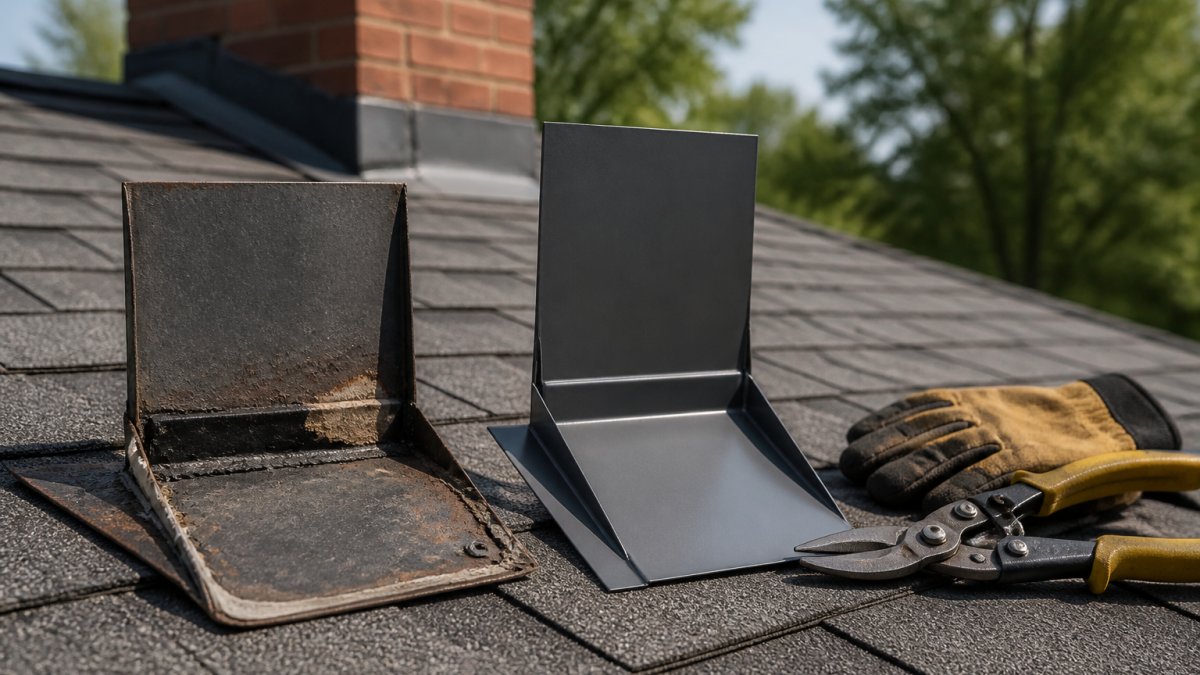
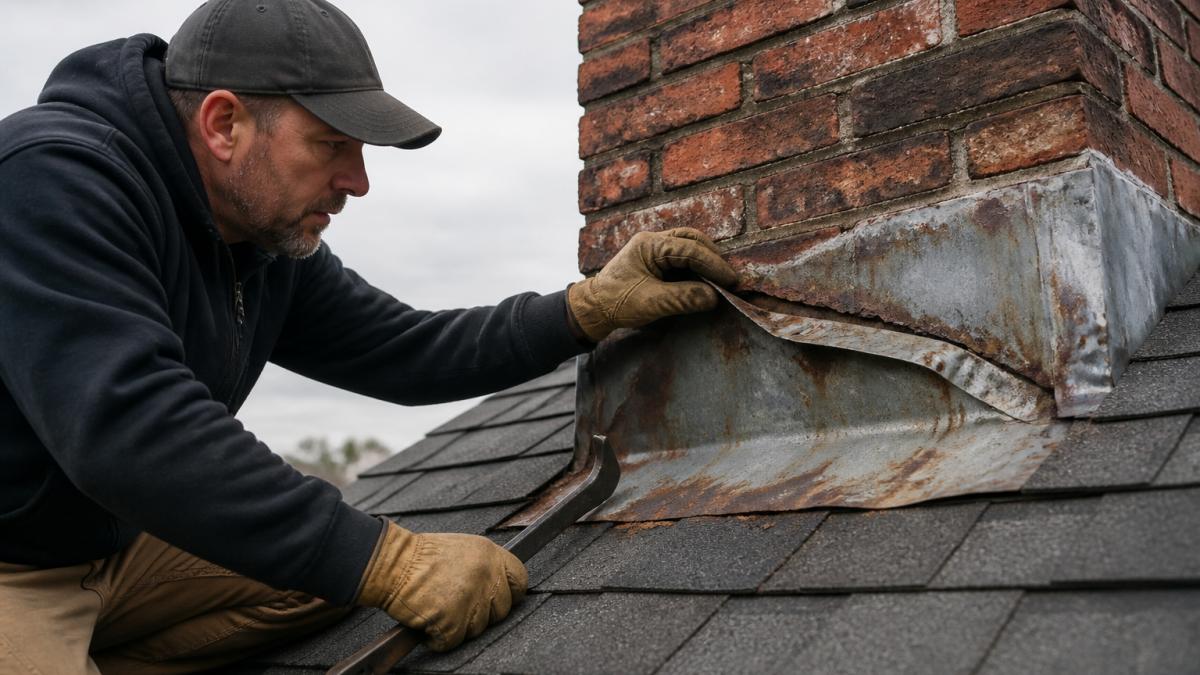
- Rust streaks or orange staining on metal flashing
- Cracked, peeling, or missing caulking along seams
- Lifted or curled metal edges that no longer sit flat
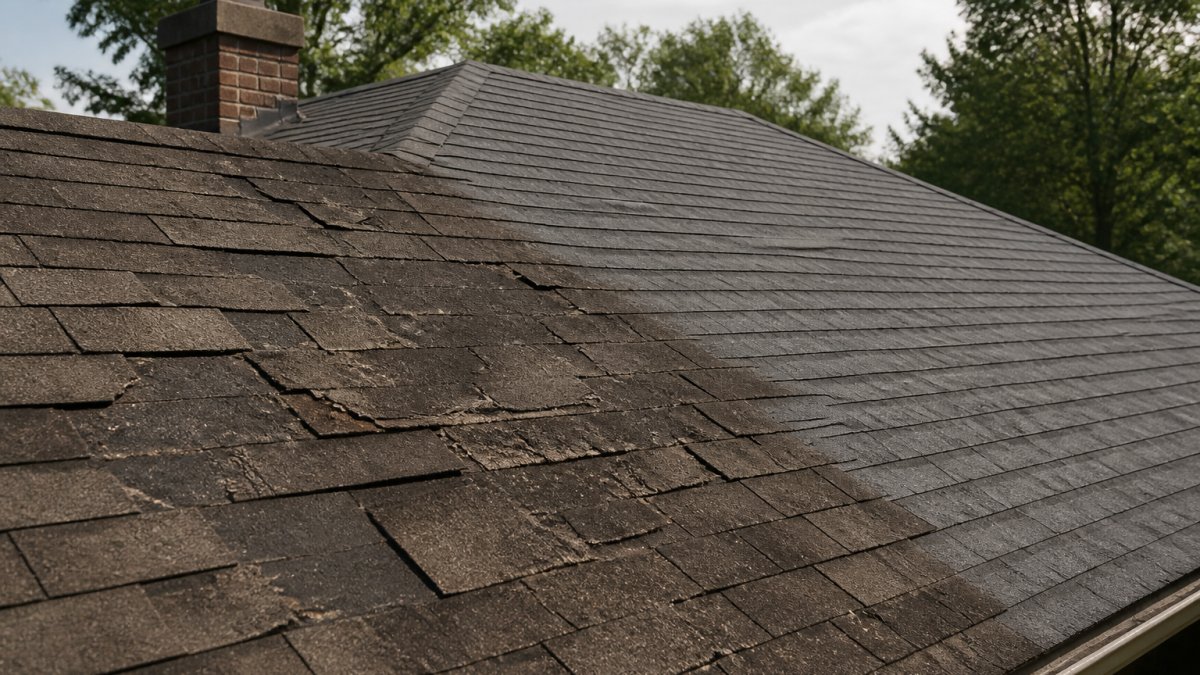
- Granule loss or shingle deterioration right beside the flashing
- Water stains on chimney brick, attic decking, or ceiling drywall
Material-Specific Warning Signs
Different flashing materials age differently, and that changes what you're looking for. Galvanized steel develops white or red rust as its coating breaks down. Copper patinas to green and can pit over decades. Aluminum corrodes in coastal or polluted air. Roofing underlayment beneath the flashing matters too: if it's torn, water reaches the deck even when the metal looks fine.
A common mistake is sealing over corroded flashing with fresh caulk. It hides the problem for a season and traps moisture underneath.
How to Identify Storm Damage on Your Roof
Storm damage shows up as fresh dents, lifted edges, and displaced shingles, not the slow wear of age. Knowing how to identify storm damage on your roof matters because insurance adjusters draw a hard line between storm damage and wear and tear.
Hail and Wind Impacts
Hail leaves telltale dents in soft metal flashing, valley metal, and vent caps. Wind gets under lifted flashing edges and peels them back, breaking the seal that keeps water out. After a storm, look for:
- Dings or dimples in metal flashing and gutters
- Shingles torn or creased near ridges and valleys
- Flashing pulled away from the chimney or wall
- Fresh granules in gutters and at downspout outlets
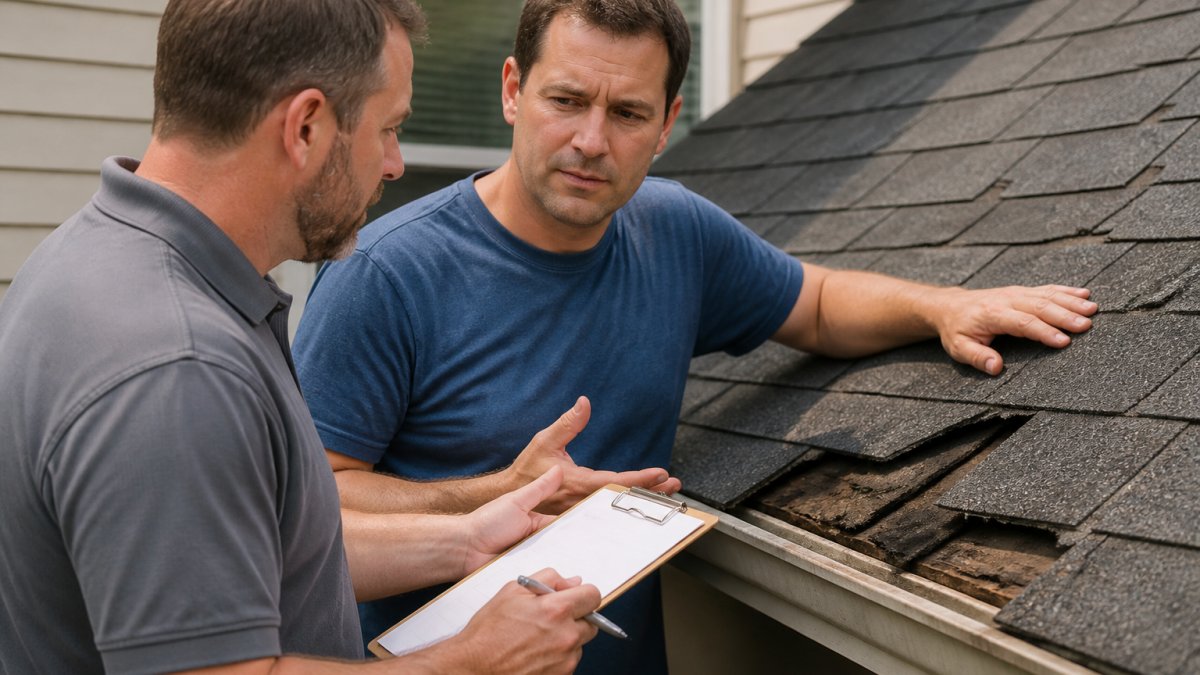
Document everything with photos and the date. If your insurer calls the damage wear and tear, a roofing contractor can inspect and document what the adjuster may have missed.
When Repair Makes Sense
Repair makes sense when flashing damage is isolated, the roof is relatively young, and the surrounding shingles are intact. A single failed pipe boot, a loose counter flashing, or a cracked sealant line is a targeted fix, not a roof-wide problem.
Repair also wins when the roof pitch and material allow safe, clean access to the damaged area. On a simple gable roof with asphalt shingles, replacing one section of step flashing is straightforward. The repair preserves sound materials and avoids the cost of tearing off a roof that still has years left.
When Full Replacement Is the Better Choice
Full replacement is the better choice when flashing failure is a symptom of a failing roof system, not the whole problem.
Age drives this decision more than any single defect. A roof past 20 years with failing flashing rarely justifies a patch, because the next failure is already forming nearby.
One more factor most guides skip: warranty implications. Patching a roof that's still under a manufacturer's warranty can void coverage if the repair isn't done to installation standards. Replacement resets the system.
Average Cost of Roof Flashing Repair in 2026
Flashing repair pricing is not a single number, and any article that hands you one is guessing. What you can budget against is a range by job type, plus the handful of variables that push a job to the top or bottom of that range.
| Job Type | Typical Installed Cost | What Drives the Price |
|---|---|---|
| Pipe boot / vent flashing (single) | $150 - $450 | Boot size, pipe diameter, shingle match |
| Step flashing run (per wall section) | $300 - $800 | Wall length, number of courses, siding removal |
| Valley flashing section | $400 - $1,200 | Open vs. closed valley, pitch, shingle tear-off |
| Chimney flashing rebuild | $500 - $1,500 | Masonry condition, counter-flashing cut-in, height |
| Drip edge replacement (full perimeter) | $300 - $700 | Linear feet, fascia condition, gutter re-set |
| Full flashing replacement tied to a new roof | $1,000 - $3,000 added to roof cost | Deck condition, number of penetrations, material upgrade |
Those ranges assume the surrounding shingles are sound and reusable. The moment a crew has to remove and replace shingles to reach the flashing, labor climbs because matching discontinued shingle lines is difficult and the repair footprint grows.
The Cost Drivers That Actually Move the Number
- Access and pitch. A two-story chimney on a 10/12 pitch takes longer to stage and secure than a single-story pipe boot on a 4/12. Labor, not material, is the majority of most flashing bills.
- Material match. Copper and lead flashing cost several times what galvanized steel does, and a repair that mixes metals incorrectly causes galvanic corrosion. If your existing flashing is copper, expect a material premium.
- Deck condition. Soft or rotted sheathing found under the flashing adds carpentry time. A small area of rot is a modest add; widespread rot changes the math toward replacement.
- Permits and inspection. Some jurisdictions require a permit for flashing work tied to structural repair. That fee and the inspection scheduling add to the total.
- Season and scheduling. Emergency tarping and storm-season demand carry premium pricing. A scheduled repair in a slow month is cheaper than an emergency call after a leak appears.
Repair vs. Replacement: The Break-Even Math
A useful rule of thumb: if the quoted repair exceeds a significant percentage of the cost of a full roof replacement and the roof is already past 15 years old, replacement usually wins on a cost-per-year basis.
Conversely, a pipe boot replacement on a relatively young roof is almost always the right call. The surrounding shingles have a decade or more of life left, and the repair preserves them.
Get at least two written estimates. Pricing for the same scope varies widely by contractor, and a written scope protects you if the job turns out to be larger once the shingles are opened up.
Warranty and Insurance Considerations
Most guides treat warranty as a footnote. In practice, warranty rules are the single most overlooked factor in the repair-vs-replacement decision, and getting them wrong can cost you coverage on a roof you already paid to protect. Two separate warranties are in play, and they behave differently.
Manufacturer Warranty: Why Partial Repairs Can Void Coverage
Roofing manufacturers sell system warranties, not piece-part warranties. The coverage is conditioned on the roof being installed as a complete system using that manufacturer's components, including underlayment, flashing, and fasteners.
This matters most on roofs still inside their warranty period. A homeowner who patches a leak to save a few hundred dollars may unknowingly void coverage on a roof that still has years of protection left.
Workmanship warranties are separate. A contractor's own warranty typically covers installation defects for a set period, and it usually requires that the contractor performed the repair. DIY or third-party repairs generally void it.
Material Compatibility: The Failure Mode Nobody Warns You About
Mixing dissimilar metals is one of the most common causes of premature flashing failure, and it is almost never mentioned in repair-vs-replace articles. When two different metals sit in contact in the presence of moisture, galvanic corrosion begins: the more active metal sacrifices itself to the less active one.
Before any repair, confirm what your existing flashing is made of and specify a compatible replacement. If the existing flashing is copper, the repair should be copper. If it is galvanized steel, use galvanized steel or a properly isolated compatible metal.
Insurance: Storm Damage vs. Wear and Tear
Homeowners insurance generally covers sudden, accidental damage from a covered peril, such as hail or wind, and excludes damage that developed gradually through wear, corrosion, or poor maintenance.
What strengthens a claim:
- Date-stamped photos of dents, lifted edges, or displaced flashing taken immediately after the storm.
- A contractor's written inspection that ties the damage to a specific storm event and distinguishes it from pre-existing wear.
- Documentation of the flashing's age and condition before the storm, if available from a prior inspection.
What weakens a claim: a history of deferred maintenance, prior DIY patches, or a gap between the storm date and the date you reported the damage. Insurers scrutinize all three.
If a claim is denied as wear and tear, a re-inspection by a qualified contractor can sometimes surface storm indicators the first adjuster missed.
Verify a contractor's license and complaint history
Conclusion
Flashing leaks rarely announce themselves, and the wrong call, patching a failing roof or replacing a sound one, costs you either way. The right answer depends on damage scope, roof age, and warranty rules, not guesswork.
That's where Leitch Roofing comes in. We provide expert residential and commercial roofing services, use quality materials and skilled crews, and offer specialized insurance claim assistance to take the friction out of the process. Get a free estimate today and know exactly which path your roof needs.
Frequently Asked Questions
Should you replace flashing when replacing a roof?
Yes, most roofing professionals recommend replacing flashing when installing a new roof. Old flashing may already have hidden corrosion or sealant degradation, and reusing it can void manufacturer warranties on new shingles. Since flashing is a critical moisture barrier, new flashing ensures your roof system performs as intended and reduces the risk of water infiltration down the line.
What is the average cost to replace roof flashing?
The cost of roof flashing repair varies depending on the extent of damage and material. Full flashing replacement costs more than isolated repairs because it involves removing and reinstalling surrounding shingles and underlayment. Pricing varies by roof pitch, accessibility, and local labor rates. For an accurate estimate, contact a licensed roofing contractor.
Is repair a better option than replacement?
Repair is often the better option when damage is isolated to a small section of flashing and the roof is under 15 years old. If the flashing failure is widespread, the roof is aging, or multiple areas show corrosion or shingle deterioration, full replacement provides better long-term value. A professional roof inspection can help you make the right call.
How do I know if my roof flashing is damaged?
Common signs of roof flashing failure include water stains on ceilings or walls, rust or corrosion on metal flashing, cracked or peeling sealant, missing flashing pieces, and granules from shingles collecting in gutters. You may also notice leaks near chimneys, vents, or valleys. If you spot any of these, schedule a roof inspection promptly to prevent further water damage.
Can roof flashing be repaired without replacing the shingles?
In some cases, flashing can be repaired without removing shingles, especially if the damage is limited to sealant or small sections of step flashing. However, proper repairs often require lifting or removing adjacent shingles to access and replace the flashing correctly. A qualified roofing contractor can assess whether a targeted repair is feasible or if shingle removal is necessary.