 ultimate-guide
Residential Roof Replacement Cost Guide 2026
Table of Contents
- What Drives Residential Roof Replacement Cost
- Average Cost of Roof Replacement Per Square Foot
- Asphalt Shingle vs Metal Roof Cost: Which Makes Sense for Your Home
- Hidden Costs Most Homeowners Overlook
- Roof Replacement Insurance Claim Process: What to Expect
- Signs You Need a Roof Replacement Now
- How to Get an Accurate Roof Replacement Cost Estimate
- Frequently Asked Questions
Last Updated: August 23, 2026
Planning a roof replacement is one of the largest home improvement decisions most homeowners will face. Understanding the true cost before you call a contractor can save you thousands of dollars. At Leitch Roofing, we provide expert residential and commercial roofing services, and we know that the biggest mistake homeowners make is going into contractor conversations without a baseline understanding of what drives pricing. Below, we break down every cost factor, material option, and hidden expense so you can negotiate from a position of knowledge.
What Drives Residential Roof Replacement Cost
Roof replacement cost is the total expense of removing an existing roofing system and installing a new one, including materials, labor, permits, and disposal. No two projects are priced the same because no two roofs are the same.
Roof Size, Pitch, and Complexity
Square footage is the most obvious cost driver, but pitch and complexity matter equally. A steep roof requires more safety equipment, slower installation, and greater physical effort. A roof with multiple valleys, dormers, skylights, or chimneys demands more precise cutting, additional flashing work, and longer labor hours.
Roof pitch is measured as rise over run. A low-slope roof at 4:12 pitch is far easier to work on than a steep 10:12 pitch. Contractors typically add a complexity surcharge for anything above 7:12 pitch, and that surcharge can be significant per roofing square.
Structural integrity also matters. If roof decking has rotted or warped from water damage, it must be replaced before new materials go down, adding both material costs and labor hours.
Labor Costs, Tear-Off, and Disposal Fees
Labor typically represents a substantial share of any roofing project's total price. The tear-off process, removing old shingles, underlayment, and flashing down to the decking, is physically demanding work often billed separately.
Disposal fees are frequently overlooked. Roofing materials are heavy, and hauling away old asphalt shingles, metal panels, or tile requires dumpster rental or truck hauls. Some contractors bundle this into their quote; others line-item it. Always ask.
Building permits are another cost that surprises homeowners. Most jurisdictions require a permit for full roof replacement. Permit fees vary by municipality, and skipping the permit to save money creates serious liability issues when you sell the home or file an insurance claim.
Average Cost of Roof Replacement Per Square Foot
Average roof replacement cost per square foot varies based on material choice, regional labor rates, roof complexity, and project scope. Getting a detailed contractor estimate is the only reliable way to price your specific project.
Roofing Squares Explained
A roofing square is a unit of measurement equal to 100 square feet of roof surface. Contractors price materials and labor in roofing squares. A 2,000-square-foot home doesn't have a 2,000-square-foot roof; the actual roof surface is larger because it accounts for pitch and overhang. A common rule of thumb is that the roof surface runs 30-50% larger than the home's footprint, depending on pitch.
Understanding roofing squares helps you read contractor estimates accurately and verify the math.
Regional Pricing Differences
Labor markets drive significant regional variation in roof replacement pricing. Areas with higher costs of living, stronger union presence, or severe weather demand tend to command higher labor rates. Material shipping costs also vary by region, with specialty materials carrying higher freight costs to rural areas.
According to the National Roofing Contractors Association's industry resources, regional labor markets are one of the primary reasons identical homes in different states see dramatically different roofing bids.
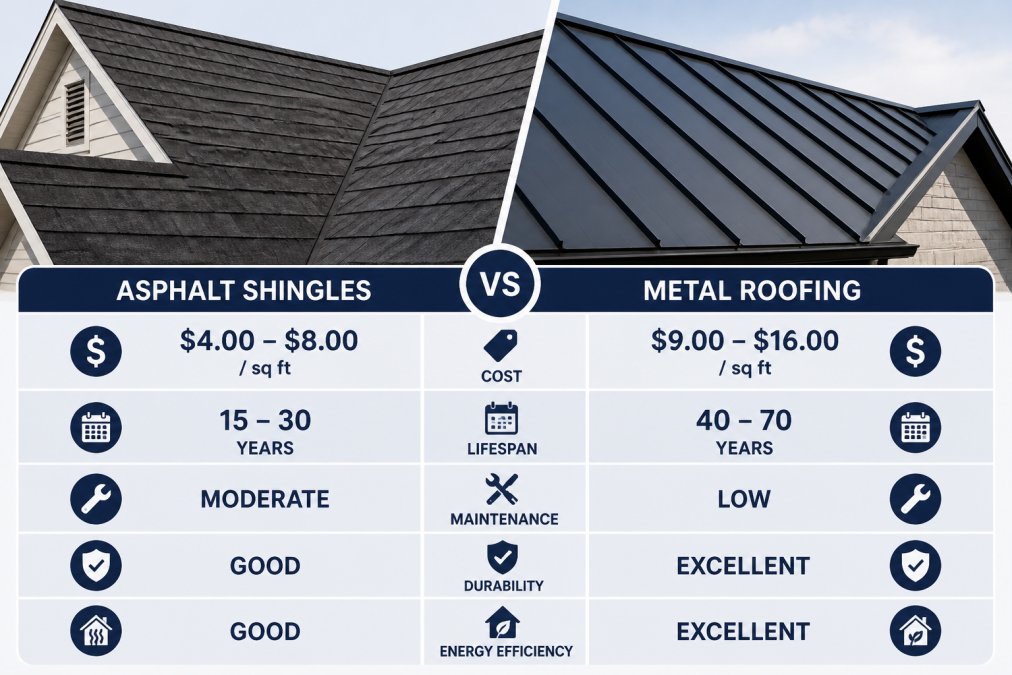
Asphalt Shingle vs Metal Roof Cost: Which Makes Sense for Your Home
The asphalt shingle vs metal roof cost comparison is the decision most homeowners get stuck on, and the right answer depends on how long you plan to stay in the home, your climate, and your budget.
Asphalt Shingles and Architectural Shingles
Asphalt shingles remain the most widely installed roofing material because they offer a reasonable balance of upfront cost, aesthetic variety, and serviceable lifespan. Standard three-tab shingles are the entry-level option. Architectural shingles are thicker, carry better wind and impact ratings, and typically come with longer warranties.
For most homeowners replacing a storm-damaged or aging roof, architectural shingles are the practical choice. They cost more upfront, but the warranty improvement and added curb appeal make the gap worthwhile. Quality underlayment and ventilation also affect long-term performance; a quality installation will outlast a budget installation by years.
Metal Roofing, Slate Tiles, and Clay Tiles
Metal roofing carries higher upfront cost than asphalt shingles, but the math changes when you factor in lifespan. A standing-seam metal roof can last 40-70 years with minimal maintenance. For homeowners planning long-term ownership, the higher initial investment often makes financial sense.
Slate tiles and clay tiles sit at the premium end of the roofing materials spectrum. Both offer exceptional longevity, with properly installed slate lasting over a century. The trade-off is cost: both are significantly more expensive per roofing square than asphalt or metal, and not every roof structure can support the added weight without reinforcement.
| Material | Typical Lifespan | Key Advantage | Best For |
|---|---|---|---|
| 3-Tab Asphalt Shingles | 15-20 years | Lowest upfront cost | Short-term ownership |
| Architectural Shingles | 25-30 years | Better warranty, curb appeal | Most homeowners |
| Metal Roofing | 40-70 years | Long lifespan, low maintenance | Long-term ownership |
| Slate Tiles | 75-100+ years | Premium durability | High-budget, permanent homes |
| Clay Tiles | 50-100 years | Aesthetic, fire resistance | Warm climates, style-focused |
Hidden Costs Most Homeowners Overlook
The estimate you get from a roofing contractor is rarely the final number. Here's a practical checklist of hidden costs to ask about before signing any contract:
- Decking replacement: Rotted or damaged roof decking discovered during tear-off is billed as extra. Ask how contractors handle this discovery and what they charge per sheet.
- Flashing replacement: Old flashing around chimneys, skylights, and valleys is often reused to save money, but failing flashing is a leading cause of post-replacement leaks. Confirm whether new flashing is included.
- Ventilation upgrades: Improper attic ventilation shortens shingle life significantly. If your current system is inadequate, correcting it adds cost but protects your warranty.
- Drip edge installation: Some contractors omit drip edge to cut costs. It's required by most building codes and protects your fascia from water damage.
- Permit fees: Ask specifically whether permits are included or billed separately.
- Dumpster or disposal fees: Confirm whether tear-off debris removal is included.
- Ice and water shield: In freeze-thaw climates, this protective underlayment layer is code-required in vulnerable areas. Confirm it's spec'd in the proposal.
Reviewing the spec sheet line by line is how you avoid paying for surprises.
Roof Replacement Insurance Claim Process: What to Expect
The roof replacement insurance claim process starts the moment you discover damage. Document everything with photos and video before any temporary repairs are made.
Your insurer will assign an adjuster to inspect the damage. The adjuster works for the insurance company, not for you. Their job is to assess the claim accurately, but their interpretation may not align with yours, particularly when damage is borderline or the roof is older.
According to the Insurance Information Institute's homeowner guidance, policyholders have the right to request a re-inspection if they disagree with an adjuster's findings. A qualified roofing contractor can accompany you during the re-inspection and document damage the adjuster may have missed.
When the Adjuster Says 'Wear and Tear'
This scenario frustrates homeowners most. The adjuster attributes damage to normal aging rather than a covered storm event, and the claim is denied or sharply reduced.
Most homeowner insurance policies cover sudden, accidental damage from storms, hail, and wind. They exclude gradual deterioration. A storm can accelerate existing wear, and adjusters sometimes characterize storm-accelerated damage as pre-existing.
What to do:
- Request the adjuster's written report and the specific policy language cited in the denial.
- Have a roofing contractor inspect the roof independently and document storm-specific indicators: hail strikes with consistent directionality, granule loss patterns consistent with impact, or bruising on shingles that indicates hail rather than aging.
- File a formal dispute with your insurer using the contractor's documentation.
- If the dispute stalls, your state's Department of Insurance handles complaints and can intervene. The National Association of Insurance Commissioners' consumer resources provides state-by-state contact information for insurance regulators.
Leitch Roofing offers specialized insurance claim assistance to help homeowners navigate the adjuster process with documentation that stands up.
Signs You Need a Roof Replacement Now
Some roofs need repair. Some need full replacement. Knowing the difference before you call a contractor prevents you from paying for a patch job on a roof that's already failing systemically.
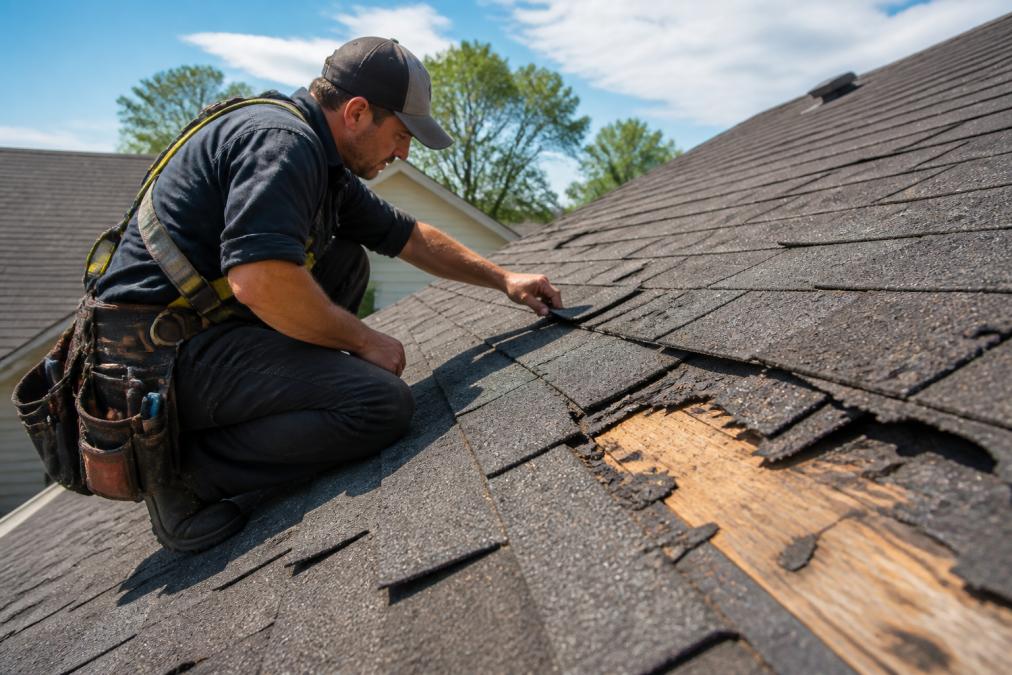
Replacement is the right call when you see multiple indicators appearing together:
- Curling or buckling shingles: Shingles that curl at the edges or buckle in the middle have lost their structural integrity.
- Granule loss in gutters: Heavy granule accumulation indicates the shingle surface is degrading. Granules protect the asphalt core from UV exposure; without them, the shingle fails quickly.
- Daylight through the attic: If you can see daylight through the roof boards from inside the attic, the decking and roofing system have failed.
- Sagging roof deck: Any visible sagging between rafters indicates structural damage, often from long-term moisture intrusion.
- Repeated leaks after repairs: A roof that leaks in multiple locations despite previous repairs has failed as a system.
- Age: Architectural shingles approaching 25-30 years, or three-tab shingles past 20 years, are candidates for proactive replacement.
A roof inspection before purchasing a home is equally critical.
How to Get an Accurate Roof Replacement Cost Estimate
Getting an accurate roof replacement cost estimate requires more than calling three contractors and picking the middle bid.
Step 1: Request itemized written estimates. Every quote should break out materials (by type and manufacturer), labor, tear-off, disposal, permits, and any identified repairs to decking or flashing.
Step 2: Verify contractor credentials. Confirm the contractor carries general liability insurance and workers' compensation coverage. Ask for the certificate of insurance directly. According to the Occupational Safety and Health Administration's roofing safety guidelines, roofing is among the highest-risk construction trades, and uninsured crews create direct liability exposure for homeowners.
Step 3: Check manufacturer certifications. Many shingle manufacturers offer extended warranties only when the product is installed by a certified contractor. Ask whether the contractor holds certification from the manufacturer whose shingles they're proposing.
Step 4: Ask about seasonal timing. Roofing contractors are busiest after major storm events and during peak seasons. Scheduling a replacement during slower periods can sometimes result in better crew availability and more competitive pricing.
Step 5: Compare warranties, not just price. A lower bid with a one-year workmanship warranty is not the same value as a higher bid backed by a ten-year warranty. The warranty is where contractor confidence shows.
The lowest bid is almost never the best value. The contractor cutting price is usually cutting something in the spec: cheaper underlayment, reused flashing, or a smaller crew that rushes the job.
Replacing a roof is a significant investment, and the gap between a well-managed project and a costly mistake often comes down to who you hire and how informed you are going in. Leitch Roofing provides expert residential and commercial roofing services, works with quality materials and skilled crews, and offers specialized insurance claim assistance to help homeowners navigate the adjuster process with documentation that stands up. Get a free estimate from Leitch Roofing and go into your project knowing exactly what you're getting.
Frequently Asked Questions
How much does a 2,000 sq. ft. shingle roof cost on average?
The total roof replacement cost for a 2,000 square-foot home depends on the roofing material, local labor rates, roof pitch, and whether tear-off of old shingles is required. Because pricing varies significantly by region and project complexity, the best way to get an accurate number is to request a detailed contractor estimate that itemizes material costs, labor costs, disposal fees, and underlayment. Get a free estimate to see what your specific project will run.
What factors influence the total price of a roof replacement?
Roof size measured in roofing squares, pitch or slope, material choice (asphalt shingles, metal roofing, slate tiles, or clay tiles), local labor costs, tear-off and disposal fees, flashing replacement, ventilation upgrades, and building permit fees all affect the final price. Roof decking condition matters too, damaged decking discovered during tear-off adds cost that most initial estimates do not include. A thorough roof inspection before work begins reduces surprise charges.
Is $30,000 a reasonable quote for a residential roof replacement?
It can be, depending on roof size, pitch, and material. A steep, large roof replaced with metal roofing or slate tiles can reach or exceed that figure. For a standard home with architectural asphalt shingles, a quote that high warrants a second opinion and a line-item breakdown. Ask the contractor to separate material costs, labor costs, disposal fees, and permit fees so you can see exactly where the money goes before signing anything.
What should homeowners know about the insurance claim process for roof replacement?
File your claim promptly after storm damage, most homeowner policies require timely reporting. Document damage with photos before any temporary repairs. An adjuster will inspect, but their initial finding is not final. If the adjuster attributes damage to wear and tear rather than a covered event, a roofing contractor experienced with insurance claims can provide a supplemental inspection report and work with your insurer to dispute the decision. Keep all correspondence and estimates on file throughout the process.
How does asphalt shingle vs metal roof cost compare over time?
Asphalt shingles, including architectural shingles, cost less upfront and are the most common residential roofing material. Metal roofing costs more initially but typically carries a longer warranty and can lower cooling costs by reflecting heat, offering an energy efficiency return over time. The right choice depends on your home improvement budget, how long you plan to stay in the home, and your local climate. A contractor estimate for both options lets you compare the numbers directly.
How long does a typical roof replacement take?
Most residential roof replacements finish in one to three days for a standard-sized home with asphalt shingles, assuming no significant roof decking damage is found during tear-off. Larger roofs, steep pitches, or premium materials like metal roofing or slate tiles extend the roof replacement timeline. Weather delays are common, so build a buffer into your schedule. Your roofing contractor should give you a written project timeline before work begins.