 ultimate-guide
Average Roof Insurance Claim Deductible: 2026 Guide
Table of Contents
- What the Average Roof Insurance Claim Deductible Actually Costs in 2026
- Percentage-Based vs Flat-Rate Deductible: Which One Do You Have?
- The Roof Insurance Claim Process, Step by Step
- How to Fight a Roof Insurance Denial
- Deductible Waivers and the Legal Risk Contractors Do Not Mention
- When to File a Claim vs Pay Out of Pocket
- Frequently Asked Questions
Last Updated: September 14, 2026
What the Average Roof Insurance Claim Deductible Actually Costs in 2026
There is no single national average roof insurance claim deductible, because the amount you owe depends on your policy structure, your home's value, and where you live. At Leitch Roofing, we help homeowners understand their deductible, and the honest answer is that a flat-rate deductible might sit in the low four figures while a percentage-based one can climb much higher on the same roof. This guide breaks down how deductibles actually work, how to calculate yours from your declarations page, and when paying out of pocket beats filing a claim. Most guides stop at the definition. We go further, into the legal traps and the inflation problem that quietly raised what you owe.
Why There Is No Single National Average
Insurers set deductibles by risk, not by a national formula. A home in a hail-prone county carries a different wind and hail deductible than one two states away. Property valuation, roof age, and local construction costs all feed into the number, so any "average" you see online is a rough starting point at best. The real figure lives on your declarations page.
How Inflation Has Pushed Deductibles Higher
Roof replacement cost has risen steadily, and percentage-based deductibles move with it. A 2% deductible on a home valued higher than it was three years ago now costs more in real dollars, even though the percentage never changed. That is the part most homeowners miss: inflation raises your share automatically, without any change to your policy language.
Percentage-Based vs Flat-Rate Deductible: Which One Do You Have?
A flat-rate deductible is a fixed dollar amount you pay before coverage kicks in. A percentage-based deductible is calculated as a percentage of your dwelling coverage limit, not the repair bill. The difference matters enormously on a roof claim.
| Deductible Type | How It's Calculated | Best For | Watch Out For |
|---|---|---|---|
| Flat-rate | Fixed dollar amount | Stable, predictable budgeting | Higher premiums |
| Percentage-based | % of dwelling coverage | Lower premiums in low-risk areas | Bigger out-of-pocket hit on large claims |
| Wind/hail specific | Separate % for storm perils | Coastal and storm-belt homes | Applies even on modest damage |
If your policy lists a separate wind and hail coverage deductible, that is the one that governs most storm claims, not your general deductible.
How to Calculate Your Roof Deductible from Your Declarations Page
Find your dwelling coverage limit and your percentage-based deductible on the declarations page. Multiply the coverage limit by the percentage. If your dwelling coverage is set at a certain figure and your wind/hail deductible is 2%, your out-of-pocket responsibility is that percentage of the coverage limit, regardless of what the repair estimate says. A claims adjuster will apply the same math. Knowing it before you file prevents surprises.
The Roof Insurance Claim Process, Step by Step
The roof insurance claim process runs from damage documentation to final payout, and skipping steps is the fastest way to a denial. Here is how it works in practice.
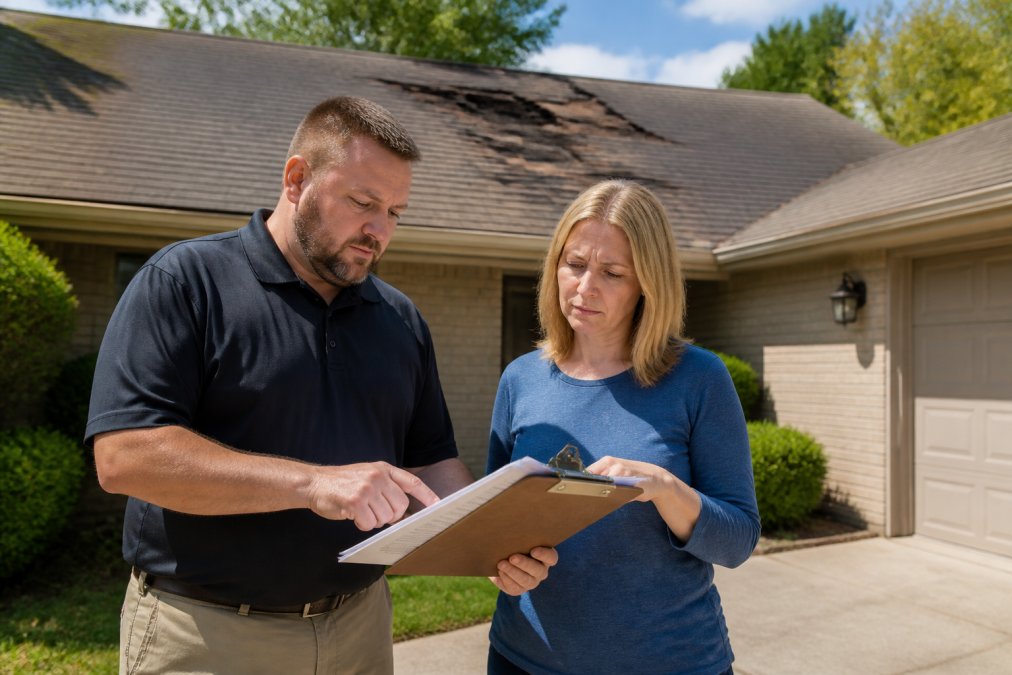
- Document the damage with dated photos before any temporary repairs.
- File the claim and get your claim number in writing.
- Schedule the adjuster inspection and be present if you can.
- Get an independent repair estimate from a licensed contractor.
- Compare the adjuster's scope against the contractor estimate.
- Negotiate supplements for anything the adjuster missed.
- Complete repairs and submit the contractor invoice for payout.
How to Fight a Roof Insurance Denial
You can fight a roof insurance denial by requesting the denial in writing, reviewing the cited policy language, and submitting a rebuttal with independent evidence. Denials often cite wear and tear or coverage exclusions rather than the actual storm damage. A licensed contractor's report, dated photos, and a second opinion on cause can reverse a denial that was based on a rushed inspection.
The key is documentation. Insurers respond to evidence, not frustration. If the denial stands after your rebuttal, most states offer an appraisal clause or a department of insurance complaint process. National Association of Insurance Commissioners consumer resources explains how to file a complaint with your state regulator when an insurer will not budge.
Deductible Waivers and the Legal Risk Contractors Do Not Mention
A deductible waiver is any arrangement where a contractor agrees to absorb, discount, or "cover" your deductible so you owe nothing out of pocket. It is one of the most common pitches in storm-damage roofing, and it is also one of the most reliable ways to turn a legitimate claim into a criminal exposure for the homeowner.
The reason is structural, not moral. Your deductible is a contractual obligation you owe to your insurer under the policy. It is not a negotiable line item between you and a contractor. When a roofer offers to "eat" it, one of three things is usually happening behind the scenes:
- The claim is inflated. The contractor pads the scope, extra squares, upgraded underlayment, unnecessary decking, so the insurer's payout covers the deductible plus profit. You sign the scope, so you sign the misrepresentation.
- The deductible is buried in the contract price. The invoice shows a number that nets out to the full claim, and the "waiver" is really a discount financed by the padded estimate.
- A lien or financing agreement replaces the deductible. You still owe the money; it has just been moved to a payment plan with interest.
Most states treat a deductible waiver as insurance fraud, and many have statutes that specifically prohibit advertising one. The FBI guidance on insurance fraud classifies inflated claims as a criminal matter, and policyholders who sign a false scope can be named as parties even when the contractor originated the scheme. Penalties range from claim denial and policy cancellation to civil liability for the inflated amount and, in serious cases, criminal charges.
How to Spot a Waiver Offer Before You Sign
Red flags that show up in real contracts:
- Language like "we pay your deductible," "no out-of-pocket cost," or "we work with your insurance so you pay nothing."
- A scope of work presented for signature before the adjuster has finished the inspection.
- A request to sign a contingency agreement, an Assignment of Benefits (AOB), or a Direction to Pay on the first visit.
- A price that exactly equals the insurer's estimate plus your deductible.
- Pressure to file a claim when you have no visible damage.
A legitimate roofer will put your deductible in writing as your responsibility, wait for the adjuster's scope before finalizing numbers, and never ask you to sign an AOB to start an estimate.
What to Do If You Have Already Signed
If you have already signed a contract with a waiver clause, act before the claim is paid:
- Request a copy of everything you signed, in writing.
- Notify your insurer's claims adjuster that a waiver was offered, in writing, and keep the email.
- Contact your state department of insurance, the National Association of Insurance Commissioners consumer resources lists the complaint process for every state regulator.
- If the contractor has already filed a padded claim in your name, consult a consumer-protection attorney before the payout is issued.
The honest version of this conversation is simple: your deductible is yours to pay.
When to File a Claim vs Pay Out of Pocket
The math on filing a roof claim has changed in the last several years, and most homeowners are still using the old rule of thumb. Two forces moved the break-even point: percentage-based deductibles that rise automatically with dwelling coverage, and the claims-history surcharges insurers now apply at renewal.
The Break-Even Math
Start with your deductible in dollars, not percent. If your dwelling coverage limit is $400,000 and your wind/hail deductible is 2%, your out-of-pocket floor is $8,000, before the insurer pays a dollar. A repair estimate of $9,500 does not clear that floor by enough to justify a claim. A repair estimate of $22,000 does.
A workable rule to consider:
- Repair under 1.5x your deductible: pay out of pocket. The claim will cost more in premium than it recovers.
- Repair between 1.5x and 2.5x your deductible: run the numbers against your specific policy. This is the gray zone.
- Repair above 2.5x your deductible: file the claim. The recovery is large enough to absorb a renewal surcharge.
These are not published thresholds. Your policy's specific surcharge schedule is the only number that matters for your house.
The Claims-History Cost Nobody Quotes You
A filed claim, even one that pays nothing, stays on your loss history for years. Most insurers report to the Comprehensive Loss Underwriting Exchange (CLUE), a database that other carriers pull when you shop for coverage. Two effects follow:
- Renewal surcharge. A single non-weather claim commonly raises premiums at renewal; a second claim in a short window can raise them sharply or trigger non-renewal.
- Shopping penalty. When you switch carriers, the new insurer sees the claim on your CLUE report and prices it in. You cannot leave the claim behind by changing companies.
This is why a $4,000 repair against an $8,000 deductible is almost never worth filing. You would be paying the full repair out of pocket anyway, and you would be buying a multi-year premium penalty for nothing.
How the Shift to Percentage Deductibles Changes the Decision
When deductibles were flat-rate, the break-even was stable. A $1,000 deductible meant a $1,000 floor every year. Percentage-based deductibles are different: they move with your dwelling coverage limit, and dwelling coverage limits have been rising with construction costs. A 2% deductible on a home that was insured for $300,000 three years ago was $6,000. On the same home now insured for $400,000, the same 2% is $8,000. The percentage did not change. Your share did.
The practical consequence: the repair amount that used to justify a claim may no longer clear your deductible. Re-run the math every year at renewal, not once when you buy the policy.
Factors That Push the Decision Either Way
File the claim when:
- Damage is from a single covered peril, wind, hail, fallen tree, and is clearly storm-related.
- The repair estimate is well above 2.5x your deductible.
- You have no claims on the policy in the last three to five years.
- The damage is progressive, a small leak that will worsen and cause interior damage later.
Pay out of pocket when:
- The repair is close to or below your deductible.
- The damage is ambiguous, wear and tear, age, or maintenance, and likely to be denied.
- You have a recent claim on the policy and a second one risks non-renewal.
- You plan to sell the home within a few years and want a clean loss history.
A Note on Documentation Either Way
Even when you pay out of pocket, photograph the damage and keep the contractor invoice. If the same damage recurs after a later storm, the earlier documentation establishes that the new loss is separate, not a pre-existing condition the insurer can exclude.
At Leitch Roofing, we help homeowners understand this comparison, because a claim that should not have been filed can have long-term implications, and a claim that should have been filed but was not leaves you paying for damage your policy may cover.
Frequently Asked Questions
How much is a typical roof deductible?
There is no single national figure. A flat-rate deductible is a fixed dollar amount, while a percentage-based deductible is calculated from your dwelling coverage limit. For example, on a $300,000 policy, a 2% deductible equals $6,000. Wind and hail deductibles are often set higher than the standard all-peril amount, so check your declarations page for the exact figure that applies to your roof claim.
What is the difference between a flat-rate and percentage-based deductible?
A flat-rate deductible is a fixed dollar amount, such as $1,000, no matter what the claim costs. A percentage-based deductible is a percentage of your dwelling coverage limit, so it rises as your coverage and home value rise. Percentage deductibles are common in wind and hail coverage and in states exposed to severe storms. The type you carry changes your out-of-pocket expenses far more than the repair estimate itself.
Is it legal for a roofing contractor to waive my deductible?
A contractor who advertises that they will absorb or waive your deductible may be engaging in practices that could be considered insurance fraud, and you could be impacted as a policyholder. The waiver is often tied to an inflated repair estimate that the insurer may dispute. It is important to pay your deductible yourself and keep the contractor invoice as proof. If a company offers to waive it, treat that as a warning sign.
How do I fight a roof insurance denial?
Start by requesting the denial in writing with the specific policy language cited. Get an independent repair estimate and a licensed contractor's report that addresses the adjuster's stated reason, whether that is wear and tear or an excluded peril. Then file a formal appeal with your insurer, and if it is upheld, escalate to your state's department of insurance. Document every call and keep copies of all correspondence.
Can I negotiate my roof insurance deductible?
You cannot negotiate the deductible on an active claim; it is a fixed term of your policy. You can, however, change it at renewal. Raising a flat-rate deductible lowers your policy premium, while lowering it raises the premium. Before you switch, run the numbers against your roof's age and your area's storm history. A higher deductible only saves money if you rarely file claims.
How do wind and hail deductibles differ from standard deductibles?
Standard deductibles usually apply to most covered losses, including fire and falling objects. Wind and hail coverage often carries its own separate deductible, frequently expressed as a percentage of dwelling coverage rather than a flat dollar amount. That means a single hailstorm claim can cost you several thousand dollars out of pocket even though your standard deductible is much lower. Read the declarations page carefully.
Roof damage rarely waits for a convenient moment, and the deductible math can feel stacked against you. Leitch Roofing offers professional repair and replacement services, uses quality materials and skilled crews, and provides insurance claim assistance to take the guesswork out of the process. Get a free estimate today and let our team help you protect your home with durable, professional results.