 how-to
Why Roof Maintenance Prevents Costly Leaks
Table of Contents
- How Preventive Roof Maintenance Stops Leaks Before They Start
- Common Causes of Roof Leaks and How Maintenance Addresses Them
- How Often to Inspect a Roof for Early Detection
- Roof Inspection After a Storm: What to Look For
- Your Roof Maintenance Checklist: DIY Tasks and Professional Work
- The Cost of Neglect: Repair Versus Replacement
- Material-Specific Maintenance: Asphalt, Metal, Tile, and Flat Roofs
- Frequently Asked Questions
Last Updated: October 12, 2026
How Preventive Roof Maintenance Stops Leaks Before They Start
Understanding why roof maintenance prevents costly leaks is essential, since leaks are one of the most expensive problems a homeowner can face.
Why roof maintenance prevents costly leaks is straightforward: small problems become big ones quickly.
The math is simple. A roof inspection costs a few hundred dollars, resealing flashing less than a thousand, and replacing a few shingles is affordable.
Common Causes of Roof Leaks and How Maintenance Addresses Them
Most roof leaks trace back to a handful of problems you can spot during inspections.
Flashing Gaps and Sealant Deterioration
Flashing is the metal or rubber seal covering the seams where your roof meets chimneys, vents, skylights, and dormers. Flashing gaps and deteriorated sealant are among the most common leak sources.
Flashing directs water away from openings, but over time sealant cracks and shrinks, and metal can rust or pull away, letting water run straight through.
During inspections, check all flashing seals for cracks, gaps, or missing sealant.
Missing or Damaged Shingles
Shingles are your roof's first line of defense, shedding water and protecting the layers underneath. A missing or damaged shingle creates an opening.
Shingles fail for several reasons: high winds tear them loose, hail cracks them, tree branches break them, and age and UV exposure make them brittle.
Routine maintenance catches damaged shingles early. Replace them immediately. A few missing shingles are a quick fix.
Clogged Gutters and Poor Drainage
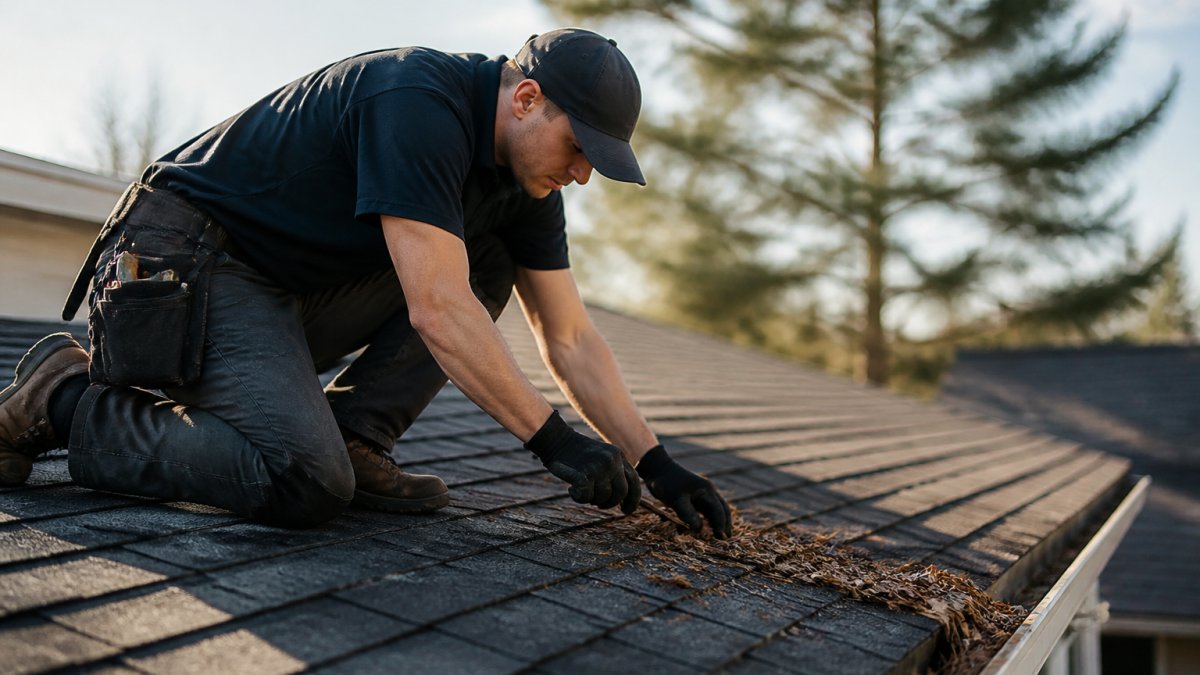
Gutters collect water from your roof and direct it away from your home. When they clog with leaves, debris, and dirt, water backs up, pools around penetrations, seeps under shingles, and runs down interior walls.
Poor drainage is a silent killer: water sitting on your roof constantly works to find a way inside. Clean gutters twice a year, spring and fall, and check downspouts so water flows freely away from your foundation.
How Often to Inspect a Roof for Early Detection
"Twice a year" is a fine baseline, but the right cadence depends on three variables most guides ignore: your climate, your roofing material, and the roof's age. A calendar tied to those variables catches problems while they're still cheap to fix.
A Seasonal Maintenance Calendar
Early spring (after the last freeze): The most important inspection in cold-winter climates. Freeze-thaw cycles open seams, lift flashing, and crack sealant.
Late summer (heat stress check): Prolonged UV exposure makes asphalt brittle and shrinks sealant.
Early fall (pre-winter): Clear gutters and downspouts completely. Confirm attic ventilation and insulation aren't trapping moisture.
After every major storm: Wind, hail, and falling limbs don't wait for the calendar.
Cadence by Roofing Material
- Asphalt shingles: Twice yearly, plus after storms. Past 15 years, move to three checks per year, since granule loss and sealant failure accelerate.
- Metal: Twice yearly, focused on fasteners, seams, and scratched or exposed panels where rust can start.
- Tile and slate: Twice yearly, plus a post-storm check for cracked or slipped pieces. Add a mid-summer debris clearing in tree-heavy areas.
- Flat and low-slope membrane: Three to four times per year. Ponding water, seam separation, and drain clogs progress faster than on pitched roofs.
Climate Adjustments
- Heavy snow and ice: Add a mid-winter visual check from the ground for ice dams and icicle buildup at the eaves.
- Coastal salt air: Inspect fasteners and metal flashing twice yearly for corrosion.
- High wind and hail corridors: Treat every significant storm as a trigger for a full inspection.
- Hot, dry climates: Watch for sealant shrinkage and UV-driven cracking; a late-summer check catches both.
Age-Based Escalation
A roof under 10 years old with no storm exposure can usually get by on the twice-yearly schedule. From 10 to 15 years, add an annual professional inspection.
Don't wait for a visible interior leak to trigger an inspection. By the time water shows up on a ceiling, the roof deck has usually been wet for weeks or months. Inspect on schedule, not on symptoms.
Roof Inspection After a Storm: What to Look For
Storms damage roofs. Wind tears shingles. Hail cracks them. Falling branches puncture them. After a major storm, inspect your roof for damage.
Look for these signs:
- Missing shingles, gaps where shingles have blown away
- Cracked or split shingles, hail impact damage or wind damage
- Lifted or curled shingles, edges peeling up, exposing the roof deck
- Granule loss, bald spots where the protective coating is gone
If you spot damage, document it with photos and contact your insurance company if the storm was severe. Get a professional inspection from a qualified roofing contractor rather than attempting major repairs yourself, a professional can identify hidden damage and ensure repairs are done correctly.
Your Roof Maintenance Checklist: DIY Tasks and Professional Work
Roof maintenance splits into two categories: tasks homeowners can safely do, and work that requires a professional.
What Homeowners Can Safely Check
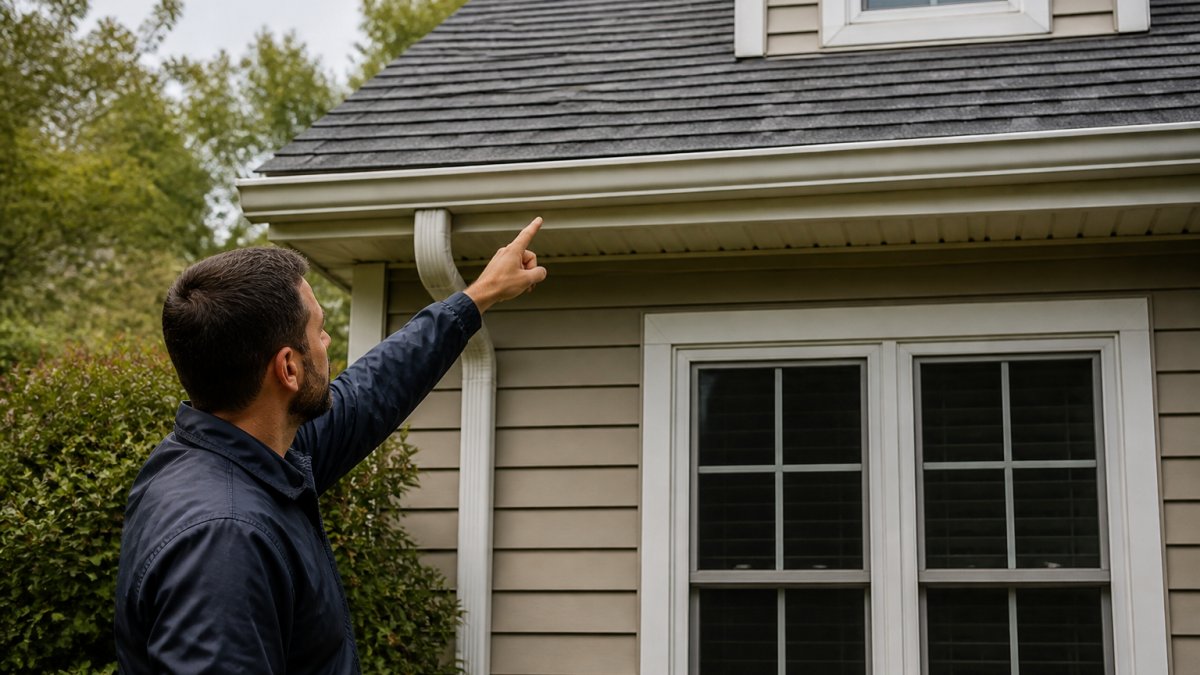
You don't need to climb on your roof for basic maintenance, many checks can be done from the ground or a ladder at the gutter line.
From the ground:
- Look for missing shingles or visible damage
- Check for debris on the roof
- Inspect gutters for clogs and debris
- Look for water stains on siding or fascia (wood trim at the roof edge)
From a ladder (if you're comfortable):
- Clean gutters and downspouts
- Remove leaves and debris
- Check flashing seals around vents and chimneys
- Look for cracked or curled shingles
Never do this yourself:
- Don't walk on the roof unless you're trained and equipped with safety gear
- Don't attempt to replace shingles or repair flashing without experience
- Don't work on a wet or icy roof
- Don't use a pressure washer on your roof, it damages shingles
When to Call a Professional
Professional roofers have the training, equipment, and insurance to work safely at height, spot problems homeowners miss, and perform repairs correctly.
Call a professional for:
- Full roof inspections (annual for old roofs, after storms)
- Shingle replacement or repair
- Flashing repair or replacement
- Sealant application or resealing
Professional inspections cost a few hundred dollars and are worth every penny: a roofer identifies problems you'd miss and documents the roof's condition, which strengthens any insurance claim.
| Task | DIY or Professional | Frequency |
|---|---|---|
| Clean gutters | DIY (if safe) | Spring and fall |
| Remove debris | DIY | As needed |
| Visual inspection from ground | DIY | Monthly |
| Check for water stains inside | DIY | Monthly |
| Professional roof inspection | Professional | 1-2 times yearly |
| Repair shingles | Professional | As needed |
| Reseal flashing | Professional | Every 5-10 years |
| Replace flashing | Professional | As needed |
The Cost of Neglect: Repair Versus Replacement
Preventive maintenance only pays off if you understand the numbers: what each stage costs, when repair stops being the right call, and how to decide between fixing and replacing.
The Cost Ladder
Roof problems don't jump from "fine" to "catastrophic", they climb a ladder, and every rung costs dramatically more than the one below.
- Rung 1, Routine maintenance: Gutter cleaning, debris removal, and a professional inspection. The cheapest tier by far, and the one that prevents every rung above it.
- Rung 2, Minor repair: Resealing flashing, replacing a handful of shingles, re-caulking a vent boot.
- Rung 3, Moderate repair: Replacing a section of decking, rebuilding a valley, or addressing a persistent leak that has reached the underlayment.
- Rung 4, Interior water damage: Drywall replacement, insulation replacement, painting, and possible mold remediation. The bill stops being a roofing bill and becomes a restoration bill.
Repair-Versus-Replace Thresholds
There's no single dollar figure that decides this, but roofing professionals use reliable rules of thumb:
- Age of the roof: If the roof is in the last quarter of its expected service life, a large repair is usually money spent on a roof about to be replaced anyway. In the first half of its life, repair almost always wins.
- Scope of damage: Small, isolated damage means repair. Damage scattered across multiple planes, valleys, or penetrations often makes replacement more economical than chasing leaks one at a time.
- Repair cost as a share of replacement cost: If a single repair approaches roughly a third of the cost of a full replacement, replacement deserves serious consideration, especially on an older roof.
- Recurrence: One leak in one spot is a repair. The same leak returning after a proper repair signals a systemic problem patching won't solve.
The Hidden Costs of Waiting
The visible repair bill is only part of the story. Deferred maintenance adds costs that surface later:
- Interior restoration: Drywall, trim, paint, and flooring repairs that follow a ceiling leak.
- Insulation replacement: Wet insulation loses its R-value and can harbor mold; it usually has to be removed and replaced.
- Mold remediation: A specialized trade often triggered by moisture that sat undetected for weeks.
- Emergency premiums: After-hours and storm-response repairs cost more than scheduled work.
A Simple Decision Framework
- Is the roof in the first half of its service life? Repair.
- Is the damage isolated to one area? Repair.
- Is the repair cost a small fraction of replacement? Repair.
- Is the roof in its final quarter of life, or is damage widespread? Get replacement quotes.
- Has the same problem returned after a proper repair? Get replacement quotes.
- Is structural damage already present? Replacement is usually the only durable answer.
Documentation That Pays Off
Whatever you decide, keep records: inspection reports, before-and-after photos of each repair, and receipts for every maintenance visit. This documentation supports warranty claims, strengthens an insurance claim by showing the roof was maintained rather than neglected, and gives you a factual basis for the repair-versus-replace decision.
Material-Specific Maintenance: Asphalt, Metal, Tile, and Flat Roofs
Different roofing materials have different maintenance needs. Know your roof type and maintain it accordingly.
Asphalt shingles are the most common residential roofing material, affordable and durable, typically lasting 15-25 years.
Tile roofs are heavy and durable but brittle, often lasting 50+ years.
If you're unsure what type of roof you have or how to maintain it, ask a professional.
Roof leaks don't happen overnight, they develop as small problems compound.
If you're concerned about your roof's condition or need a professional inspection, reach out to Leitch Roofing. We provide expert residential and commercial roofing services, including detailed inspections and insurance claim assistance. Get a free estimate today and let our skilled team assess your roof's health.
Frequently Asked Questions
How does regular roof maintenance prevent leaks?
Regular maintenance catches small problems before they become water intrusion points. Cleaning gutters prevents water backup, re-sealing flashing stops gaps, and replacing damaged shingles closes entry paths for water. Early detection of roof defects through routine inspections means minor repairs now instead of costly interior damage later. Most leaks start small, maintenance stops them at that stage.
How often should a roof be inspected?
Inspect your roof twice yearly: once in spring after winter weather and once in fall before heavy rain season. After storms, inspect immediately for visible damage. If your roof is over 15 years old, consider professional inspections annually. Visual checks from the ground are safe; climbing requires professional equipment and expertise. A professional roofing contractor can spot early signs homeowners miss.
What roof problems should homeowners check for after a storm?
Look for missing or cracked shingles, debris lodged in gutters or against roof penetrations, bent flashing, and exposed roof decking. Check your attic for water stains or moisture. From ground level, scan the roof edge with binoculars. Storm damage often affects multiple areas, one visible problem usually means others exist. Professional inspection after storms catches hidden damage before it causes water damage inside.
Can a small roof leak cause serious damage?
Yes. A small leak that drips into your attic or walls can cause mold growth, structural rot, and energy efficiency loss within months. Water intrusion spreads, moisture travels along framing and insulation, causing damage far from the entry point. Interior damage costs far more than timely roof repair. Addressing small leaks immediately prevents expensive repairs and protects your home's value and structural integrity.