 how-to
Signs of Wind Damage on Roof Shingles
Last Updated: November 2, 2026
Quick Summary
The most common signs of wind damage on roof shingles are lifted or creased tabs, missing shingles, and bare spots where granules have blown away. Wind often breaks the seal that holds each tab flat, then lifts the edge just enough to crease it, and that crease becomes a weak point where water finds its way in.
- Check gutters and downspouts for piles of dark grit, which signal granule loss.
- Inspect from the ground first, since climbing onto a wet or windy roof is risky.
- Photograph every damaged area before anyone touches the roof, using date-stamped wide shots and close-ups.
- A creased tab cannot be resealed because the mat is bent and the seal will not hold.
- One or two missing shingles is a quick repair, while large bare areas need a full assessment.
Table of Contents
- What Wind Damage on Roof Shingles Actually Looks Like
- Missing Roof Shingles After a Storm: What to Check and When to Act
- How to Do a Safe Roof Inspection After a Storm
- Signs of Roof Leaks After Wind Damage
- Documenting Damage for a Roof Wind Damage Insurance Claim
- Repair or Replace? Deciding After Wind Damage
- Get a Free Roof Inspection and Estimate
- Frequently Asked Questions
What Wind Damage on Roof Shingles Actually Looks Like
Spotting wind damage early can prevent larger repairs later. The most common signs of wind damage on roof shingles are lifted or creased tabs, missing shingles, and bare spots where granules have blown away.
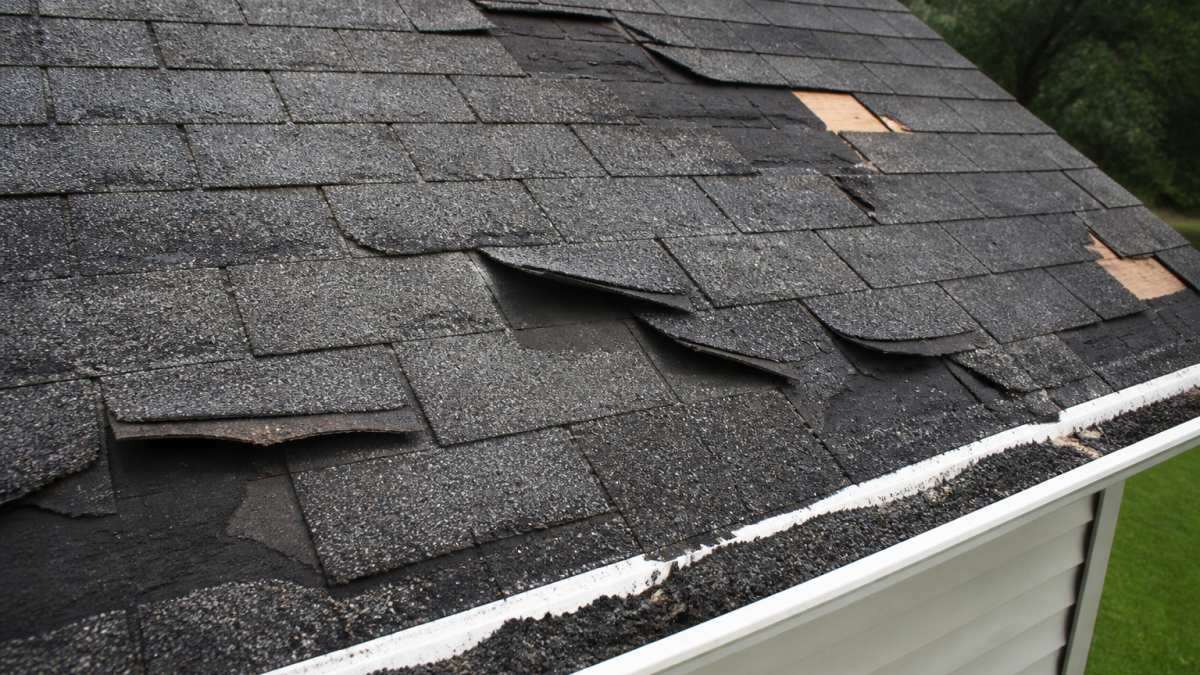
Wind doesn't always rip shingles off in dramatic fashion. Often it breaks the seal that holds each tab flat, then lifts the edge just enough to crease it. That crease is a weak point.
Lifted, Creased, and Torn Shingles
Lifted shingles are the first thing to check. Walk your property line and look up.
Creasing is subtler. Run your eyes along each row. A crease looks like a fold line across the tab, often lighter in color.
A common mistake is assuming a lifted shingle will settle back down. It won't. Once the seal breaks, wind keeps working at it.
Granule Loss and Exposed Mat
Granules protect the asphalt from sun and rain. When wind scours a roof, it strips them away.
Check your gutters and downspouts for piles of dark grit. That's your roof washing away. On the shingles themselves, look for dark patches where the sandy surface is gone and the black mat shows through.
Exposed mat means the shingle is near the end of its life. It also means the next storm will hit harder.
Missing Roof Shingles After a Storm: What to Check and When to Act
Missing roof shingles after a storm should be addressed promptly rather than left to wait. One missing shingle exposes the underlayment, and the next rain can push water into your attic. Count the missing shingles and note their location on each roof section.
Here's what to check:
- Count the gaps. One or two missing shingles is a quick repair. Large bare areas need a full assessment.
- Look at the edges. Missing shingles near ridges and eaves signal wind lifting from the edge inward.
- Check the ground. Shingles in the yard tell you the wind was strong enough to tear, not just lift.
A quick tarp over the gap buys time while you file a claim or call a roofer.
How to Do a Safe Roof Inspection After a Storm
A roof inspection after a storm starts on the ground, not on the roof. Climbing onto a wet or windy roof is risky, so it is safer to inspect from the ground. The goal of a first-pass inspection is not to diagnose every shingle, it is to decide, with evidence, whether you have a documentable claim, an emergency repair, or a maintenance item.
Ground-Level Checks and Binocular Scans
Start at the corners of your home. Wind hits corners and gable ends hardest because those edges catch the gust first and the seal strip has the least backing.
Then scan each roof section in a grid: left to right, bottom to top, one slope at a time. Note anything that breaks the pattern. Use these field criteria to sort what you see:
- Lifted tab: the bottom edge of the tab sits above the course below it, and you can see a shadow line under the tab. The adhesive seal strip has released. A lifted tab that still lies flat after the wind dies is a resealing candidate only if the mat is intact.
- Creased tab: a visible fold line across the tab, often lighter or darker than the surrounding granules, running roughly parallel to the tab's bottom edge. A crease means the mat has been bent past its elastic limit, the shingle will not lie flat again and is a weak point for water intrusion.
- Torn tab: a split or missing corner. Even a small tear lets water past the seal strip and into the course below.
Check the gutters and downspouts too. Granule piles and shingle fragments collect there after a storm and are the cheapest evidence you can photograph, they show the roof was shedding material, not just that a tab looked odd from the ground.
Attic and Interior Checks
Go inside before you go back outside. The attic tells you what the roof surface cannot:
- Look for daylight. With the attic dark, any pinhole of light through the decking is a direct path for water. Note its location relative to a roof section so you can match it to exterior damage.
- Check the decking for staining. Water stains on the underside of roof sheathing, especially along seams and around penetrations, show where water has already traveled.
- Feel the insulation. Damp or compressed insulation under a leak point is a reliable early indicator, even before a ceiling stain appears.
- Smell for mustiness. A persistent musty odor in the attic often means moisture is trapped, not that a leak is active today.
Water travels along rafters and decking, so an interior stain frequently appears several feet from the actual gap. Do not assume the stain marks the entry point, mark both the stain and the nearest exterior damage and let a roofer reconcile them.
Photographing and Logging What You Find
Photograph every damaged area before anyone touches the roof.
Build a simple log as you go: roof section, damage type (lifted, creased, torn, missing), approximate count, and whether the damage sits at an edge, field, or ridge.
Avoid walking the roof yourself to confirm what you saw from the ground. Wet shingles, granule loss, and a released seal strip all reduce traction.
Signs of Roof Leaks After Wind Damage
Signs of roof leaks after wind damage show up inside your home before you see them on the roof. Brown ceiling stains, peeling paint, and musty smells in the attic are the usual first clues. Water travels along rafters, so the stain often appears far from the actual gap.
Watch for these:
- Water stains on ceilings or walls, especially after rain
- Damp or dark insulation in the attic
- Daylight showing through the roof boards
A leak that starts small can rot decking within a season. Catch it early.
Documenting Damage for a Roof Wind Damage Insurance Claim
A roof wind damage insurance claim lives or dies on documentation. Photograph every damaged area before anyone touches the roof.
Build your file with:
- Date-stamped photos of each problem area
- A written list of missing or lifted shingles by roof section
- Receipts for any emergency tarping
Many policies cover sudden storm damage but not wear and tear, which is why clear photos matter.
If your claim gets denied, ask for the reason in writing. You can contact our team for help with documentation and claim support.
Be cautious about signing anything from a door-to-door contractor before your insurer inspects.
Repair or Replace? Deciding After Wind Damage
Repair can make sense when damage is limited to a few shingles. Replacement may be worth considering when shingles are missing across multiple sections, granules are gone, or the roof is near the end of its service life. The hard part is the middle ground, a roof that is 12 to 18 years old with damage concentrated on one or two slopes.
The Three Questions That Drive the Call
1. Is the mat exposed? Granules are the shingle's sacrificial layer; the asphalt mat underneath is what actually sheds water.
2. Is the seal strip intact? A lifted tab whose adhesive strip is still tacky can sometimes be resealed with roofing cement under a qualified roofer's direction.
3. Can the shingle be matched? Shingle lines are discontinued regularly, and a patch that does not match the field is visible from the street and can affect resale.
A Decision Framework You Can Apply
| Situation | Best Move | Why |
|---|---|---|
| 1-3 missing shingles, roof under 15 years, mat intact | Repair | Low cost, quick fix, shingle line likely still available |
| Lifted tabs across one section, seal strip still tacky | Reseal or partial replacement | Seal is broken but mat is intact |
| Creased or torn tabs across one slope | Partial replacement of that slope | Creases will not reseal and will leak |
| Granule loss or mat exposure across most of the roof | Replace | Shingles are worn out; patching accelerates failure elsewhere |
| Damage on multiple roof sections, or roof over 20 years old | Replace | Repairs will not stop the leaks and patching an old roof rarely pays off |
| Discontinued shingle line with visible damage | Full-slope replacement | Color match is impossible; a patch becomes a resale problem |
How the Insurance Scope Changes the Answer
An adjuster's scope of loss is not the same as a contractor's repair estimate. The scope lists what the carrier agrees to pay for, line items for tear-off, underlayment, shingles, and sometimes code-required items like drip edge or ice barrier.
A few practical rules keep that process clean:
- Get the roofer's written scope before you sign anything from the insurer or a door-to-door contractor.
- Ask the roofer to photograph and document the reason for each line item, mat exposure, crease count, discontinued shingle match, so the supplement is evidence-based.
- Do not authorize permanent repairs before the adjuster inspects. Emergency tarping is fine and usually reimbursable; a full re-roof before inspection can complicate the claim.
Ask any roofer for a written scope of work and a clear reason for the recommendation. You can also browse completed roofing projects to see the quality of work before deciding. Our residential roofing services cover both repair and full replacement.
Get a Free Roof Inspection and Estimate
The best time to catch wind damage is before the next storm. A free inspection gives you a clear picture of what's damaged, what's worn, and what your insurance may cover.
You can check whether we cover your area. When you're ready, request a free estimate and we'll set up a time to look at your roof.
Frequently Asked Questions
Can shingles be wind-damaged without being blown off?
Yes. Wind can break the seal between shingle tabs and the course below, leaving shingles lifted, creased, or loose while still on the roof. These shingles often look fine from the ground but will flap in the next storm and let water in. Granule loss and exposed mat are other signs of wind damage that do not involve missing shingles. A professional roof inspection after a storm can find this hidden damage before it turns into a leak.
How soon should wind-damaged shingles be repaired?
Temporary repairs should start as soon as the storm passes and it is safe to work. Lifted or missing shingles expose the roof deck to rain, and a single open tab can let water into the attic within one storm. Permanent repairs depend on weather and material availability, but documenting the damage and contacting a roofer early protects your roof wind damage insurance claim. Delaying can also let small problems spread to the deck and insulation.
What should I document before contacting my insurance company?
Take dated photos and video of every damaged area from the ground and from a safe vantage point. Include wide shots of the roof and close-ups of lifted, creased, or missing shingles, plus any interior stains or ceiling damage. Keep fallen shingles and note the date of the storm. Save receipts for emergency tarps or repairs. This record supports a roof wind damage insurance claim and helps the adjuster match the damage to the storm event.
Can wind damage cause a roof leak even if I don't see missing shingles?
Yes. Wind can lift shingle tabs enough to break the seal without tearing them off, and water can enter at the lifted edge. Cracked pipe boots, loose flashing, and damaged ridge caps are also common wind issues that leak later. Watch for signs of roof leaks after wind damage such as attic stains, damp insulation, peeling paint, or ceiling spots. A roof inspection after a storm catches these before the next rain.
Wind damage rarely fixes itself, and small gaps turn into big leaks fast. At Leitch Roofing, our skilled crews use quality materials for every repair and replacement, and we help homeowners work through insurance claims from start to finish. Get started with Leitch Roofing and get a free estimate on your roof today.