 how-to
Signs of Hidden Roof Damage After a Storm
Last Updated: October 23, 2026
Quick Summary
Signs of hidden roof damage after a storm include missing, cracked, curled or lifted shingles, granule loss, granules in gutters, dented metal, sagging rooflines, and debris on the roof. Indoors, watch for ceiling stains, wall discoloration, peeling paint, musty smells, and daylight in the attic. Check the attic for water trails on rafters and around vents, chimneys, and pipe boots.
- After a wind event, check the side of the roof facing the wind first, where damage clusters.
- A hail-bruised roof can take months to leak, so no ceiling stain is not proof of an intact roof.
- Inspect the attic on a dry day with a flashlight, gloves, long sleeves, and a mask.
- Photograph damage before covering it with a tarp, and keep every temporary-repair receipt.
- Reinspect after every major storm and again 30 days later, since some leaks take weeks to surface.
Table of Contents
- Why Hidden Roof Damage After a Storm Is Easy to Miss
- 8 Visible Signs of Hidden Roof Damage to Check From the Ground
- Hail Damage Roof Signs Most Homeowners Overlook
- Signs of a Roof Leak After a Storm Inside Your Home
- How to Do a Safe Roof Inspection After a Storm
- What to Do After Storm Damage to Your Roof: Documentation and Insurance
- Storm Damage vs. Normal Wear: Telling the Difference and When to Reinspect
- Frequently Asked Questions
Why Hidden Roof Damage After a Storm Is Easy to Miss
Hidden roof damage after a storm rarely announces itself. Loose shingles often land in a neighbor's yard, not yours, and the leak stays invisible until a ceiling stain blooms weeks later.
At Leitch Roofing, we see this constantly after heavy weather.
Most damage hides in three places:
- Under the shingle layer, where the waterproof barrier tears without visible surface cracks
- Around flashing and vents, where seals fail quietly
- Inside the attic, where moisture builds long before it shows below
A quick glance from the street proves almost nothing. Below: the visible signs, the attic check most people skip, and what to do next.
How Storm Type Changes What You Should Look For
Wind and hail break roofs differently, so the clues differ.
Straight-line wind lifts and curls shingle edges and drives rain sideways into seams. Look for lifted tabs and sideways water trails.
Hail bruises shingles and dents soft metal, so damage often shows up as texture changes rather than holes.
Fallen limbs cause the most obvious damage, but a branch can gouge a shingle and leave the waterproof barrier intact one day and torn the next.
8 Visible Signs of Hidden Roof Damage to Check From the Ground
You can spot a lot without climbing anything. Grab binoculars, walk the perimeter, and note these eight signs of hidden roof damage after a storm.
- Missing shingles. Gaps in the rows, especially near ridges and edges.
- Cracked shingles. Fine splits that look like a dry riverbed.
- Curled or lifted shingles. Edges that no longer lie flat.
- Granule loss. Bald patches where the shingle surface looks smooth.
- Granules in gutters. A grit trail in the gutter or at the downspout base.
- Dented metal. Dings on vents, flashing, or gutter aprons.
- Sagging rooflines. A dip or wave that wasn't there before.
- Debris and fallen branches. Limbs resting on the roof or wedged in valleys.
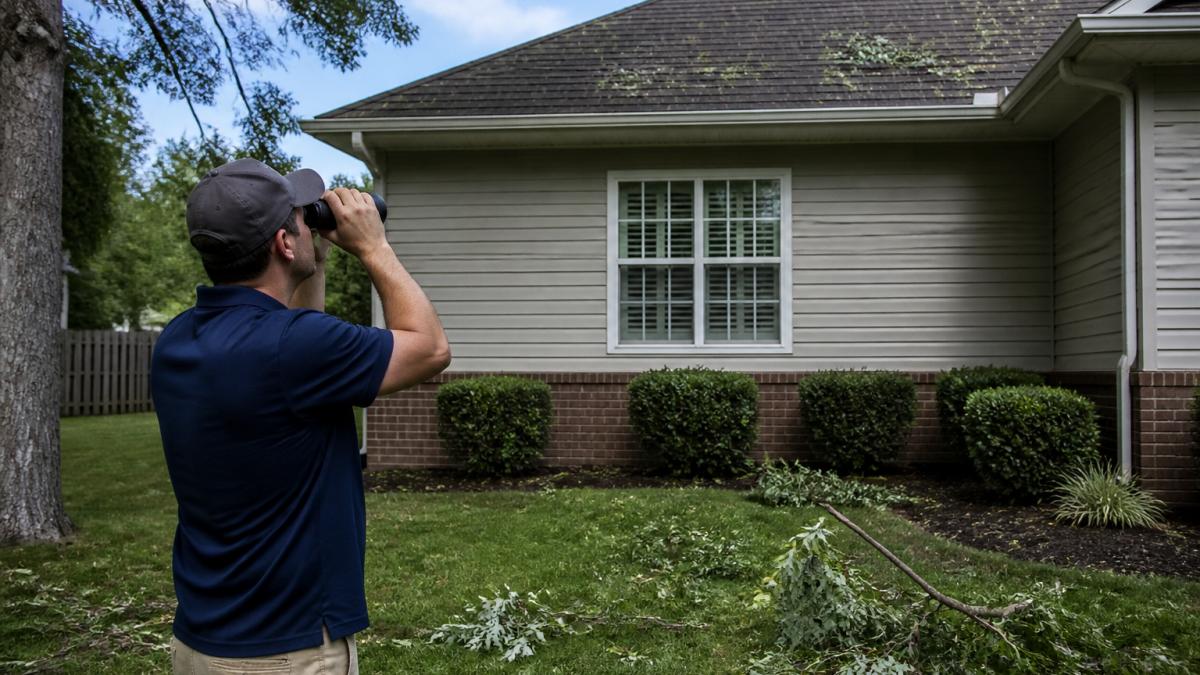
Write down what you see and where. Photos help later if you file a claim.
Shingles, Granules, and Debris
Granule loss is the quiet one. Shingles shed grit over their life, but a storm can strip a whole patch in minutes. Check under downspouts after rain, a pile of dark grit means the surface took a beating.
Debris tells a story too. A branch resting on the roof looks harmless. Underneath it, the shingle may be crushed or torn.
Metal, Flashing, and Gutter Damage
Metal parts fail first. Vents, flashing, and gutter aprons are soft, so hail dents them easily, and a dented vent can crack its seal, letting water in behind the shingles.
Gutters matter as much as the roof. Loose hangers, dents, and separated seams all point to impact. Check where the gutter meets the fascia for gaps.
Hail Damage Roof Signs Most Homeowners Overlook
Hail damage roof signs are subtle because hail rarely punches a clean hole. It bruises the shingle, weakening the mat underneath, understanding that separates a real inspection from a glance from the driveway.
What Hail Actually Does to a Shingle
An asphalt shingle is a fiberglass mat coated in asphalt and topped with mineral granules. When a hailstone strikes, the impact does three things at once:
- It fractures the mat beneath the surface, even when the top looks intact.
- It knocks granules loose in a circular pattern around the impact point.
- It compresses the asphalt, leaving a soft, spongy spot that flexes under foot pressure.
The result is a shingle that looks fine from ten feet away but has lost waterproof integrity at the impact site. That's why a hail-bruised roof can go months before it leaks, often far from the bruise.
Hail Damage by Roofing Material
The same hailstone leaves different evidence depending on what it hits.
Metal roofs. Hail leaves dents, but the bigger clue is what the dent does to the panel seam and fasteners.
Tile and slate. Hail cracks or chips tile and can hairline-fracture slate without visible displacement.
Soft metals, vents, flashing, gutter aprons, downspouts. The easiest hail tell. Dents cluster on the windward slope and horizontal surfaces.
Fresh Impact vs. Old Damage
Hail damage and ordinary wear look alike from a distance. The difference is pattern and timing:
- Fresh dents on metal have sharp edges and bright metal showing through; old dents are dull and rusted.
- Fresh granule loss is patchy and clustered on one slope; aging granule loss is thin and even across the whole roof.
- Fresh bruises are soft and localized; aging shingles are brittle everywhere.
Date-stamped photos taken before any repair are the single most useful thing you can hand an adjuster.
Signs of a Roof Leak After a Storm Inside Your Home
Signs of a roof leak after a storm often show up indoors first. Water travels along rafters and drips far from the breach, so a hallway ceiling stain can trace back to a vent on the far side of the roof.
Watch for these indoor clues:
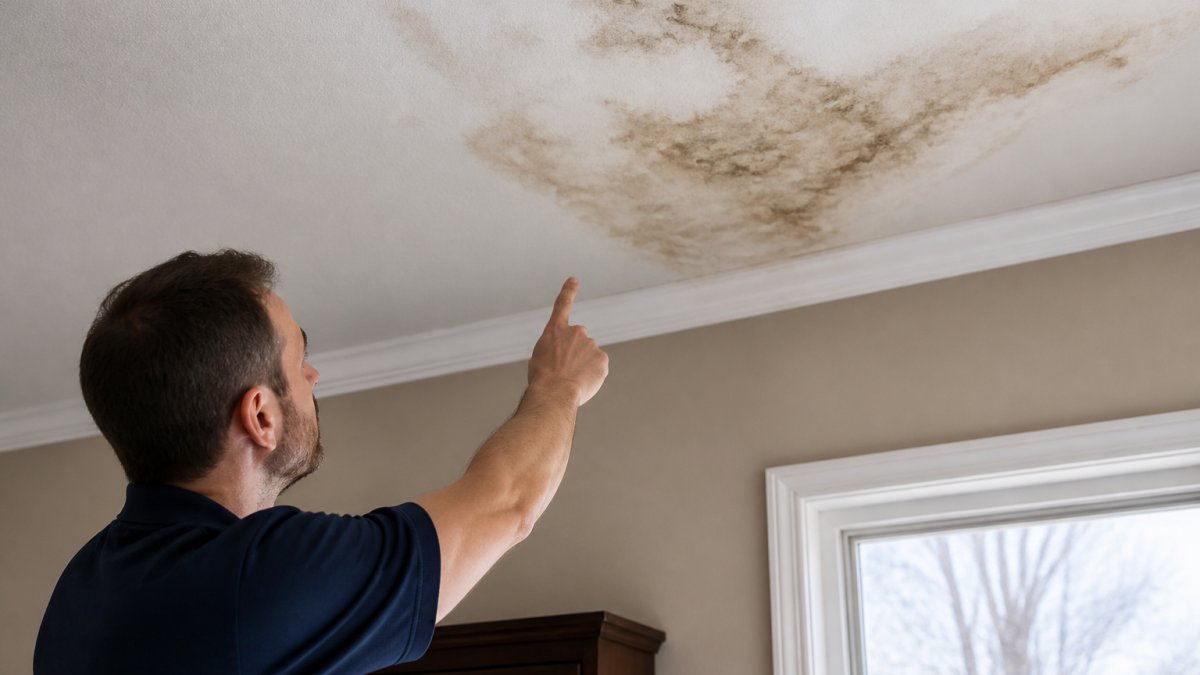
- Ceiling stains that are brown, yellow, or ring-shaped
- Wall discoloration near the top of a room
- Peeling paint or bubbling drywall
A stain that grows after each rain is a live leak, not an old one. Mark its edges with pencil and check again after the next storm.
A Step-by-Step Attic Inspection for Hidden Leaks
The attic is where hidden roof damage gives itself away. Check on a dry day with a flashlight and notepad.
- Suit up. Wear gloves, long sleeves, and a mask. Attic insulation and dust irritate skin and lungs.
- Bring light. A strong flashlight beats a phone light for spotting water trails.
- Look up first. Scan the roof boards for dark streaks, water stains, or sagging.
- Check the rafters. Water runs along wood, so look for staining on the sides of rafters, not just the top.
- Inspect around penetrations. Vents, chimneys, and pipe boots are common leak points. Look for rust, staining, or daylight.
- Check the insulation. Wet insulation looks matted or dark. Don't step on it.
- Smell the air. A musty odor points to moisture, even if you can't see it.
- Photograph everything. Note the location of each stain.
If you find active moisture or daylight, stop and call a professional. Walking a wet attic is a fall risk, and the source needs a proper repair.
How to Do a Safe Roof Inspection After a Storm
A roof inspection after a storm should start on the ground. The Occupational Safety and Health Administration guidance on fall protection makes clear that working at height carries serious risk, and a homeowner with a ladder is not a roofer.
Do this instead:
- Use binoculars from the yard to scan each slope
- Check from a ladder only at the gutter line, never above it
- Never walk a wet or steep roof
Once you've noted what you can see safely, hand the rest to a pro who knows how to walk a roof safely and where hidden damage hides.
What to Do After Storm Damage to Your Roof: Documentation and Insurance
What to do after storm damage to your roof comes down to one thing: document everything before you touch anything. Most homeowners lose claim value because the evidence disappeared before the adjuster saw it.
The Documentation Checklist
Work through this in order, starting the day you notice damage:
- Photograph from the ground first. Shoot each slope, the gutters, the downspouts, and any debris on the lawn. Include a wide shot of the whole house so the adjuster can orient each close-up.
- Photograph the attic. Stains on rafters, matted insulation, and daylight through the decking are evidence the adjuster may never climb up to see.
- Date-stamp everything. Most phone cameras embed the date; if yours doesn't, note the date and time in a written log.
- Write a damage log. For each item: what it is, where it is (which slope, which room below), and when you first noticed it. A pencil mark on a ceiling stain, re-checked after the next rain, proves the leak is live.
- Keep every receipt. Tarps, plywood, a rented ladder, a hotel night if the home became uninhabitable, temporary-repair and displacement costs are often reimbursable under the policy.
- Save the storm record. A dated news report or a copy of the National Weather Service storm report for your area ties the damage to a specific event.
Temporary Repairs: Do Them, But Document First
A tarp or patch is often necessary to prevent further damage, and most policies expect you to mitigate. But the order matters:
- Photograph the damage before you cover it. Once a tarp goes up, the original shingle condition is gone.
- Keep the tarp receipt and note the date it went up.
- Don't make permanent repairs before the adjuster inspects unless the home is unsafe. Permanent repairs can be read as evidence that the damage was minor.
Talking to Your Insurer
Open the claim promptly. Most policies require you to report damage within a reasonable time, and delay lets an insurer question whether the damage is storm-related. When you call:
- Have your policy number, the date of loss, and your documentation log ready.
- Ask what the insurer needs from you and in what format.
- Ask whether the adjuster will inspect from the ground, the roof, or both, and whether you can have your contractor present.
Your policy likely requires you to report damage promptly. Check the consumer guidance from the Federal Emergency Management Agency on filing insurance claims after a disaster for the general steps most insurers expect.
When the Adjuster Visit Happens
Be present if you can. Walk the property with the adjuster and point out each item on your log. A homeowner who can say "there's a soft spot on the south slope near the ridge, and here's the photo from the attic" gets a more thorough look. If the adjuster calls storm damage "wear and tear," a detailed inspection report from a qualified contractor can change that conversation.
Leitch Roofing offers specialized insurance claim assistance to simplify the process for our clients.
Storm Damage vs. Normal Wear: Telling the Difference and When to Reinspect
Storm damage and normal wear look alike from a distance. The difference comes down to pattern and timing.
| Clue | Storm Damage | Normal Wear |
|---|---|---|
| Location | Clustered on one slope | Spread evenly |
| Granule loss | Sudden, patchy | Gradual, thin |
| Metal parts | Fresh dents | Rust and age |
| Timing | After a known event | Over many years |
Age matters too.
Reinspect on a schedule. Check after every major storm and again 30 days later.
If you're buying a home, get an inspection before closing. A pre-purchase roof check catches hidden damage a general home inspection may skip.
Storm damage rarely stays hidden forever. Leitch Roofing offers expert residential and commercial inspections, quality repairs, and hands-on help with your insurance claim, all starting with a free estimate.
Frequently Asked Questions
Can a roof have storm damage without visible leaks?
Yes. Hidden roof damage often shows up long before water reaches your ceiling. Missing or lifted shingles, granule loss, dented metal vents, and cracked flashing can all compromise the waterproof barrier while the attic stays dry for weeks or months. That is why a roof inspection after a storm matters even when nothing is dripping. Catching these signs early lets you repair damaged shingles and flashing before moisture, mold growth, and interior damage set in, which usually keeps the repair smaller and cheaper.
How soon should I inspect my roof after a storm?
Check from the ground as soon as it is safe, then schedule a professional roof inspection after a storm within a few days to two weeks. Wind and hail damage is easiest to document before shingles curl further or debris gets moved. If you plan to file an insurance claim, most policies require prompt notice and reasonable proof of damage, so photograph everything early. Waiting months can blur the line between storm damage and normal wear, which gives adjusters a reason to deny or reduce your claim.
Does homeowners insurance cover roof damage from wind and hail?
Most standard homeowners policies cover sudden storm damage from wind and hail, though coverage terms, deductibles, and age-related exclusions vary by policy. Your job is to document the damage clearly: photos of missing shingles, dented metal, granule loss in gutters, and any interior water stains. A roofer experienced with insurance claims can inspect the roof, record what they find, and meet your adjuster on site. Review your policy or call your agent before filing so you know your deductible and what your plan actually covers.
Can hail damage on a roof be repaired, or does it need replacement?
It depends on how bad the hail damage roof signs are. Minor hail impact marks, a few bruised shingles, or dented vents can often be repaired by replacing individual shingles and metal components. If hail has cracked shingles across large sections, worn away granules down to the fiberglass mat, or damaged flashing around multiple penetrations, a full replacement is usually the better long-term call. A professional inspection after a storm will tell you which situation you are in before you commit to either path.