 how-to
Roof Insurance Claim Denied: Steps to Take in 2026
Table of Contents
- Start With the Denial Letter: What It Actually Says
- Common Roof Insurance Claim Denial Reasons
- How to Document Roof Damage for Insurance Before You Appeal
- How to Write an Insurance Appeal Letter That Gets Read
- Requesting a Second Inspection and Using the Appraisal Clause
- Hiring a Public Adjuster for Roof Damage: When It Makes Sense
- Filing a Complaint and Understanding Bad Faith Practices
- Conclusion: Your Next Steps After a Denied Roof Insurance Claim
- Frequently Asked Questions
Last Updated: September 24, 2026
Start With the Denial Letter: What It Actually Says
A denied roof insurance claim is not the end of the road, the denial letter is your roadmap. Read that letter twice before doing anything else.
The letter must state a specific reason for the denial. Insurers cannot simply say "denied", they must point to a policy provision, an exclusion, or an inspection finding. That reason tells you exactly what to challenge.
Look for three things in the letter:
- The cited policy language (which section or exclusion they used)
- The adjuster's findings (what they say they saw or did not see)
- Your appeal rights and deadlines (how long you have to respond)
If the letter is vague, that vagueness works in your favor.
Common Roof Insurance Claim Denial Reasons
Most roof insurance claim denial reasons fall into a handful of categories. Knowing which applies to you shapes your appeal strategy, because each has a different counter-argument and burden of proof.
- Wear and tear, the insurer argues the damage is from age, not a covered event. Your counter is causation evidence: weather records, a contractor's report distinguishing granule loss from impact damage, and photos showing fresh fractures versus rounded, aged edges.
- Pre-existing damage, they claim the problem existed before your policy started. Your counter is a dated inspection, prior repair receipts, or a home purchase inspection report showing the roof was sound at inception.
- Maintenance neglect, they argue you failed to maintain the roof. Your counter is a maintenance log, receipts for prior repairs, and evidence the specific failure was sudden and accidental rather than gradual.
- Insufficient documentation, your photos or receipts did not prove the loss. This is the most fixable denial: you re-document and resubmit.
- Damage below your deductible, the repair cost does not exceed what you owe. Your counter is a second, itemized estimate that captures scope the first adjuster missed.
- Missed filing deadline, you reported the damage too late. Your counter depends on your policy's notice provision and whether the insurer was prejudiced by the delay.
Decoding the policy language behind the denial
The denial letter usually cites one of three things, each signaling a different dispute:
- An exclusion (for example, a wear-and-tear or maintenance exclusion). This is a coverage dispute, you must show your loss falls outside the exclusion.
- A policy condition (for example, a notice or proof-of-loss requirement). This is a compliance dispute, you must show you met the condition or that the insurer waived it.
- A factual finding (for example, "no covered event occurred"). This is a causation dispute, you must rebut the adjuster's inspection with your own evidence.
When the denial is really an underestimated scope
Not every "denial" is a coverage denial. Often a claim was approved but scoped too low, the adjuster paid for a patch when the roof needs replacement, or missed decking, flashing, or underlayment. That is a scope dispute you fix with a supplemental claim, not an appeal.
How to Document Roof Damage for Insurance Before You Appeal
Strong documentation wins appeals; weak documentation gets a second denial. Start gathering evidence the day you decide to fight.
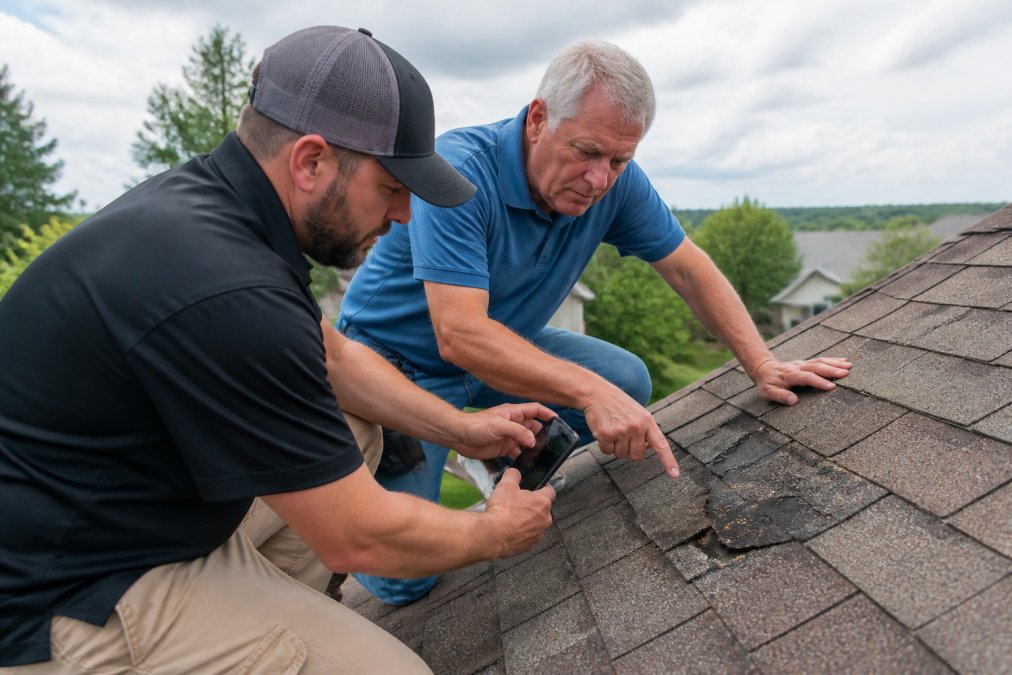
Here is what to collect:
- Photographic evidence - wide shots of the whole roof plus close-ups of damaged shingles, hail strikes, and granule loss
- A written contractor report - a licensed roofer's assessment of cause and scope
- A repair estimate - itemized, with materials and labor broken out
- Your original claim file - including the adjuster's report and any correspondence
- Dates and weather records - proof that a storm hit when you say it did
How to Write an Insurance Appeal Letter That Gets Read
Here is a template you can adapt:
[Date]
[Insurer Name] Claims Department
Re: Appeal of Denied Claim - Policy #[Number], Claim #[Number]
To Whom It May Concern:
I am formally appealing the denial of my roof claim dated [date]. The denial letter cites [exclusion or provision]. I disagree for the following reasons:
- [Reason one, tied to evidence]
- [Reason two, tied to evidence]
- [Reason three, tied to evidence]
Enclosed please find: [list documents].
I request a written response within [timeframe]. Thank you for your prompt review.
Sincerely, [Your Name] [Phone] | [Email]
Three rules make appeal letters work:
- Reference the exact policy language the insurer used
- Attach evidence, do not just describe it
- Ask for a specific outcome (a re-inspection, a revised settlement, or a written explanation)
Send your appeal to a named person, not a generic department. Call and ask who handles appeals for your region, then address the letter to them. It gets read faster.
Requesting a Second Inspection and Using the Appraisal Clause
If your appeal is denied, your next lever is often a second inspection, request an independent adjuster or a re-inspection.
To use it:
- Read your policy's appraisal provision word for word.
- Send a written demand for appraisal.
- Name your appraiser and ask the insurer to name theirs.
- Let the two appraisers agree on an umpire if needed.
Hiring a Public Adjuster for Roof Damage: When It Makes Sense
A public adjuster works for you, not the insurer, documenting the loss, negotiating the claim, and usually taking a percentage of the settlement.
- Your claim is large or complex
- The insurer's offer is far below your contractor's estimate
- You have already been denied once
- You do not have time to manage the process yourself
Filing a Complaint and Understanding Bad Faith Practices
When appeals and appraisal fail, you have outside options: a complaint with your state insurance commissioner, and in serious cases, a bad faith claim. Here is a concrete framework for both.
Is your insurer acting in bad faith? A checklist
Bad faith is when an insurer handles your claim unreasonably. Not every denial is bad faith, insurers may deny claims they reasonably believe are not covered. Bad faith is about the handling, not just the outcome. Look for these patterns:
- Denying a valid claim without a reasonable basis, or citing a policy provision that does not actually apply
- Failing to investigate properly, no inspection, no follow-up, or ignoring the evidence you submitted
- Delaying payment or a decision without a legitimate reason, especially past your policy's stated response window
- Misrepresenting your policy's coverage or the reason for denial
- Failing to communicate material information about the claim
- Making a low settlement offer with no explanation of how it was calculated
- Requiring documentation the policy does not require, as a way to stall
Filing a complaint with your state insurance department
A complaint with your state insurance commissioner is free, needs no lawyer, puts your case on record, and often prompts a fresh review by a different examiner.
To file effectively:
- Get the denial and any settlement offer in writing.
- Write a short timeline: date of loss, date reported, date inspected, date denied.
- Attach your evidence, photos, contractor report, estimate, and the denial letter.
- State the specific outcome you want (re-inspection, revised settlement, or written explanation).
- File through your state insurance department's consumer portal and keep the confirmation number.
Tracking your deadlines: the clock most homeowners miss
Your claim runs on multiple clocks at once, and they do not expire together:
- The appeal window, set by your policy or the denial letter. Often measured in days or a few months from the date of the denial.
- The proof-of-loss deadline, set by your policy, usually a set number of days after the loss.
- The statute of limitations, set by state law, governing how long you have to sue over a denied claim. This is typically measured in years, but it can be shortened by a policy's contractual limitations clause.
- The bad faith deadline, often separate from the breach-of-contract deadline, and sometimes shorter.
Your appeal clock and your lawsuit clock are different. A denied claim can still be appealed internally while the statute of limitations runs. Track both dates from day one, and if a deadline is unclear, get it in writing before you rely on it.
Mediation and arbitration
Two more tools exist: mediation and arbitration. Mediation uses a neutral third party to help both sides agree and is non-binding unless you sign a settlement; arbitration is more formal and usually binding. For complex disputes, an attorney can advise which fits, and whether your policy's appraisal clause is a better first step.
Conclusion: Your Next Steps After a Denied Roof Insurance Claim
A denied roof insurance claim feels final, but it rarely is. The process rewards homeowners who document carefully, appeal in writing, and know their policy's tools.
Frequently Asked Questions
What should I do immediately after my roof insurance claim is denied?
Read the denial letter carefully to identify the specific reason, then gather your claim file, photos, and contractor reports. You have the right to request a second inspection, file a formal appeal, or hire a public adjuster. Keep copies of everything and note your state's statute of limitations for appeals, which is often one to two years.
Can I hire a public adjuster after a claim denial?
Yes. Hiring a public adjuster for roof damage after a denial is allowed in most states. A public adjuster reviews your policy provisions, documents the scope of loss, and negotiates with your insurer on your behalf. They typically charge a percentage of the final settlement, so confirm fees in writing before signing a contract.
What evidence is needed to appeal a roof insurance denial?
You need photographic evidence of shingle damage, hail damage, or storm damage; a written contractor report with a repair estimate; your original proof of loss; and any independent adjuster findings. Include your policy endorsement details and a clear timeline of when the damage occurred to counter claims of wear and tear.
How long do I have to appeal a denied roof claim?
The deadline depends on your state's statute of limitations for insurance appeals, which is commonly one to two years from the denial date. Some policies also include a contractual appeal window. Check your denial letter and policy provisions for specific deadlines, and contact your state insurance commissioner's office if you need clarification.