 how-to
Is Annual Commercial Roof Inspection Necessary?
Table of Contents
- Why Annual Commercial Roof Inspections Matter
- How Often to Inspect a Commercial Roof
- Commercial Roof Inspection After a Storm
- Signs of Commercial Roof Damage You Can't Ignore
- Commercial Roof Inspection Checklist for Property Owners
- Documentation and Insurance Claims
- Frequently Asked Questions
Last Updated: October 18, 2026
Why Annual Commercial Roof Inspections Matter
A commercial roof inspection is one of the most overlooked maintenance tasks for business owners. Many property managers assume their roof is fine until a leak appears or damage becomes visible. That's a costly mistake.
Your commercial roof faces constant stress from weather, UV exposure, and temperature changes. Small problems grow into expensive repairs when left unchecked. Regular inspections catch issues early, before they threaten your building's interior, equipment, or operations.
The truth is simple: preventive maintenance saves money. An annual commercial roof inspection identifies problems while they're still manageable and affordable to fix.
How Often to Inspect a Commercial Roof
The short answer to "is a commercial roof inspection necessary annually" is yes for most buildings, but the annual cadence is a floor, not a ceiling. The right interval is the one that matches how fast your specific roof can go from a small defect to a water intrusion event.
Why annual is the baseline: A commercial roof is a system of membranes, flashing, sealant, fasteners, and drains that all move at different rates under thermal cycling. A seam that opens a quarter inch in October can wick water into insulation by January.
When annual is not enough, inspect more often if any of these apply:
- Roof is over 10 years old. Membrane and sealant performance degrades non-linearly; a 12-year-old roof can lose more in one season than a 4-year-old roof loses in three.
- Flat or low-slope roof. Ponding water, blocked drains, and membrane seams fail faster than on pitched roofs. Twice yearly (spring and fall) is a common pattern.
- Heavy snow, hail, or wind exposure. Inspect after every significant event, not just annually.
- Large tree canopy nearby. Branches, leaf litter, and animal traffic accelerate debris and drainage problems.
- Coastal or industrial exposure. Salt spray, chemical fallout, and airborne particulates shorten membrane life.
- Roof supports HVAC equipment, skylights, or solar. Every penetration is a leak candidate; more penetrations mean more frequent checks.
- The building has had a prior leak or repair. Repaired areas need verification within 6 months, then annually.
When you can stretch the interval: A new roof under a manufacturer's warranty, with no penetrations, no ponding, and a documented maintenance log, can often go 18-24 months between full inspections, provided the warranty terms allow it.
The trade-off to weigh: An annual inspection is a small line item against the cost of a single interior water event, saturated ceiling tiles, ruined inventory, disrupted operations, and possible mold remediation. Inspecting twice a year roughly doubles the inspection spend but typically catches drainage and seam issues a full season earlier.
After any severe weather event, hail, high wind, or a long heavy-rain stretch, inspect immediately regardless of where you are in the annual cycle. Storm damage does not wait for the calendar.
Commercial Roof Inspection After a Storm
Storm damage doesn't always announce itself. Wind can lift shingles without tearing them completely. Hail creates small cracks that leak weeks later. Flying debris punches holes you might miss from the ground.
Timing matters. Inspect your roof within 24-48 hours after a major storm passes. Water infiltration happens fast. The first 48 hours are critical for documenting damage and filing insurance claims.
What to look for after a storm:
- Missing or displaced shingles or wood shakes
- Cracked, curled, or lifted shingles
- Dents or impact marks on metal roofing
- Damaged flashing around chimneys and roof penetrations
- Debris embedded in the roof surface
- Bent or damaged gutters and downspouts
- Sagging areas or visible structural weakness
Don't attempt a full inspection yourself if conditions are unsafe. Wet surfaces, steep angles, and debris create serious fall hazards. Call a professional if your roof is steep, high, or conditions are slippery.
Signs of Commercial Roof Damage You Can't Ignore
Some roof damage is obvious. Other problems hide until they cause serious problems inside your building. Learn to recognize both types.
Visible exterior damage:
- Missing, cracked, or curled shingles
- Lifted or buckling shingles
- Exposed wood or underlayment
- Rust stains or corrosion on metal surfaces
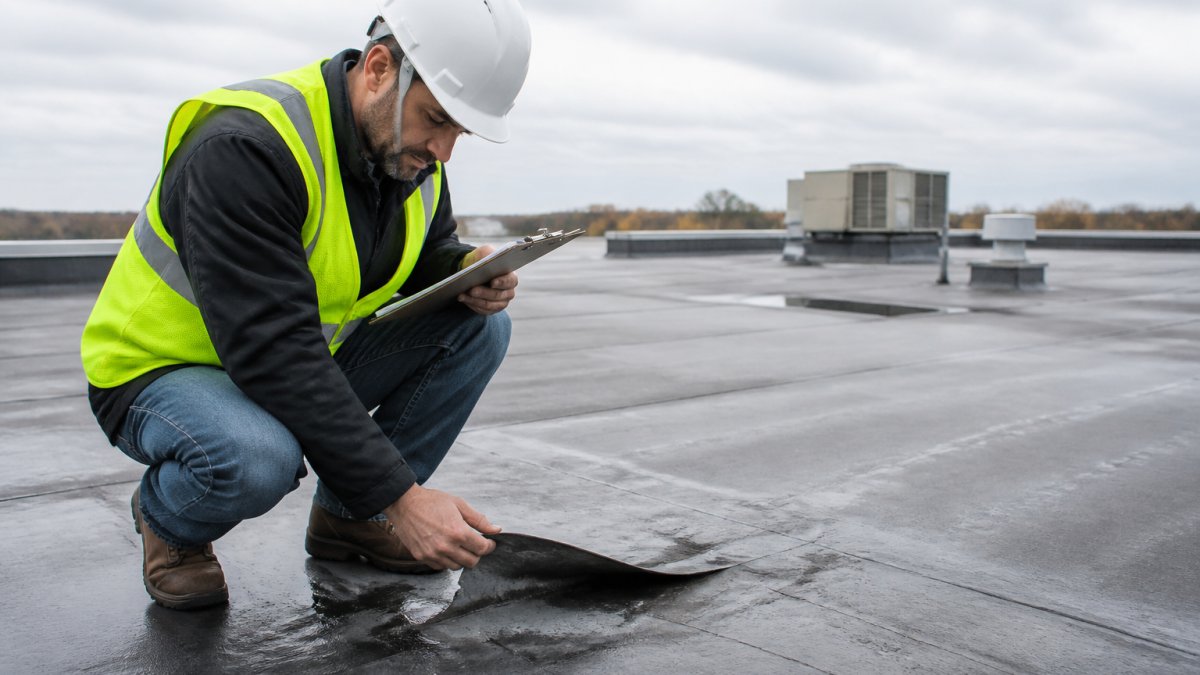
- Cracks in flat roof membranes
- Bubbles, wrinkles, or blistering on flat roofs
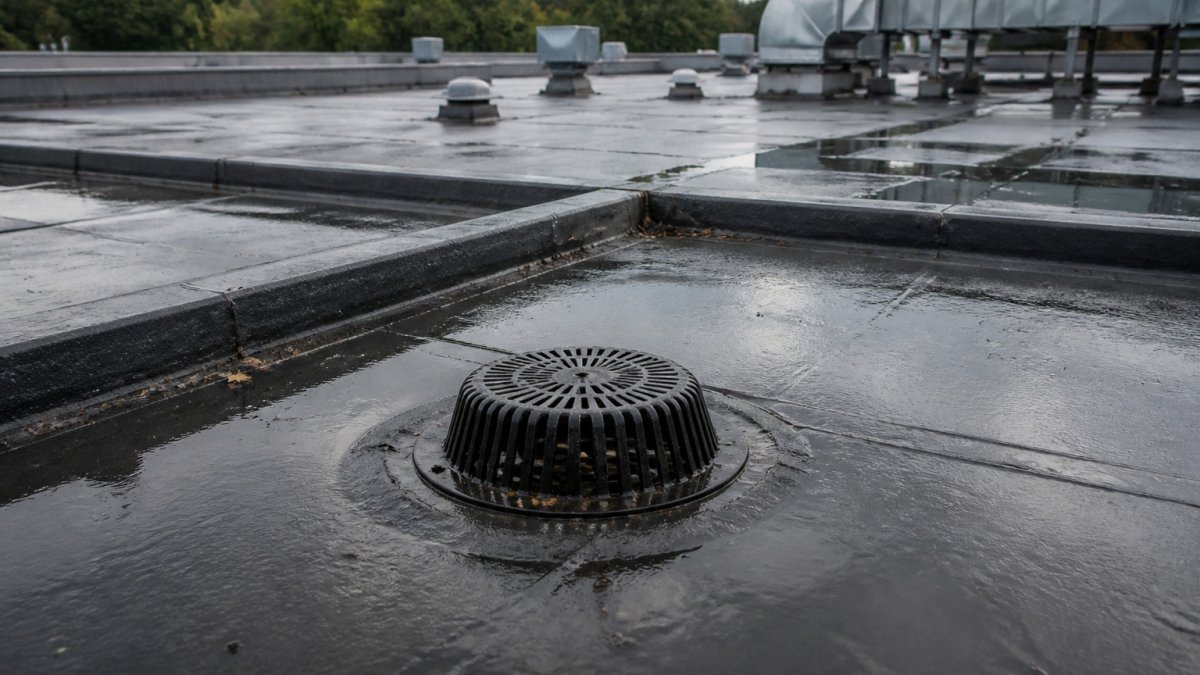
- Pooling water (ponding) on flat roofs
- Damaged or missing flashing around chimneys, vents, and skylights
- Clogged gutters and downspouts
Interior signs of water intrusion:
- Water stains on ceiling tiles or drywall
- Discoloration or mold growth on interior walls
- Damp spots in the attic or upper floors
- Musty odors indicating moisture buildup
- Peeling paint or wallpaper near walls or ceilings
- Visible mold or mildew
Interior damage means water has already entered your building. This requires immediate professional assessment and repair. Moisture in walls and attics leads to structural decay and mold, which threatens occupant health and building integrity (the CDC).
Commercial Roof Inspection Checklist for Property Owners
Most inspection guides hand you a list of things to look for on the roof. That is the wrong starting point for a property owner, because the safest and most useful checks happen from the ground, from the attic, and from inside the building, before anyone goes near a ladder. Use this sequence.
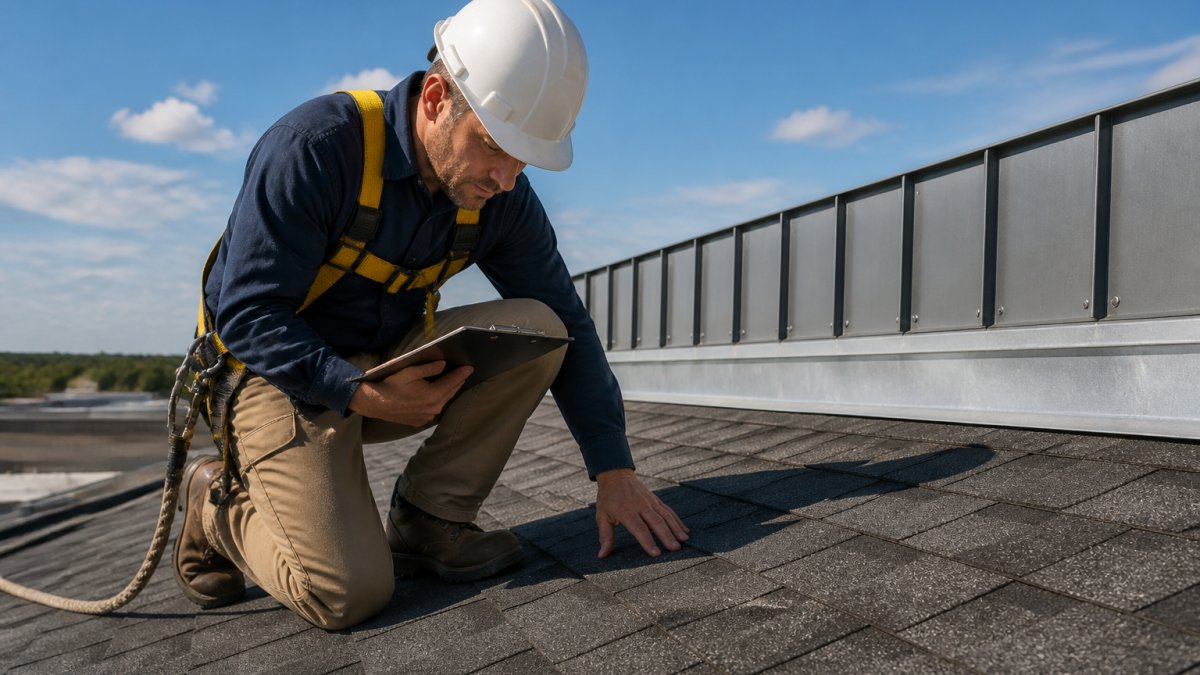
Step 1, Ground-level walk-around (safe for anyone)
Walk the perimeter with binoculars and a phone camera. You are looking for what the roof is telling you from below:
- Sagging roofline or dips, a straight edge along the fascia reveals deflection you cannot see from on top.
- Missing, lifted, or curled shingles or membrane edges visible at the eaves and ridges.
- Rust streaks or corrosion trails on metal panels, fasteners, and flashing.
- Stained or discolored soffit and fascia, a sign water is tracking behind the gutter.
- Gutter and downspout condition, separation at seams, sagging runs, rust-through, and downspouts that discharge directly against the foundation instead of away from the building.
- Debris piles at roof-to-wall transitions and in valleys, which hold moisture against the membrane.
- Ponding water on flat roofs, visible as dark patches or standing water 48 hours after rain stops.
Step 2, Interior and attic check (safe for anyone)
Water almost always shows up inside before it is obvious outside:
- Ceiling tiles and drywall, brown rings, sagging tiles, or bubbling paint.
- Attic decking and rafters, dark staining, soft spots, or daylight visible through the roof deck.
- Insulation, compressed, damp, or matted insulation under a leak path.
- Musty odor in upper floors or mechanical rooms, which often points to trapped moisture.
- Mold or mildew on walls, especially at roof-to-wall transitions.
- HVAC penetrations and roof hatches, check the ceiling and framing around every curb and penetration for staining.
Step 3, Heavy-rain-specific checks (the gap most guides skip)
Prolonged rainfall exposes problems that a dry-day inspection cannot:
- Ponding water that persists more than 48 hours after rain stops, this is a drainage defect, not a weather event.
- Leaks that appear only during long rain, these usually trace to flashing at roof-to-wall transitions, valley liners, or failed seam sealant, not to the field membrane.
- Downspout capacity, during heavy rain, watch whether downspouts overflow at the top or back up at the bottom; either means the drainage system is undersized or blocked.
- Scuppers and roof drains, confirm they are clear and that strainers are intact before the rainy season, not after.
- Roof-to-wall and parapet transitions, the most common heavy-rain leak path on flat commercial roofs.
Step 4, Severity triage: urgent vs. routine
Not every finding needs a same-day call. Sort what you find:
Urgent, call a professional now:
- Active water dripping inside during or after rain
- Sagging deck or visible structural deflection
- Ponding water deeper than roughly 2 inches or persisting beyond 48 hours
- Exposed decking or underlayment over a large area
- Any sign of electrical or equipment exposure to water
Schedule within 30 days:
- Cracked or lifted flashing with no active leak
- Clogged gutters or blocked drains
- Isolated missing shingles or membrane blisters
- Stained ceiling tiles with no active drip
Monitor at next annual inspection:
- Minor granule loss, surface weathering, or cosmetic staining
- Small debris accumulation that has been cleared
Step 5, Document as you go
Photograph every finding from multiple angles, note the date and recent weather, and keep a simple log. This record is what turns a verbal observation into evidence for a warranty claim or an insurance adjuster.
When to call a professional instead of checking yourself
Do not go on the roof if it is steep, more than one story, wet, icy, or windy, or if you are unsure what you are seeing. A professional inspection adds the parts you cannot safely do: a full membrane and flashing assessment, core sampling where needed, and a written report with photos and recommendations suitable for warranty and insurance use. The cost of that inspection is small against the cost of a missed active leak.
Documentation and Insurance Claims
If you discover damage, document everything carefully. Insurance companies require proof before approving claims.
Documentation steps:
- Take clear photos of all damage from multiple angles
- Record the date and time of inspection
- Note weather conditions and recent storms
- Write detailed descriptions of each damaged area
- Keep records of previous repairs or maintenance
- Save receipts for any emergency repairs
For insurance claims:
- Report damage to your insurance company promptly
- Provide photos and written descriptions
- Request an adjuster to inspect the damage
- Get a professional inspection report from a roofing contractor
- Keep all documentation organized and accessible
- Follow your insurance company's claim procedures
Insurance adjusters sometimes underestimate damage or classify damage as wear and tear rather than storm damage. A professional inspection report from an experienced contractor provides evidence to support your claim. We can help you navigate this process and ensure your claim reflects the actual damage.
Frequently Asked Questions
Is a commercial roof inspection necessary every year?
Yes. Annual commercial roof inspections are essential to catch early signs of damage, prevent costly repairs, and maintain warranty coverage. Most manufacturers recommend at least one comprehensive inspection annually, with additional inspections after severe weather. Regular inspections also document the roof's condition for insurance purposes and help you budget for maintenance or replacement.
Should a commercial roof be inspected after a storm?
Absolutely. Storm damage can range from visible to completely hidden, and water intrusion may not appear for weeks. Inspect your roof within 24-48 hours after heavy rain, hail, or wind events. Look for missing shingles, lifted flashing, debris accumulation in gutters, and interior water stains. Early detection prevents moisture infiltration and structural damage that becomes exponentially more expensive to repair later.
What are the signs that a commercial roof needs repair?
Watch for missing, cracked, curled, or lifted shingles; water stains on ceilings or walls; pooling water on flat roofs; damaged or rusted flashing around chimneys and penetrations; clogged gutters and downspouts; and visible mold or algae growth. Interior signs include musty odors, peeling paint, or soft spots in the attic. Any of these warrant a professional inspection to assess repair needs and prevent further damage.
Can a roof inspection identify storm damage?
Yes. A thorough inspection can identify both visible damage (missing shingles, debris impact marks) and hidden damage (lifted shingles, compromised flashing, moisture in the attic). Professional inspectors use specialized tools and knowledge to spot structural weakness, early water intrusion, and drainage problems that homeowners might miss. This documentation is also critical for insurance claims, as it establishes the extent of damage caused by the storm.
Your commercial roof protects your entire building and everything inside it. Annual inspections keep problems small and manageable. After storms, quick action prevents water damage and mold. When you need professional assessment, documentation, or insurance claim support, Leitch Roofing is here to help. We provide expert commercial roof inspections with detailed reports and specialized assistance with insurance claims. Get a free estimate today and protect your building investment.