 how-to
How to Spot Roof Leaks Before They Cause Damage?
Last Updated: October 25, 2026
Quick Summary
To spot roof leaks before they cause damage, check your attic for water stains on roof sheathing, wet insulation, and discolored wood, then inspect your roof exterior for missing or cracked shingles and damaged flashing around chimneys and vents. Look inside your home for water stains on ceilings and walls, peeling paint, and musty odors that signal moisture intrusion.
- Water stains on ceilings are the most visible indicator of roof leaks and may not appear directly below the leak source.
- Check your attic first on a clear day for wet insulation, dark streaks on roof sheathing, and mold growth around roof penetrations.
- Missing, cracked, or curled shingles allow water to penetrate; shingles typically last 15-25 years before failing.
- Flashing around chimneys, vents, and skylights is a common leak source and can rust, crack, or separate over time.
- Call a professional roofer if you notice active water dripping, mold growth, soft wood, or water damage spreading to multiple rooms.
Table of Contents
- Signs of a Roof Leak Inside Your Home
- How to Find a Roof Leak: Checking Your Attic
- Roof Leak Inspection Checklist: Exterior Inspection
- Roof Leak After Storm: What to Check First
- Distinguishing a Roof Leak from Other Water Sources
- When to Call a Professional Roofer
- Get a Free Roof Inspection Today
- Frequently Asked Questions
Signs of a Roof Leak Inside Your Home
Water damage inside your home is often the first sign of a roof leak. By the time you see ceiling stains, water has likely been traveling through your roof structure for days or weeks. Catching these early warning signs can save you thousands in structural damage and mold remediation.
Water Stains and Discoloration on Ceilings and Walls
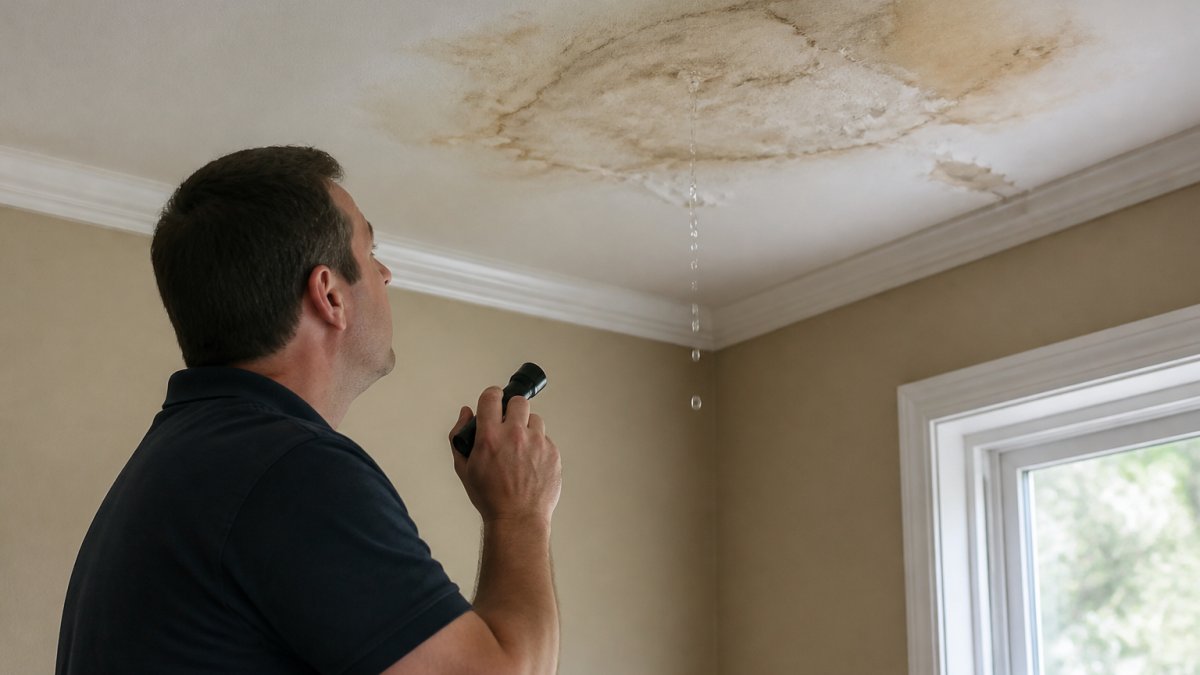
Water stains are the most visible indicator of a roof leak. They appear as yellow, brown, or rust-colored patches on ceilings or upper walls; fresh stains look wet, older ones dry but visible.
Check these areas first:
- Ceilings directly below the roof
- Walls near exterior corners
- Areas around light fixtures and vents
The stain may not be directly below the leak source.
Multiple rings around a stain indicate repeated leaks over several seasons, meaning the damage is likely more extensive than a single weather event.
Peeling Paint, Bubbling Drywall, and Sagging Ceilings
Moisture trapped behind walls causes paint to peel and bubble. The paint loses adhesion as water pushes it from the drywall, and bubbling paint often feels soft or spongy.
Bubbling drywall is a serious warning sign: water has soaked into the drywall itself, weakening it so it may crumble if pressed. This damage spreads quickly once it starts.
Sagging ceilings indicate heavy water accumulation. The ceiling material absorbs moisture and becomes heavier. Sagging can happen suddenly, especially after heavy rain.
Do not ignore these signs:
- Peeling or bubbling paint anywhere on ceilings or upper walls
- Soft spots in your ceiling when you press gently
- Visible sag or dip in the ceiling line
Musty Odors and Mold Growth
A musty smell in your attic or upper rooms signals moisture and possible mold. Mold spreads quickly in damp environments, and musty odors often appear before you see visible growth.
Mold thrives in dark, damp spaces like attics and wall cavities, feeding on wood, insulation, and drywall.
Look for visible mold signs:
- Black, green, or white fuzzy patches
- Discoloration on wood framing or insulation
- Damp insulation that feels wet or squishy
Mold can hide inside walls where you cannot see it. If you smell mold but do not see it, the leak may be inside the wall cavity.
How to Find a Roof Leak: Checking Your Attic
Your attic is the first place to investigate when you suspect a roof leak. Most water intrusion evidence appears here before it reaches your living spaces, so a careful attic inspection can help you spot roof leaks before they damage your home's structure.
What to Look For During Attic Inspection
Start your attic inspection on a clear day when you can see without a flashlight. Natural light from roof vents and gaps helps you spot water stains and wet areas, but bring a flashlight for dark corners and behind insulation.
Look for these signs of water intrusion:
- Water stains on roof sheathing (the wood under the shingles)
- Wet or damp insulation
- Discolored wood that looks darker than surrounding areas
Check the underside of the roof carefully. Stains often appear as dark streaks or rings. Recent leaks look wet or feel damp. Older leaks dry out but leave permanent discoloration.
Inspect around roof penetrations first:
- Chimney flashing
- Vent pipes
- Skylights
These spots are common leak sources because they interrupt the roof's water-shedding surface.
Tracing Water Intrusion to Its Source
Water does not always fall straight down. It travels along roof surfaces, wood framing, and insulation before dripping into your living space.
Start at the water stain on your ceiling and look directly above it in the attic. You may not find the leak source there; instead, look for the highest point of water damage.
Follow the wet path upward:
- Look for wet wood or insulation
- Trace discolored areas toward higher points
- Follow stains along rafters and roof sheathing
The leak source is usually the highest point of moisture damage, where water first enters the roof structure.
Roof Leak Inspection Checklist: Exterior Inspection
Inspecting your roof from the outside requires caution. Only go on the roof if you feel safe and the surface is dry; many homeowners prefer professional inspections to avoid falls and injuries.
Shingle Damage and Missing or Cracked Areas
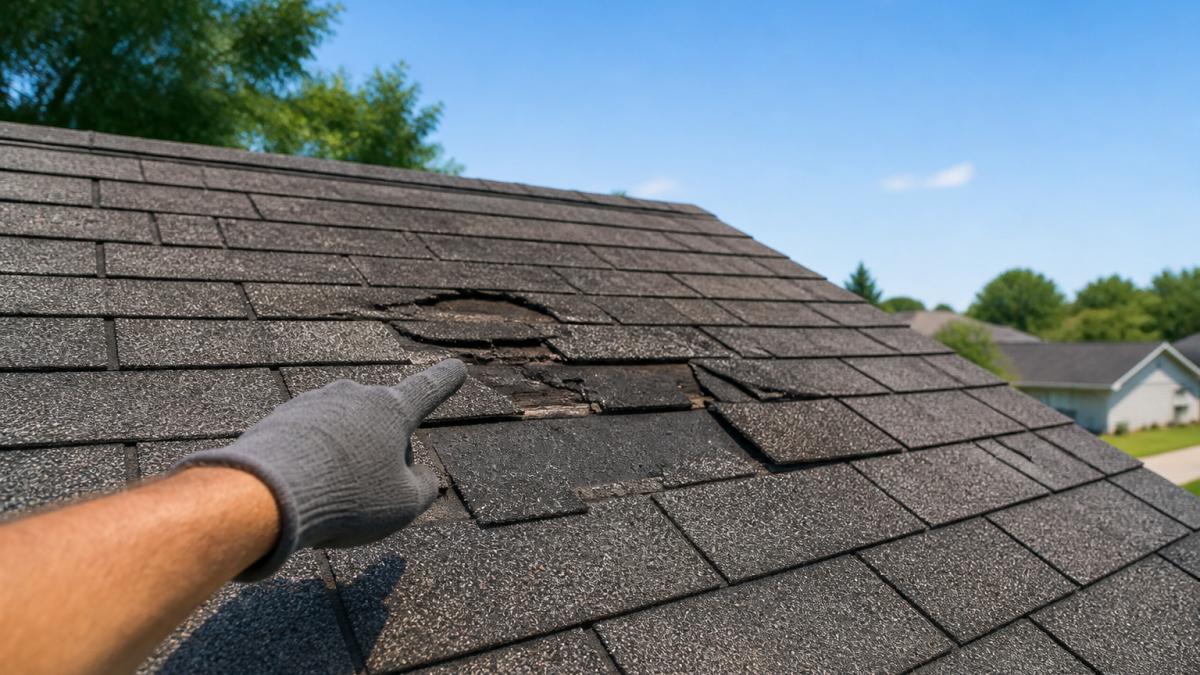
Inspect your shingles for these problems:
- Missing shingles or large sections
- Cracks running across shingle surface
- Shingles curling or lifting at edges
Storm damage often causes obvious shingle damage: wind lifts and tears off shingles, hail creates dents and cracks, and heavy rain forces water under lifted shingles.
Age also causes shingle failure. Shingles typically last 15-25 years; as they age, they become brittle and crack more easily, and the sun hardens and curls them.
Check the entire roof surface, not just areas near the leak. Damage in one spot may not be the leak source.
Inspecting Flashing Around Chimneys, Vents, and Penetrations
Flashing is the metal that seals gaps where roof penetrations pass through the roof. Flashing around chimneys, vents, and skylights is a common leak source, and it can rust, crack, or separate over time.
Inspect all roof flashing carefully:
- Check where flashing meets the roof surface
- Look for gaps or separation
- Examine flashing for rust or corrosion
Flashing should be firmly attached and properly sealed so water flows off without pooling. If flashing is lifted or separated, water gets underneath and causes leaks.
Chimney flashing is particularly vulnerable. The chimney expands and contracts with temperature changes, stressing the flashing and cracking it or breaking the seal. Regular inspection catches these problems early.
Roof Leak After Storm: What to Check First
Storm damage often causes roof leaks. High winds lift shingles and tear them off. Hail dents and cracks shingles. Heavy rain forces water under lifted shingles and through small cracks. Checking your roof after a storm helps you spot roof leaks before they cause damage inside your home.
Immediate Damage Assessment and Safety Steps
Start your inspection from the ground:
- Look at your roof from the street or yard
- Use binoculars to inspect shingles from a distance
- Check for missing shingles or large visible damage
This ground-level inspection tells you if professional inspection is needed. If you see obvious damage, call a professional roofer immediately.
If you do not see obvious damage but suspect a leak, check your attic within 24 hours.
Inside your home, check these areas:
- Ceilings and upper walls for water stains
- Attic for wet insulation or wood
- Basement or lower levels for water intrusion
Document any damage with photos. These photos help your insurance adjuster assess the claim. Take pictures of the roof, interior water damage, and damaged items.
Documentation for Insurance Claims
Taking photos and keeping records helps you get fair compensation for storm damage. Insurance companies need evidence of damage and its cause.
Photograph and document:
- All visible roof damage (shingles, flashing, vents)
- Water stains on ceilings and walls
- Damaged insulation or wood in the attic
Keep receipts for any temporary repairs you make to prevent further damage. Insurance typically covers emergency repairs to prevent additional loss.
Write down a detailed description of what happened:
- When the storm occurred
- What type of damage you noticed
- When you discovered the leak
This information helps your insurance adjuster understand the full scope of damage. Professional roofers like Leitch Roofing can help document damage and work with your insurance company.
Distinguishing a Roof Leak from Other Water Sources
Not all ceiling stains come from roof leaks. Plumbing leaks, condensation, and poor ventilation also cause water damage.
Plumbing leaks appear directly below water lines or fixtures. Look for water stains on ceilings directly below bathrooms, kitchens, or laundry rooms.
Poor ventilation allows moisture to accumulate in attics. Attics need air flow to prevent moisture buildup.
How to tell the difference:
- Roof leak: Stain appears after rain, located near roof penetrations or damaged areas, water is active and wet
- Plumbing leak: Stain appears directly below bathroom or kitchen, water drips steadily, problem exists regardless of weather
- Condensation: Stain appears in winter or humid seasons, affects large areas, no active dripping, attic feels damp
When in doubt, have a professional inspect. Roofers can quickly determine if water damage comes from the roof or another source.
When to Call a Professional Roofer
Some roof leaks are easy to spot and fix. Others require professional expertise to locate and repair properly. Knowing when to call a professional prevents costly mistakes.
Call a roofer if you notice:
- Active water dripping or wet stains
- Visible roof damage after a storm
- Mold or mildew growth
Professional roofers have the tools and training to find hidden leaks. They can access your roof safely and inspect areas you cannot reach.
Residential roofing services from Leitch Roofing include thorough inspections, leak detection, and professional repairs.
Get a Free Roof Inspection Today
Early detection saves money and protects your home. A professional roof inspection catches problems before they become expensive repairs.
During a free inspection, our team checks:
- Shingle condition and damage
- Flashing integrity around penetrations
- Attic moisture and ventilation
Request a free estimate today to schedule your inspection.
If you have questions or want to discuss your roof concerns, contact us to speak with a roofing expert.
Key Takeaways:
- Water stains, peeling paint, and musty odors are early signs of roof leaks
- Check your attic for wet insulation and discolored wood to trace water sources
- Inspect shingles and flashing for damage, especially after storms
| Warning Sign | Location | Action Required |
|---|---|---|
| Water stains | Ceiling or walls | Check attic within 24 hours |
| Peeling paint | Upper walls | Inspect for moisture source |
| Sagging ceiling | Interior | Call professional immediately |
| Musty odor | Attic | Look for mold and moisture |
| Missing shingles | Roof surface | Schedule repair soon |
| Wet insulation | Attic | Identify leak source and dry area |
External Resources:
According to the National Association of Home Inspectors, water intrusion is one of the most common causes of structural damage in residential properties.
Research from the Insurance Institute for Business and Home Safety shows that proper roof maintenance and timely repairs reduce water damage claims significantly and protect home value long-term.
Frequently Asked Questions
How can you tell if your roof is leaking?
The most obvious sign is water stains or discoloration on your ceiling or walls, often appearing as brown or yellow patches. Look for peeling paint, bubbling drywall, or a sagging ceiling. You may also notice a musty odor, dampness in the attic, or visible mold growth. If you hear dripping sounds during or after rain, that's another clear indicator. Check your attic with a flashlight for moisture, dark streaks, or wet insulation.
How do you check for a roof leak from inside the house?
Start in your attic during or shortly after rain. Look for water dripping, wet spots on rafters or decking, or dark stains indicating past leaks. Trace water paths carefully, water often travels along rafters or structural beams before dripping down, so the entry point may be several feet away from where you see damage. Check around roof penetrations like vents and chimneys. If you can't access the attic safely, a professional roofer can perform a thorough interior inspection.
How can you find the source of a roof leak?
Start by checking the highest point where you see water damage, then trace upward toward the roof. Look for water stains, wet insulation, or discolored wood. In the attic, follow the water path along rafters and decking. Once you identify a general area, inspect the roof exterior above that spot for missing shingles, cracked areas, or damaged flashing around vents and chimneys. Remember that water can travel sideways before dripping, so the leak source may not be directly above the stain. Professional roofers use specialized techniques to pinpoint leaks accurately.
What should I do immediately after discovering a roof leak?
First, ensure your safety, do not climb on a wet or damaged roof. Move valuables away from the affected area and place buckets to catch dripping water. If the leak is severe, turn off electricity to that area if water is near outlets or fixtures. Document the damage with photos for your insurance claim. Then contact a roofing professional to assess the damage and determine next steps. Temporary tarping may be necessary to prevent further water intrusion until repairs are made.