 how-to
How to Prove Roof Damage Was Caused by Wind
Last Updated: October 26, 2026
Quick Summary
To learn how to prove roof damage was caused by wind, document the damage pattern first: creased or lifted shingles, patchy missing shingles, and fresh granule loss in gutters point to wind rather than age. Then back it up with dated photos, a professional roof inspection report, and National Weather Service storm records for your area.
- A creased shingle is the strongest single clue that wind got under the shingle.
- Storm loss clusters on windward slopes, ridges, and edges, while age wears evenly.
- Photograph wide shots and close-ups, plus a newspaper or phone screen showing the date.
- Pull National Weather Service storm reports and NOAA Storm Prediction Center wind records by date and county.
- Never say the roof is old anyway during the adjuster visit; casual comments get written into claim notes.
Table of Contents
- Start With the Signs of Wind Damage to Roof Surfaces
- Wind Damage vs Wear and Tear Roof Patterns: How to Tell Them Apart
- Document the Damage: Roof Wind Damage Photos for Insurance Claim Files
- Get a Roof Inspection Report for Insurance Claim Support
- Line Up Weather Records and Neighbor Evidence
- Handle the Adjuster Visit Without Giving Ground
- Request a Free Wind Damage Inspection From Leitch Roofing
- Frequently Asked Questions
Start With the Signs of Wind Damage to Roof Surfaces
Learning how to prove roof damage was caused by wind starts with knowing what wind actually does to a roof. At Leitch Roofing, we tell homeowners the same thing: the damage pattern is your first piece of evidence. Wind leaves a signature, and it looks nothing like old age.
Wind damage to a roof is physical disruption caused by uplift, suction, and flying debris during a storm. It shows up as lifted shingles, creased tabs, missing pieces, and fresh granule loss. Age, by contrast, wears a roof down evenly.
Here is what we look for on every inspection:
- Lifted shingles where the sealant strip has let go
- Creased or bent tabs that folded up and snapped back
- Missing shingles in a scattered, patchy pattern
- Granules piled in gutters or at downspout outlets
- Dented vents, flashing, and gutters from debris strikes
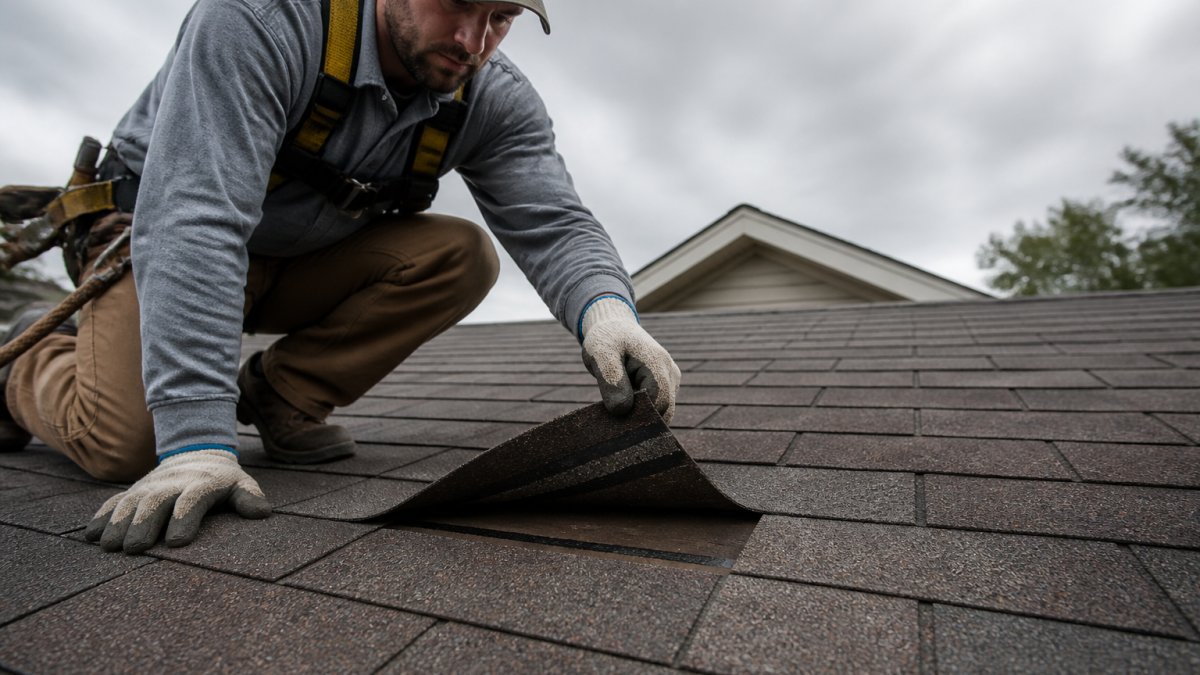
What Lifted, Creased, or Missing Shingles Tell You
A creased shingle is the strongest single clue you have. The asphalt tab bent upward under wind pressure, then dropped back into place. The crease line stays behind.
That crease cannot form from normal aging. It is a mechanical fold, and it tells an adjuster the wind got under the shingle.
Missing shingles matter too, but the pattern matters more. Storm loss tends to cluster on windward slopes, ridges, and edges. Even, scattered wear across the whole roof points to age instead.
Granule Loss and Exposed Mat: Wind or Age?
Granule loss is the trickiest sign to call. Both wind and time strip granules off asphalt shingles.
The difference is location and freshness. Wind scours granules in streaks, usually on the same slopes that lost shingles. You often find the granules washed into gutters or piled at downspouts right after a storm.
Age-related loss is uniform and gradual. If the mat is showing through across the entire roof, that is wear, not wind. If bare spots sit next to fresh creases, wind is the better explanation.
Wind Damage vs Wear and Tear Roof Patterns: How to Tell Them Apart
The wind damage vs wear and tear roof question decides most claims. Insurance covers sudden storm damage. It does not cover a roof that simply wore out. Adjusters look for proof of a single event, not a slow decline.
Here is how the two patterns compare:
| Clue | Wind Damage | Wear and Tear |
|---|---|---|
| Shingle pattern | Patchy, clustered on slopes and edges | Even across the whole roof |
| Tab condition | Creased, folded, or torn | Curled, cracked, brittle |
| Granule loss | Streaked, fresh, in gutters | Uniform, gradual |
| Timing | After one storm event | Builds over years |
| Other damage | Dented vents, downed limbs | None from a single event |
A common mistake is pointing at curled shingles and calling it storm damage. Curling is the classic sign of an aging roof, and an adjuster will spot it fast. Stick to the clues that point to one event.
Your roof's age matters here. Older shingles are more brittle, but that does not mean wind cannot damage them. The Insurance Information Institute's guide to homeowners insurance explains what storm-related damage a standard policy typically covers.
Document the Damage: Roof Wind Damage Photos for Insurance Claim Files
Good roof wind damage photos for insurance claim files do more than show a broken roof. They tie the damage to a date and a cause. Take them before you touch anything.
Here is the photo checklist we hand to homeowners:
- Wide shot of each roof slope from ground level
- Close-up of every creased or lifted shingle
- Missing shingle areas with the surrounding field visible
- Granules collected in gutters or at downspouts
- Dented gutters, vents, and flashing
- Fallen limbs or debris on or near the roof
- A photo of a newspaper or phone screen showing the date
- Interior stains or leaks, if any
Photo Angles and Details Adjusters Look For
Adjusters want context, not just close-ups. A tight shot of one torn shingle proves nothing on its own. Pair it with a wider frame that shows where on the roof it sits.
Shoot into the light when you can. Side lighting shows creases and lifted edges far better than flat overhead sun. Get low, get close, and always include a landmark so the location is clear.
If you want to see what properly documented storm damage looks like, our project gallery shows completed repair work across the region.
Get a Roof Inspection Report for Insurance Claim Support
A roof inspection report for insurance claim support is a written, professional record of what the storm did. It carries more weight than homeowner photos alone because it comes from someone who inspects roofs for a living.
A strong report includes:
- Roof age, material, and overall condition
- A damage map showing where each issue sits
- Photos matched to each finding
- A cause opinion: wind, age, or impact
- A recommended repair scope
What most guides miss is that the cause opinion is the valuable part. Anyone can photograph a torn shingle. A trained inspector can say why it tore and back that up.
Ask for the report in writing, with photos attached. You can book the professional roof inspection the section describes. A verbal "yep, that's storm damage" will not help you when the claim is reviewed.
Line Up Weather Records and Neighbor Evidence
Your photos show damage. Weather records show a storm happened that could cause it. You need both.
Pull the National Weather Service storm reports for your area on the date in question. NOAA's Storm Prediction Center publishes wind reports and storm tracks by date and county. Save the page or a PDF copy.
Then look around. Neighbors with the same damage strengthen your case, especially on the same street and the same roof slope. A shared pattern is hard for an adjuster to dismiss as coincidence.
Keep the timeline tight:
- Storm date and time
- Date you first noticed damage
- Date you filed the claim
- Date of inspection
Gaps in that timeline invite questions. Fill them in with records, not memory.
Handle the Adjuster Visit Without Giving Ground
The adjuster visit is where claims are won or lost. Be present, be organized, and be careful with your words.
Have your photo file, inspection report, and weather records ready. Walk the adjuster to the damage you documented. Let the evidence do the talking.
Watch out: never say "the roof is old anyway" or "I figured it was about time." Casual comments get written into claim notes and used to deny coverage. Stick to facts about the storm.
If the adjuster calls it wear and tear, do not argue on the spot. Ask for the denial in writing with the reason stated. Then get a second opinion from a roofer who documents cause. If you want guidance before the visit, contact our team and we will walk you through what to have ready.
Request a Free Wind Damage Inspection From Leitch Roofing
You do not have to build this case alone. A free wind damage inspection gives you the documentation, the cause opinion, and the photos an insurer expects to see.
Before you book, read our verified customer reviews to see how we handle claims and communication. Then request your free estimate and we will get an inspector to your roof.
At Leitch Roofing, we bring skilled crews, quality materials, and hands-on insurance claim expertise to every job. Our team documents damage the way adjusters want it documented, and we help homeowners through the claim process from inspection to final repair. We also handle full residential and commercial roofing work when the claim is settled.
Frequently Asked Questions
What does wind damage look like on a roof?
Wind damage usually shows as shingles that are lifted, curled, creased, or torn away, often in patches on the side the storm hit. Look for exposed nail heads, missing granules in streaks, and shingle tabs bent back at the seal. Unlike even, widespread aging, wind damage tends to cluster and follow the storm's direction. Take dated close-up photos of each spot before anything is repaired so the pattern is preserved for your claim.
How can I tell if roof damage was caused by wind or wear and tear?
Wind damage vs wear and tear roof damage differ in pattern and timing. Wear and tear is gradual: uniform granule loss, brittle shingles across the whole slope, and aging sealant. Wind damage is sudden and localized, with creased or flipped shingles, fresh tears, and debris impact marks, usually right after a recorded storm. A contractor's inspection report that ties the damage pattern to a specific weather event is the strongest way to separate the two.
What evidence do I need to prove wind damage to my roof?
Build a file with dated photos of the damage, a written roof inspection report from a licensed contractor, local weather records showing wind gusts at or above the shingle's rated limit, and notes on any neighbor damage. Keep receipts for emergency tarping and a log of every call with your insurer. This combination gives the adjuster documented proof rather than a verbal claim, which is what makes a wind damage claim hold up.
Will homeowners insurance cover roof damage caused by wind?
Most standard homeowners policies cover sudden wind damage, but coverage depends on your policy terms, deductible, and the roof's age and condition. Insurers often deny claims they attribute to wear and tear, so proof matters. If an adjuster calls it maintenance, a contractor's inspection report and dated photos can support a reinspection request. Review your policy's wind and cosmetic damage provisions before filing.
Wind damage claims reward preparation, and the homeowner with photos, records, and a professional report holds the stronger hand. Get started with Leitch Roofing and turn a storm-damaged roof into a documented, well-supported claim.