 how-to
How to Fight Roof Insurance Denial: 2026 Guide
Table of Contents
- Common Reasons for Roof Insurance Claim Denial
- Review Your Policy and Denial Letter First
- How to Fight Roof Insurance Denial Step by Step
- Roof Insurance Claim Appeal Letter Sample
- The Appraisal Clause: A Powerful Option When Appeals Stall
- Hiring a Public Adjuster for Roof Damage
- When to Fight a Roof Insurance Denial With an Attorney
- Frequently Asked Questions
Last Updated: August 25, 2026
Getting a roof insurance denial letter is one of the most frustrating things a homeowner can face after a storm. You've paid your premiums, the damage is real, and now your insurer is telling you no. At Leitch Roofing, we work with homeowners through this exact situation regularly, and the truth is: a denial is not the end of the road. Knowing how to fight a roof insurance denial, step by step, is what separates homeowners who get their roofs replaced from those who pay out of pocket.
The good news is that policyholders have real tools available, from formal appeals to the appraisal clause to hiring a public adjuster. Below, this guide walks through every option, including a sample appeal letter you can use today.
Common Reasons for Roof Insurance Claim Denial
Most roof insurance claim denials fall into a handful of predictable categories. Understanding which one applies to your situation is the first step toward building a credible challenge.
Wear and Tear vs. Sudden Storm Damage
This is the single most common battleground in roof claim disputes. Insurance policies cover sudden, accidental damage, not gradual material breakdown. When an adjuster attributes roof deterioration to wear and tear rather than a specific storm event, the insurer can deny the claim entirely.
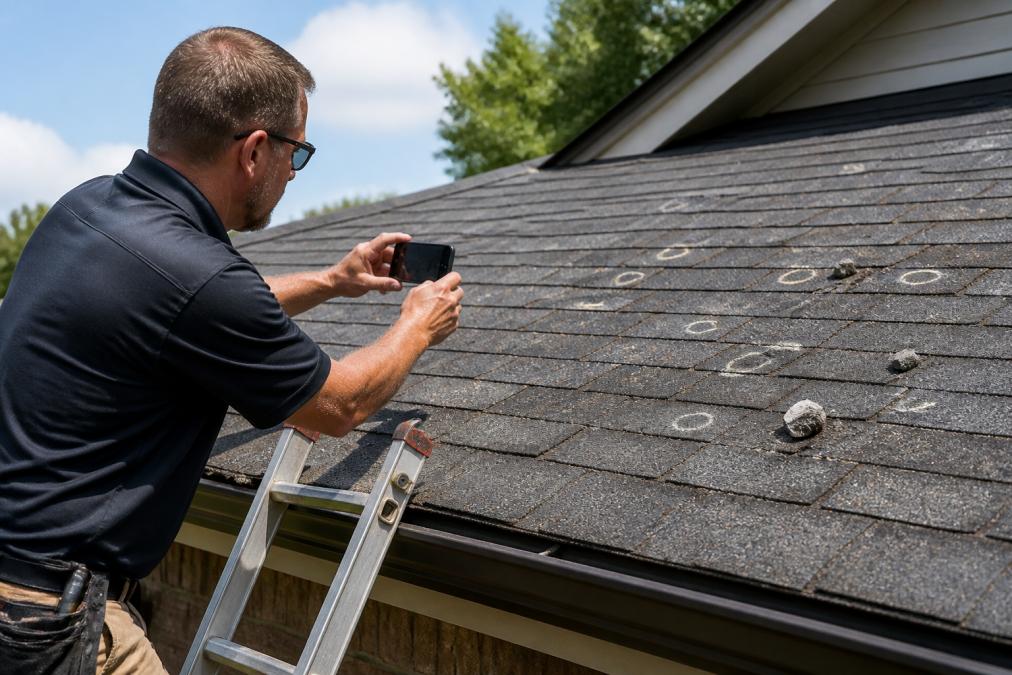
A hail storm striking a 15-year-old roof can cause genuine, insurable damage. But an adjuster may argue that granule loss, cracked shingles, or sagging decking existed before the storm. A qualified roofing contractor can identify storm-specific damage patterns, such as impact spatter from hailstones, that differ from age-related deterioration.
Policy Exclusions and Coverage Limits
Insurers also deny claims based on specific policy exclusions: improper installation, lack of maintenance, cosmetic damage only, or damage below the deductible. Some policies distinguish between replacement cost value and actual cash value, with depreciation subtracted from settlements.
Read your policy's exclusions section carefully before filing an appeal. Coverage limits and proof of loss requirements often surprise homeowners who assumed they were fully covered.
Review Your Policy and Denial Letter First
Before doing anything else, read your insurance policy and denial letter side by side.
The denial letter must state a specific reason for the denial. Vague language is a red flag. If the letter references a policy exclusion, find that exact exclusion in your policy and read it in full. Insurers sometimes misapply exclusions or cite provisions that don't actually cover the situation described.
Pay close attention to:
- The specific policy section cited in the denial
- Whether the adjuster's report matches what you observed on your roof
- The deadline for filing a formal appeal or invoking the appraisal clause
- The statute of limitations for filing a bad faith complaint in your state
Many states require insurers to respond to claims and appeals within defined timeframes. The National Association of Insurance Commissioners consumer resources provides state-by-state guidance on policyholder rights. Missing a deadline can forfeit your right to appeal.
How to Fight Roof Insurance Denial Step by Step
Fighting a roof insurance denial is a methodical process. Each step builds on the last, and skipping one weakens your position.
Step 1: Document the Damage Thoroughly
Photograph and video every area of damage as soon as it is safe to do so. Capture wide shots showing the full roof plane, then close-ups of individual impact points, cracked shingles, missing granules, and any interior water intrusion. Date-stamp everything.
Documentation creates a contemporaneous record tying damage to a specific weather event and gives an independent contractor and appraiser concrete evidence to assess.
Step 2: Request Your Full Claim File
You are entitled to request your complete claim file from your insurer, including the adjuster report, photographs, internal notes, and the specific policy language used to deny the claim.
The file often reveals inconsistencies, such as an adjuster who spent 20 minutes on a complex roof inspection, or notes that contradict the denial letter's stated reasoning. Written correspondence requesting the file creates a paper trail that matters if the dispute escalates.
Step 3: Get an Independent Contractor Estimate
Hire a qualified roofing contractor to conduct a full inspection and provide a written estimate. This should itemize damage, specify materials required, and distinguish between storm-caused damage and pre-existing conditions.
An independent contractor estimate is one of the most persuasive documents in a roof insurance claim appeal. Make sure the contractor is licensed and willing to put their assessment in writing, including their professional opinion on the cause of damage.
Step 4: Obtain an Independent Meteorology Report
An independent meteorology report documents the specific weather conditions at your property's address on the date of the claimed storm. It can confirm hail size, wind speeds, and storm track, providing objective, third-party evidence that a qualifying weather event occurred.
Forensic meteorology firms provide these reports for a fee, and the investment is often worthwhile given the cost of a full roof replacement. According to the Insurance Information Institute's guidance on homeowners claims, supporting documentation significantly strengthens a policyholder's position during appeals.
Step 5: File a Formal Written Appeal
Once you have your documentation, contractor estimate, and meteorology report, file a formal written appeal with your insurer. Address it to the claims department in writing, reference your claim number, and include all supporting documents.
Your appeal should:
- State clearly that you are disputing the denial
- Identify the specific reason given in the denial letter
- Explain why that reason is incorrect or misapplied, with evidence
- Attach the contractor estimate and meteorology report
- Request a response within the insurer's stated resolution timeframe
- Keep a copy of everything you send
Send the appeal via certified mail with return receipt requested.
Roof Insurance Claim Appeal Letter Sample
A professional, well-structured appeal letter signals to your insurer that you are serious and organized. Here is a template you can adapt:
[Your Name] [Property Address] [Date]
[Insurance Company Name] Claims Department [Insurer Address]
Re: Formal Appeal of Claim Denial, Claim No. [XXXXXX]
Dear Claims Representative,
I am writing to formally appeal the denial of my roof damage claim referenced above. Your denial letter dated [DATE] cited [REASON FROM DENIAL LETTER] as the basis for the decision. I respectfully dispute this determination and am providing the following supporting documentation:
- A written inspection report and replacement estimate from [Contractor Name], a licensed roofing contractor, dated [DATE], which identifies storm-specific damage patterns inconsistent with normal wear and tear.
- An independent meteorology report from [Firm Name], dated [DATE], confirming that a hail event with [SIZE] diameter hailstones occurred at my property address on [DATE OF STORM].
- Photographs documenting damage taken on [DATE].
Based on this evidence, I request that you reconsider the denial and approve coverage for the full replacement cost value of the damaged roof system as outlined in my policy.
I expect a written response within [X] days as required under [your state's] insurance regulations. If I do not receive a satisfactory response, I am prepared to invoke the appraisal clause under Section [X] of my policy and to file a complaint with my state's Department of Insurance.
Sincerely, [Your Name] [Phone Number] [Email Address]
The Appraisal Clause: A Powerful Option When Appeals Stall
The appraisal clause is one of the most underused tools available to policyholders, and most homeowners have never heard of it.
The appraisal clause is a provision in most homeowners insurance policies that allows either party to demand a formal appraisal process when there is a disagreement over the amount of a loss. Each party hires an independent appraiser, and those two appraisers select a neutral umpire. If the appraisers cannot agree, the umpire casts the deciding vote. The resulting award is binding.
This process resolves disputes about the dollar amount of the loss. If your insurer agrees that some damage is covered but offers far less than your contractor's estimate, invoking the appraisal clause can force a fair valuation without litigation.
To invoke the appraisal clause, send written notice to your insurer stating your intent. Your policy will specify the exact process and timeframes. This is worth doing before hiring an attorney, as it is faster and less expensive than going to court.
Hiring a Public Adjuster for Roof Damage
A public adjuster is a licensed professional who represents the policyholder, not the insurance company, during a claim.
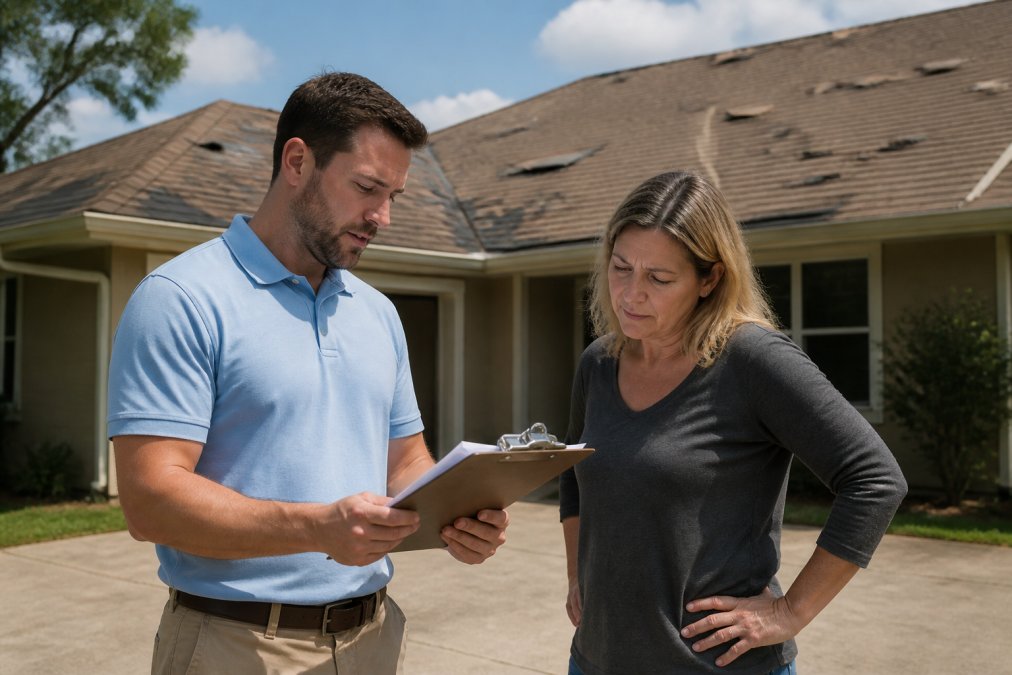
Hiring a public adjuster for roof damage is worth serious consideration when the claim is large, the denial reasoning is complex, or you lack the time to manage the process yourself. Public adjusters understand policy language, document damage in the format insurers respond to, and negotiate directly with claim representatives on your behalf.
Public adjusters typically charge a percentage of the final settlement, which means they are motivated to maximize your payout. The National Association of Public Insurance Adjusters professional standards provides a directory of licensed adjusters and outlines their standards.
When to Fight a Roof Insurance Denial With an Attorney
Most roof insurance denials can be resolved through appeals and the appraisal clause. But some situations call for legal representation.
Consider consulting a policyholder attorney if:
- Your insurer is acting in bad faith, such as refusing to respond, misrepresenting policy terms, or unreasonably delaying the claim
- The insurer denies the claim after a binding appraisal award
- The denial involves a coverage dispute that the appraisal clause cannot resolve
- You are approaching the statute of limitations for filing suit under your policy
Bad faith insurance practices are regulated at the state level. Most states allow policyholders to file complaints with their state Department of Insurance. For legal disputes, the American Bar Association's guide to finding insurance attorneys is a useful starting point for locating attorneys who specialize in policyholder representation.
Attorney fees in insurance disputes are often contingency-based, meaning you pay nothing unless you win.
| Situation | Best Next Step |
|---|---|
| Denial cites wear and tear | Independent contractor inspection + meteorology report |
| Dispute over damage amount | Invoke the appraisal clause |
| Insurer unresponsive or delaying | File state DOI complaint + consult attorney |
| Complex documentation needs | Hire a licensed public adjuster |
| Missed appeal deadline | Consult attorney immediately |
| Low settlement offer | Public adjuster or appraisal clause |
Roof insurance denials hit hardest when the damage is real and the repair cost is significant. The process of challenging a denial is manageable when you work through it methodically: document thoroughly, request your claim file, get independent professional assessments, and put everything in writing. Leitch Roofing offers insurance claim assistance alongside our roofing inspections and repairs, which means we can help document damage in the format that moves the needle with insurers. Our skilled crews provide written estimates that meet the standards adjusters and appraisers expect. Get a free estimate today and let us help you build the case your claim deserves.
Frequently Asked Questions
Can you dispute a denied insurance claim?
Yes. A roof insurance denial is not final. Policyholders have the right to file a formal written appeal, invoke the appraisal clause in their policy, or file a complaint with their state's Department of Insurance. Supporting your appeal with an independent contractor estimate, photos, and a meteorology report significantly strengthens your case. If the insurer still refuses a fair settlement, consulting a bad faith insurance attorney is a legitimate next step.
What not to say to a roof insurance adjuster?
Avoid admitting that the damage looks minor or that the roof is old. Never guess at dates or causes of damage. Do not agree verbally to a settlement amount on the spot, and do not sign anything before reviewing the adjuster report in full. Stick to documented facts: the storm date, visible hail or wind damage, and your contractor's written estimate. All significant communications should follow up in writing to create a clear record.
How do I write an appeal letter for a denied insurance claim?
Address the letter to your claim representative and include your policy number, claim number, and the denial letter date. State clearly that you are disputing the denial, cite the specific policy language you believe supports coverage, and attach supporting evidence: photos, a contractor estimate showing replacement cost value, and any meteorology report confirming the storm event. Set a reasonable resolution date and request a written response. Keep the tone factual and professional throughout.
What happens if my roof claim is denied?
After a roof insurance denial, you have several options: file a formal appeal with new documentation, invoke the appraisal clause to bring in an independent appraiser, hire a public adjuster to renegotiate on your behalf, or consult an attorney if bad faith is suspected. Be aware of your state's statute of limitations for insurance disputes, which limits how long you have to act. Acting quickly and keeping all written correspondence organized improves your chances of a successful outcome.