 how-to
How to Extend the Life of Industrial Warehouse Roofs
Table of Contents
- Why Roof Lifespan Matters for Warehouse Operations
- Establish a Commercial Roof Inspection Frequency Schedule
- Create and Follow an Industrial Roof Maintenance Checklist
- Address Drainage and Standing Water Prevention
- Understand Commercial Roof Coating Benefits
- Decide: Commercial Roof Repair vs. Replacement
- Document Roof Condition and Maintenance Records
- Protect Your Roof from Foot Traffic and Mechanical Damage
- Frequently Asked Questions
Last Updated: October 21, 2026
Why Roof Lifespan Matters for Warehouse Operations
A commercial roofing system is one of your largest capital assets. When it fails, operations stop. Water intrusion shuts down equipment, damages inventory, and forces costly emergency repairs.
The difference between a roof that lasts 15 years and one that lasts 25 years isn't luck. It's systematic maintenance.
Most warehouse managers treat roofs like they treat parking lots: ignore them until something breaks. That approach costs money. A roof that fails early forces you to replace it before you've recovered your original investment.
How to extend the life of industrial warehouse roofs starts with understanding what actually damages them. UV exposure breaks down membrane materials. Standing water creates weak spots. Debris traps moisture.
The roofing materials themselves matter too. Built-up roofing, modified bitumen, and metal roofing all have different service lives. A built-up roof typically lasts 15-20 years. Metal roofing can exceed 40 years. Modified bitumen falls somewhere in between. But material lifespan assumes proper maintenance.
Establish a Commercial Roof Inspection Frequency Schedule
A commercial roof inspection should happen at least twice per year. Most warehouse owners miss this entirely. They call a roofer only after a leak appears in the office or water stains show up on the ceiling.
By then, damage has already spread underneath the membrane. Water intrusion causes structural rot, mold, and corrosion that costs far more to repair than catching the problem early.
Seasonal Inspection Timing
Spring and fall are the critical windows. Spring inspections catch winter damage: ice dam buildup, debris accumulation, and membrane brittleness from freeze-thaw cycles. Fall inspections prepare the roof for winter stress and identify storm damage before heavy snow loads arrive.
Schedule inspections in late March or early April and again in late September or early October. This timing aligns with seasonal stress points.
After severe weather events, inspect the roof within 48 hours. Don't wait for the next scheduled inspection. Hail, high winds, and heavy rain create immediate vulnerabilities.
Professional vs. Visual Assessments
A visual inspection from the ground or from binoculars catches obvious problems: debris piles, visible pooling, or sections where the membrane looks degraded. A professional inspection goes deeper.
A professional inspector walks the roof surface, probes seams, checks flashing around penetrations, tests drainage systems, and documents conditions with photos and measurements. They identify early-stage problems that aren't visible from ground level.
Many warehouse managers do a visual walk-through themselves quarterly and hire a professional inspector annually. This hybrid approach is cost-effective and catches most issues before they become expensive.
Create and Follow an Industrial Roof Maintenance Checklist
A maintenance checklist keeps your team focused on what actually prevents damage. Without one, maintenance becomes reactive and inconsistent.
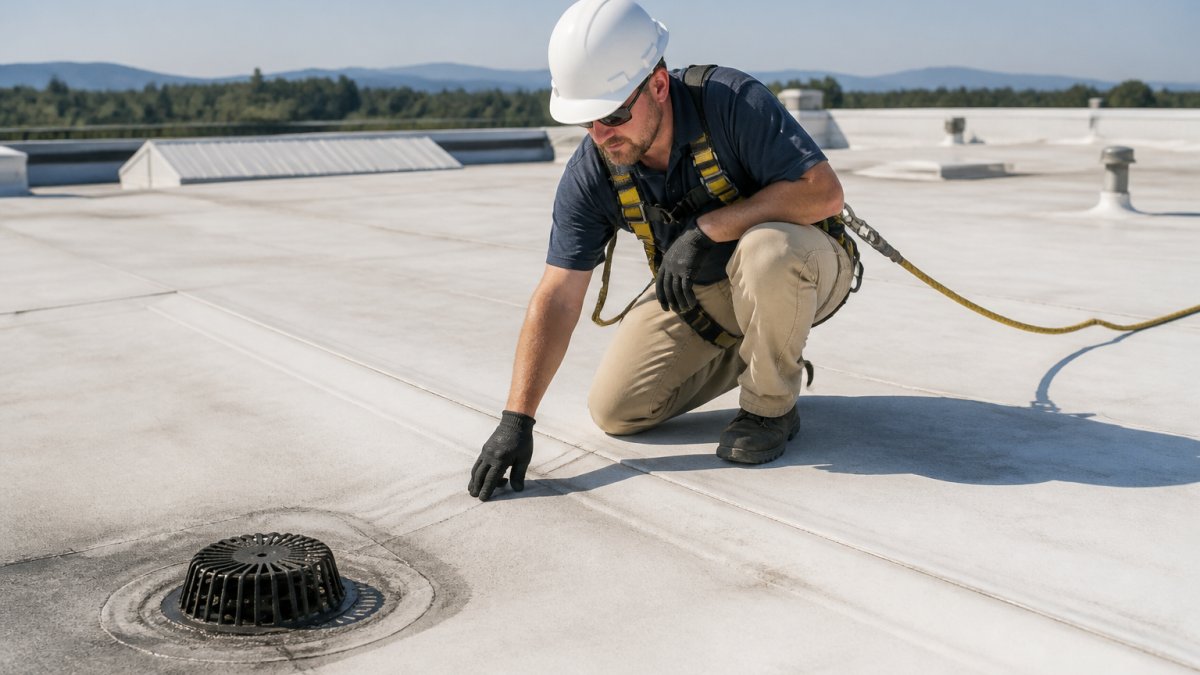
Monthly and Quarterly Tasks
Monthly checks take 30-45 minutes and require no special equipment:
- Walk the perimeter and check for visible debris accumulation
- Look for pooled water in low spots (signs of drainage failure)
- Inspect visible flashing around HVAC units, vents, and exhaust pipes
- Check for obvious membrane damage, tears, or blistering
- Photograph problem areas for your maintenance log
Quarterly inspections add detail:
- Clear debris from roof drains and gutters
- Inspect roof-to-wall joints and corners for separation
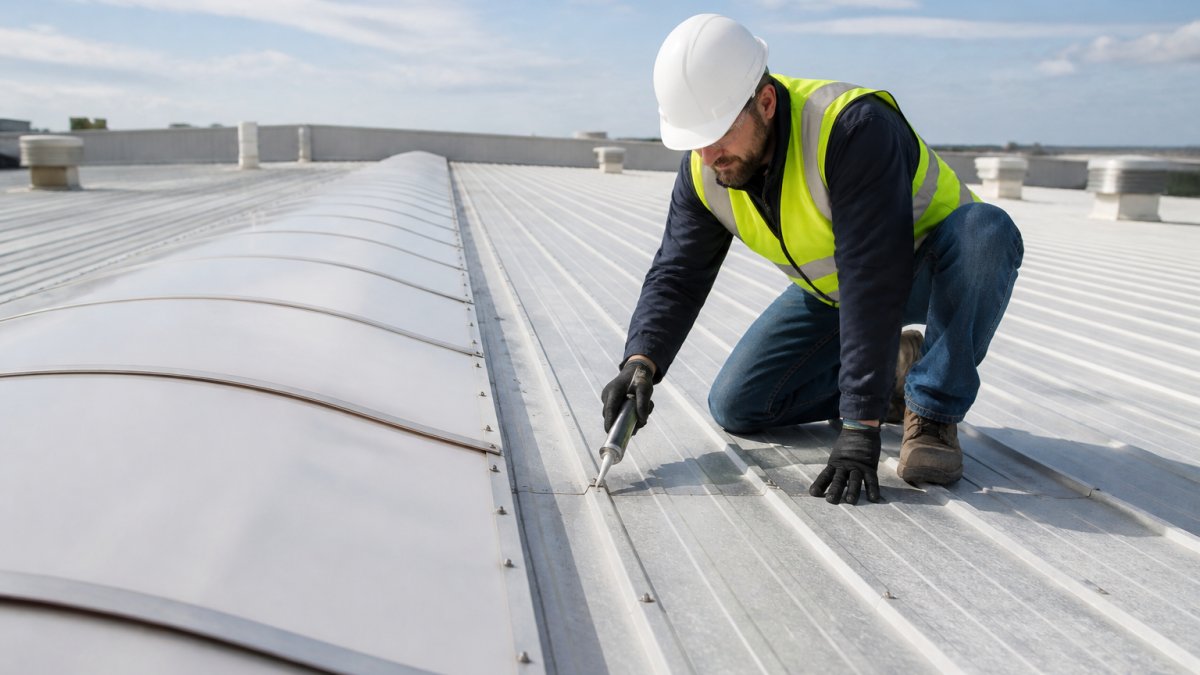
- Check sealant around all penetrations for cracks or deterioration
- Look for algae or mold growth (indicates moisture retention)
- Verify that HVAC maintenance crews haven't damaged the membrane during service visits
Annual Deep-Cleaning Priorities
Once per year, schedule a thorough cleaning. Debris removal is the single most effective maintenance task you can do.
Leaves, dirt, and organic material trap moisture against the membrane. This accelerates deterioration and creates conditions for mold and algae growth. Pressure washing can damage a roof membrane, so use soft-bristle brushes and low-pressure water instead.
Clean roof drains completely. Clogged drains force water to pool, which weakens the membrane and can lead to structural damage if water enters the building.
After cleaning, inspect the membrane surface closely. Cleaning removes dirt that can hide small tears or blistering.
| Task | Frequency | Time Required | Priority |
|---|---|---|---|
| Visual debris check | Monthly | 30 minutes | High |
| Drain inspection | Quarterly | 20 minutes | High |
| Flashing check | Quarterly | 30 minutes | Medium |
| Deep cleaning | Annual | 2-4 hours | High |
| Professional inspection | Annual | 2-3 hours | High |
Address Drainage and Standing Water Prevention
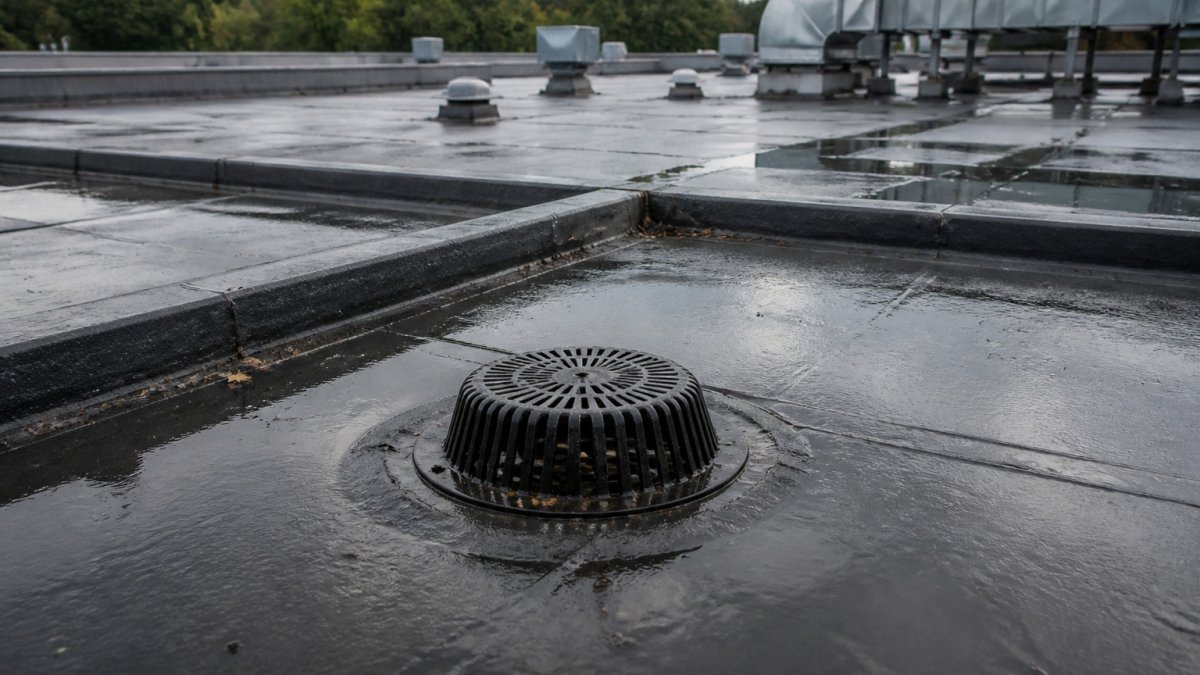
Standing water is the fastest way to shorten roof lifespan. Water that pools on the membrane penetrates seams and creates weak spots. Ponding water also adds weight stress to the structure.
Most warehouse roofs have some slope for drainage, but flat roofs are common in industrial settings. Even slight slopes can fail if drains clog or if the roof membrane settles unevenly over time.
Check for standing water 24 hours after rain. If water remains, you have a drainage problem. The solution depends on the cause.
Clogged drains are the most common issue. Clear them completely. Remove leaves, dirt, and debris by hand. Flush the drain with water to ensure flow.
If drains are clear but water still pools, the roof may have settled. Low spots develop over time as the structure shifts slightly.
Standing water also prevents you from inspecting the membrane underneath. You can't see damage if water covers it.
Understand Commercial Roof Coating Benefits
A roof coating is a protective layer applied to the membrane surface. It extends roof lifespan by blocking UV exposure, which is the primary cause of membrane degradation.
UV rays break chemical bonds in roofing materials. Over time, this causes the membrane to become brittle, crack, and lose its water-resistant properties. A UV-resistant coating slows this process significantly.
Most coatings also improve reflectivity, which reduces roof surface temperature. This lowers cooling costs in summer and reduces thermal stress on the membrane during temperature swings.
Coatings come in several types. Acrylic coatings are water-based, easy to apply, and cost-effective. Polyurethane coatings are more durable and provide better protection but cost more.
A quality coating adds 5-10 years to roof lifespan when applied to a roof in good condition. If the membrane is already damaged, a coating masks the problem but doesn't fix it.
The best time to apply a coating is when the roof is 5-10 years old, before significant UV damage has accumulated.
Decide: Commercial Roof Repair vs. Replacement
At some point, repair stops making economic sense. The decision between repair and replacement depends on roof age, damage extent, and remaining service life.
When Early Repairs Extend Service Life
Catching problems early makes repair the right choice. A small tear caught within weeks costs $200-500 to repair. The same tear left for months spreads and requires $2,000+ in repairs.
Early repairs include:
- Sealing small tears or cracks in the membrane
- Replacing damaged flashing around penetrations
- Repairing localized areas of blistering or separation
- Clearing debris and addressing drainage problems
These repairs typically add 3-7 years to roof lifespan and cost a fraction of replacement.
When Replacement Becomes the Better Choice
Replacement makes sense when the roof has reached the end of its design service life or when damage is widespread.
A built-up roof nearing 20 years old with multiple problem areas is approaching replacement time anyway. Spending money on repairs buys only a few more years. Replacement gives you a new 15-20 year service life.
Widespread damage (more than 20% of the roof surface showing deterioration) also favors replacement. Patching multiple areas doesn't address the underlying aging of the membrane.
If repair costs exceed 50% of replacement cost, replacement is the better investment.
Document Roof Condition and Maintenance Records
Maintenance documentation is often overlooked but critical for two reasons: it protects your insurance claim and it helps you make informed decisions about repair vs. replacement.
Keep records that include:
- Date of each inspection and who performed it
- Photos of the roof condition (overall and problem areas)
- Description of any damage found
- Maintenance tasks completed
- Repairs performed and cost
- Materials used (brand, type, coverage)
- Professional inspection reports with detailed findings
This documentation proves you've maintained the roof properly. If water damage occurs and your insurance company investigates, you can show that you followed a maintenance plan and addressed problems promptly. This strengthens your claim.
The records also create a timeline of roof condition. Over several years, you'll see patterns: whether damage is spreading, whether repairs are holding, whether the roof is degrading faster than expected.
Store records digitally and in hard copy. Use a simple spreadsheet or a dedicated maintenance log. Include photos from each inspection.
Protect Your Roof from Foot Traffic and Mechanical Damage
HVAC maintenance, antenna installation, and equipment service all require people on the roof. Each visit creates risk.
Foot traffic damages protective coatings and can puncture the membrane if workers step on weak spots. Heavy equipment moved across the roof causes abrasion and can tear the membrane.
Establish clear protocols:
- Require all roof access to be scheduled and supervised
- Insist that workers use designated walkways if available
- Prohibit dragging equipment across the membrane
- Require contractors to inspect the roof before and after their work
- Have them document any damage they cause
After contractors leave, inspect the area they worked. Photograph any new damage immediately. This creates a record if problems develop later.
For frequent access points (around HVAC units, for example), consider installing protective walkway pads. These distribute weight and protect the membrane from abrasion.
Mechanical damage is often overlooked as a cause of roof failure. Contractors assume the roof can handle anything. It can't. A single puncture can go unnoticed for months until water enters the building.
Extending the life of industrial warehouse roofs comes down to consistency. When you're ready to assess your roof's condition or discuss a maintenance strategy, get a free estimate today and let our team show you how we can extend your roof's lifespan and protect your operations.
Frequently Asked Questions
How often should an industrial warehouse roof be inspected?
Professional inspections should occur at least twice yearly: once after winter to assess freeze-thaw damage, and once after summer storms. High-traffic roofs or those in extreme climates may need quarterly assessments. Monthly visual walkthroughs by facility staff catch debris, standing water, and obvious wear early. Regular inspection schedules help you identify small issues before they become costly water intrusion problems that shorten your roof's service life.
What maintenance helps a warehouse roof last longer?
The core practices are debris removal, drainage system cleaning, prompt leak repairs, and UV-resistant coating application. Remove leaves, dirt, and standing water monthly. Clear gutters and roof drains quarterly. Repair small leaks immediately to prevent membrane damage. Apply protective coatings every 3-5 years to shield the roof surface from UV exposure and weather. These preventative maintenance steps can extend your industrial roofing material's lifespan by 10-15 years compared to neglected roofs.
When should I repair a warehouse roof instead of replacing it?
Repair is cost-effective if your roof is under 15 years old, damage is localized to less than 25% of the surface, and the structural integrity remains sound. Small leaks, damaged flashing, or worn seams are prime repair candidates. If your roof is nearing the end of its service life (typically 20-30 years depending on material), has widespread membrane failure, or requires repairs more than twice yearly, replacement often costs less over time and provides better warranty protection.
Can roof coatings extend the life of an industrial roof?
Yes. Commercial roof coatings provide UV-resistant protection that slows weathering and extends the roof's lifespan by 5-10 years. They also reduce energy costs by reflecting heat and improve water drainage by smoothing surface imperfections. Coatings are most effective on built-up roofing, modified bitumen, and metal systems. Apply coatings every 3-5 years or when the surface shows significant wear. They work best as part of a preventative maintenance plan, not as a standalone solution for severely damaged roofs.