 how-to
How to Avoid Roof Repair Scams: A 2026 Guide
Table of Contents
- Why Roof Repair Scams Spike After a Storm
- How to Verify Roofing License and Insurance Before Hiring
- 7 Questions to Ask a Roofing Contractor on Your Driveway
- The Roof Repair Contract Checklist: 5 Clauses That Protect You
- Tactics Scammers Use to Manufacture Damage and Fear
- How to Handle Door-to-Door Offers and Free Inspections
- Your Next Step: Hire With Verification, Not Urgency
- Frequently Asked Questions
Last Updated: September 7, 2026
Why Roof Repair Scams Spike After a Storm
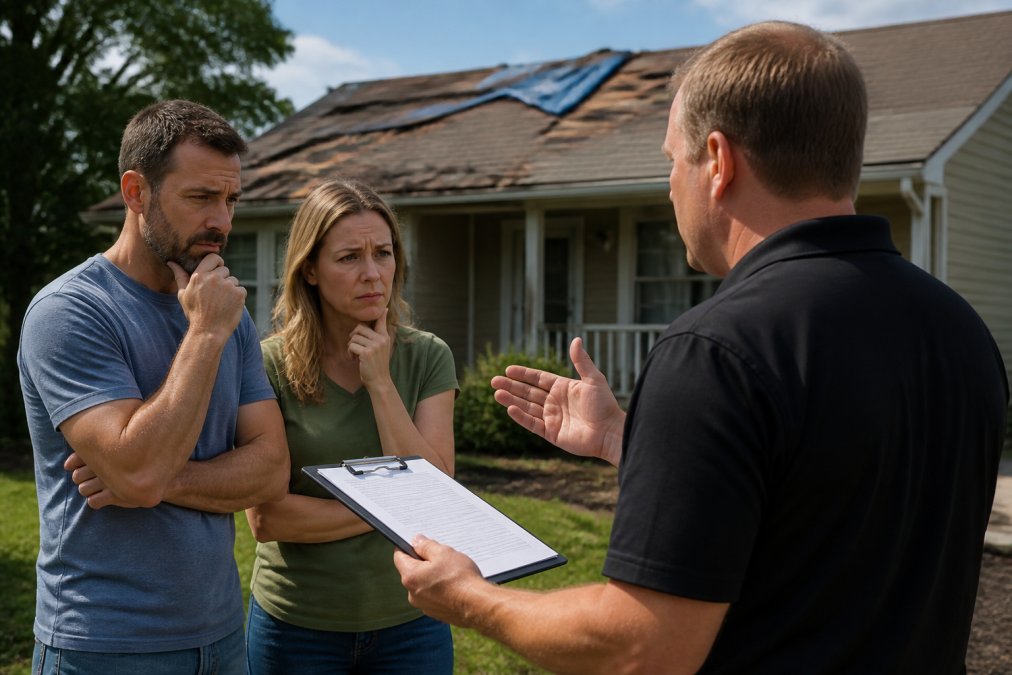
Severe weather is the single most reliable trigger for roofing fraud. When hail or high winds sweep through a neighborhood, unmarked trucks and out-of-state solicitors follow within days, offering fast repairs and "free" inspections. This surge is not a coincidence; it is a calculated business model that preys on homeowners under pressure.
Storm chasers operate on urgency. They know that a damaged roof creates anxiety about leaks, mold, and structural decline, and they exploit that fear to push quick signatures. According to guidance from the Federal Trade Commission on storm damage repair, legitimate contractors rarely go door-to-door after a disaster, and consumers should be highly skeptical of unsolicited offers. The pressure to act immediately is the primary tool of the fraudster.
This guide gives you a verification process that removes emotion from the decision, replacing urgency with due diligence.
How to Verify Roofing License and Insurance Before Hiring
The most effective way to avoid roof repair scams is to confirm your contractor is properly licensed and insured before any work begins. Roof repair scams frequently involve unlicensed operators who collect deposits and disappear.
First, request the contractor's license number and cross-check it against your state's licensing board database, which confirms whether the license is active and whether complaints have been filed. Second, ask for a certificate of insurance directly from the contractor's provider, not a photocopy. This proves they carry general liability coverage and workers' compensation, protecting you if an injury occurs on your property.
A common mistake is accepting a verbal assurance of insurance. If a contractor cannot produce a current certificate, treat that as a red flag. This step alone eliminates a large portion of fraudulent actors.
7 Questions to Ask a Roofing Contractor on Your Driveway
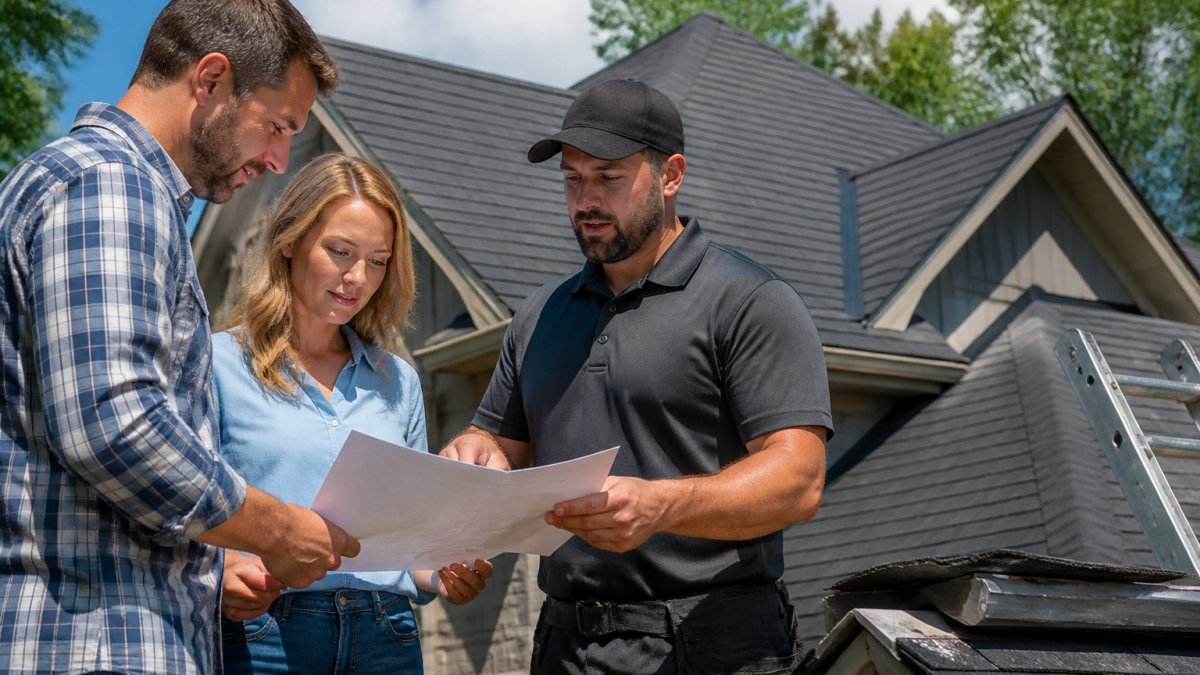
When a contractor appears at your door, the driveway conversation is where scams are either exposed or confirmed. Keep this list of questions to ask a roofing contractor ready.
- What is your full legal business name and physical address? A PO box or out-of-state address is a warning sign.
- Can you provide your state contractor license number? Verify it independently, not just by looking at their card.
- Will you provide a certificate of insurance from your carrier? Confirm it is current and covers the specific job.
- Do you have references from jobs completed in this area within the last year? Call at least two of them.
- Will you pull the required permits for this repair? Permit requirements exist to protect you from faulty work.
- Does your workmanship warranty cover labor as well as materials? Get the warranty terms in writing.
- Can I see a written estimate that itemizes materials and labor costs? A vague lump sum makes it impossible to compare bids.
The Roof Repair Contract Checklist: 5 Clauses That Protect You
A verbal agreement offers zero protection. A written contract is your primary defense against roof repair scams, but only if you scrutinize the language for clauses that shift risk and control away from you.
1. A Detailed Scope of Work (and What 'Detailed' Means)
The contract must include a detailed scope of work describing exactly what will be repaired or replaced, including materials, brands, and colors. A common scam is to use vague terms like "repair as needed" or "match existing shingles," giving the contractor an out to use cheaper materials (peer-reviewed research). Insist on a line-item description specifying the manufacturer, product line, and color. A contract that says "install GAF Timberline HDZ in Charcoal" is far more protective than one that says "install architectural shingles." A lump sum for materials is a red flag that the contractor may substitute lower-grade products.
2. A Project Timeline with a 'Time is of the Essence' Clause
The contract must state a project timeline with a start date and an estimated completion date. A predatory contractor can start the job and then disappear for weeks. Look for a clause stating "Time is of the essence," meaning the timeline is a critical part of the contract and any unreasonable delay is a breach. Without it, a court may view the completion date as an estimate. If the contractor refuses to include this phrase, they don't intend to be held to a schedule.
3. Payment Terms That Tie Final Payment to Your Final Walkthrough
Payment terms must be explicit, with the final payment tied to completion and your final inspection. The most dangerous clause is an Assignment of Benefits (AOB) , which gives the contractor the legal right to bill your insurance company directly and receive payment without your approval. This removes your control over the claim; the contractor can inflate the bill, and if you dispute the work, you fight both the contractor and your insurer. Strike this clause out. You should receive the insurance check and pay the contractor upon satisfactory completion.
4. The Named Contractor and License Number
The contract must name the specific roofing contractor and their license number, not a generic "we" or a salesperson's name. A common scam involves a salesperson who is not a licensed contractor: they sign the contract, collect a deposit, and subcontract the work to an unlicensed crew, leaving you with no recourse. Verify that the name on the contract matches the state license and certificate of insurance, and confirm the license number is active on your state's database.
5. A 'Right to Cancel' and Change Order Process
The contract should address how change orders are handled, ensuring any added work is approved in writing before it begins. A contractor may start work, claim they found "unexpected damage," and demand more money. The contract should state that any change to scope or price must be documented in a written change order signed by both parties before the additional work is performed. Under the FTC's Cooling-Off Rule, you have the right to cancel a contract signed in your home within three business days (the FTC). A legitimate contractor will acknowledge this right in writing; a scammer will try to talk you out of it.
This roof repair contract checklist protects you from the two most common fraud tactics: billing for work never performed and using cheaper materials than promised. If a contractor hesitates to put these terms in writing, walk away.
Tactics Scammers Use to Manufacture Damage and Fear
Scammers do not just find damage; they manufacture it, both physically and emotionally, to create a sense of crisis that overrides your judgment.
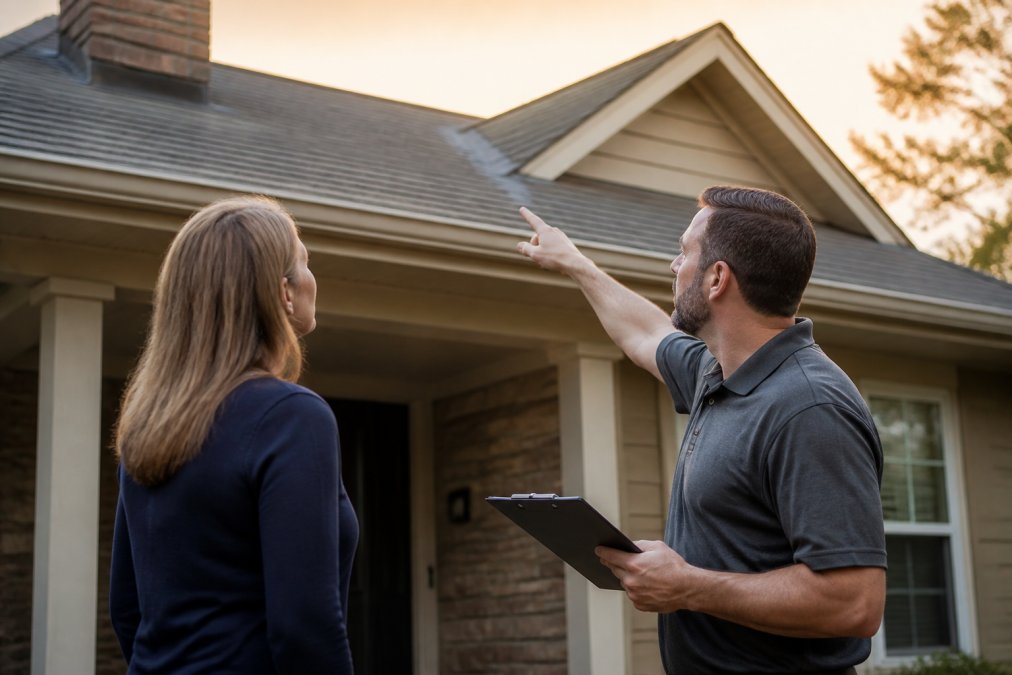
Physically, some storm chasers exaggerate or even create damage by throwing objects at shingles or pouring water to simulate leaks. Emotionally, they frame every question as a delay that risks further damage. Mentioning an "insurance adjuster friend" who can expedite your claim is a classic sign of insurance claim fraud.
Property damage genuinely caused by a storm will be documented by your own insurance adjuster, not a contractor's sales pitch. If a solicitor shows you "damage" they found, ask for photographic evidence with timestamps and cross-check it yourself. A truthful contractor will let the insurance process run its course.
How to Handle Door-to-Door Offers and Free Inspections
Door-to-door solicitation is the most common entry point for roof repair scams, and the "free inspection" is its favorite hook. These offers are sales leads designed to find homeowners who will sign quickly under pressure. The most effective defense is a pre-planned, unemotional response.
The 'Storm Chaser' Checklist: Spotting the Out-of-Towner
Scammers monitor weather reports and arrive with the first responders. When a solicitor knocks after a major storm, run through this checklist to identify a potential storm chaser:
- Out-of-State License Plates: Look at their truck. Is it parked on your street? Does it have an out-of-state plate? Legitimate local contractors rarely travel hundreds of miles to solicit work. A temporary plate or a rental truck is a major red flag.
- Temporary Phone Numbers: Ask for their business card. Does the phone number have a local area code? Scammers often use burner phones or VoIP numbers with area codes from other states. A quick reverse-lookup on a search engine can reveal if the number is a cell phone or a landline associated with a physical business address.
- No Physical Local Address: Ask for their physical business address. A PO box or an address that is a residential home in another state is a warning sign. A legitimate contractor has a local office, a warehouse, or at least a physical yard where they store materials.
- High-Pressure Tactics: They will say things like "I have a crew in the area today and can give you a discount if we start now" or "Your insurance adjuster will never approve this if you wait." This is a manufactured urgency tactic. Legitimate contractors are busy after a storm and will schedule an inspection for a later date.
- Refusal to Provide Identification: If you ask for their license and they hesitate, or if they only show a sales permit, not a contractor's license, end the conversation.
The 'Free Inspection' Trap: What They Are Really Doing
The "free inspection" is not a diagnostic service; it is a sales funnel. The solicitor's goal is to get on your roof, find (or fabricate) damage, and pressure you into signing a contract on the spot. They are salespeople trained to close a deal, not qualified to assess structural damage. If they claim to find damage, ask for photographic evidence with timestamps. If they are vague or show you a photo of a neighbor's roof, they are likely trying to manufacture a claim.
The Assignment of Benefits (AOB) Trap
The most dangerous document a door-to-door solicitor can present is an Assignment of Benefits (AOB) , which transfers your insurance claim rights to the contractor. By signing it, you give the contractor the power to negotiate with your insurance company and receive the claim payment. This removes your oversight; the contractor can inflate the cost of the work, and you are left with a lien on your home if they fail to pay suppliers. Never sign an AOB on the spot. If a contractor asks you to sign one, it is a definitive red flag.
Your Script for Saying No
The safest approach is to decline the inspection entirely. If you believe your roof sustained storm damage, contact a reputable local contractor yourself. If you choose to engage with a solicitor, have a script ready:
- "Thank you, but I am not interested. I will be contacting a local, licensed contractor myself."
- "Please leave my property. If you do not leave, I will call the local police non-emergency line."
- "I will not sign any documents today. Please do not return."
Your insurance company is the authority on covered damage, and your state's licensing board is the authority on contractor legitimacy. Neither will ever contact you door-to-door. When you handle the outreach yourself, you restore the power balance and reduce your risk of becoming a victim.
Your Next Step: Hire With Verification, Not Urgency
The pattern is consistent: urgency, high-pressure sales, and a refusal to put things in writing. That is the opposite of how professional roofing should work. A legitimate contractor welcomes your questions, provides documentation freely, and operates on a timeline that allows for proper due diligence. Our approach centers on this transparency, offering insurance claim expertise and professional crews who complete the work as specified in a clear contract.
If you are facing storm damage or simply want a professional assessment of your roof, contact Leitch Roofing for a free estimate. Our team serves both residential and commercial properties, and we will walk you through the repair or replacement process with clarity and integrity, helping you handle your insurance claim with confidence.
Frequently Asked Questions
What is the fastest way to spot a roofing scammer?
The fastest way is to check whether they have a real contractor license and liability coverage before they step on your roof. Ask for their license number and insurance certificate, then verify both with the state licensing board and the insurance agency directly. Scammers rarely have either. A legitimate roofer will provide these documents without hesitation. If they pressure you to sign before you verify, that alone is a red flag that points to a roof repair scam.
Are 'free' roof inspections from door-to-door solicitors ever legitimate?
Some are, but you should treat them with caution. A storm chaser who appears uninvited after severe weather and offers a free inspection is often looking to fabricate damage for an insurance claim. A legitimate roofer will not pressure you into an immediate decision or demand you sign an assignment of benefits on the spot. If they do find damage, ask for photos and get a second opinion from a licensed roofing contractor before filing a claim.
What should I do if I already signed a contract with a suspicious roofing company?
Review the contract immediately for cancellation terms and check whether it includes an assignment of benefits clause, which may have transferred your insurance rights to the contractor. Document every interaction and take photos of any work performed. Contact your insurance company to report your concerns and ask about your consumer rights. You can also file a complaint with your state attorney general's office and your local contractor licensing board. Acting quickly matters.
Why do I keep getting texts and calls about roof inspections after a storm?
Storm chasers buy lead lists and monitor weather data to target neighborhoods right after hail or high winds. They use mass texting and robocalls because they only need a few responses to make a profit. These unsolicited offers are a common sign of a roof repair scam operation. Legitimate local roofers rely on referrals and reputation, not cold-call campaigns. Delete the messages and contact a roofing contractor with a physical address in your community instead.
The pressure to hire immediately after a storm is real, but it is also exactly what scammers rely on. By verifying licenses, requesting certificates of insurance, and reviewing every contract clause, you protect your home and your finances. Get started with Leitch Roofing today and experience roofing done right, with verification at the forefront of every project.