 how-to
How to Avoid Insurance Claim Scams: 7 Steps for Homeowners
Table of Contents
- What You'll Need Before You Start
- Step 1: Know the Common Types of Insurance Claim Scams
- Step 2: Spot Roofing Contractor Red Flags Before You Sign
- Step 3: Questions to Ask a Roofing Contractor Before Hiring
- Step 4: Document the Accident Scene and Your Claim
- Step 5: Protect Your Personal Information From Scammers
- Step 6: How to Report Insurance Fraud to the NICB
- Step 7: Recover After a Scam and Rebuild Your Claim
- Frequently Asked Questions
Last Updated: September 17, 2026
What You'll Need Before You Start
Learning how to avoid insurance claim scams starts with preparation, not suspicion. Before a storm hits or a contractor knocks, gather a few essentials so you can verify anyone who touches your claim. This guide from Leitch Roofing walks through seven steps that protect homeowners from staged accidents, phony adjusters, and inflated repair bills.
Here's what to have ready:
- Your full insurance policy, including the declarations page and coverage limits
- Your insurer's official claims phone number saved in your phone
- A folder for photos, receipts, and written estimates
- A notebook or notes app for logging every conversation
- Your state insurance department's consumer hotline number
Step 1: Know the Common Types of Insurance Claim Scams
Insurance claim scams generally fall into two categories: physical schemes staged in person and digital schemes run through email, phone, and fake websites. Knowing both helps you recognize trouble before you sign anything.
Staged Accidents and Crash for Cash
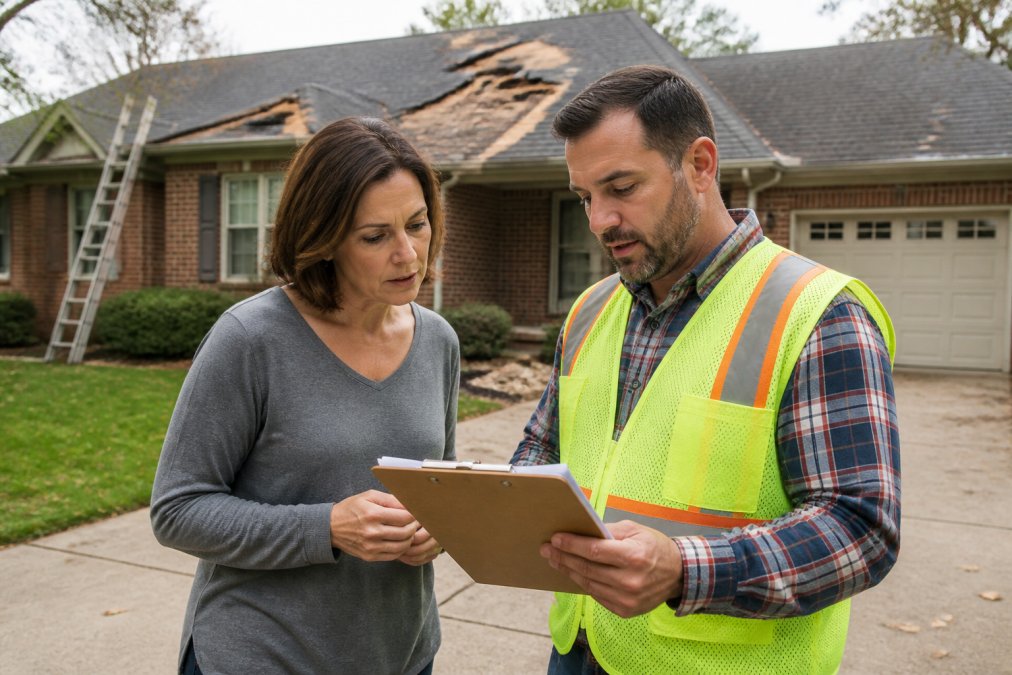
Staged accidents, sometimes called crash for cash, are deliberate collisions or fabricated incidents designed to trigger a payout. On the road, a driver may brake suddenly so you rear-end them, then claim exaggerated injuries. Around your home, a contractor may damage shingles himself, then offer to "find" the damage during a free inspection.
Digital and Cyber Insurance Scams
Digital scams have grown faster than any other category because they don't require the scammer to be in the same state, or country, as you. Four patterns account for most reports.
Other Schemes Worth Knowing
Two more patterns round out the list. Inflated or phantom damage claims happen when a contractor or body shop bills your insurer for work never done or pre-existing damage. Premium diversion happens when an agent collects your premium but never forwards it to the carrier, leaving you uninsured. Catch both the same way: keep your own copy of every estimate, invoice, and payment confirmation, and reconcile them against your insurer's records yearly.
Step 2: Spot Roofing Contractor Red Flags Before You Sign
The clearest roofing contractor red flags appear before any work begins. Door-to-door solicitation after a storm tops the list. Legitimate crews stay busy through referrals and insurance work, not by knocking on doors in freshly damaged neighborhoods.
Watch for these signals:
- Pressure to sign a contract the same day
- A demand for full payment or a large deposit upfront
- No physical business address, only a phone number
- Offers to "waive your deductible" (illegal in most states and a sign of a fraudulent claim)
- Out-of-state license plates and no local references
- Refusal to provide a written, itemized estimate
Step 3: Questions to Ask a Roofing Contractor Before Hiring
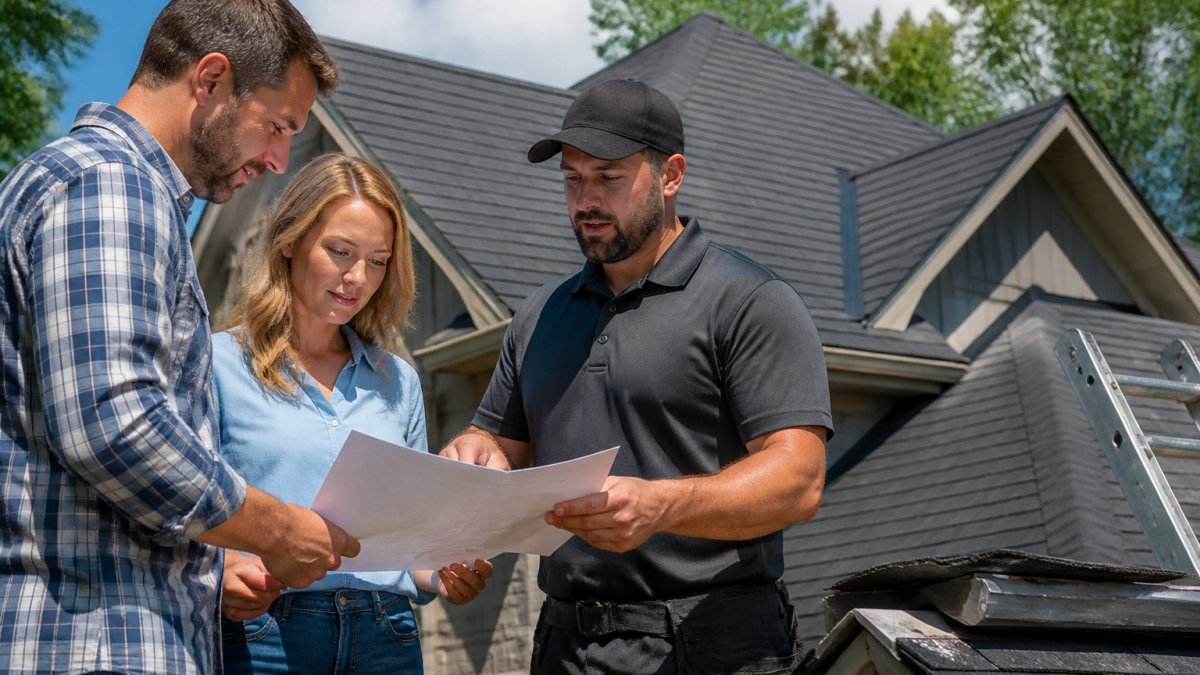
Knowing the right questions to ask a roofing contractor before hiring separates a professional from a predator. Ask them in person, write down the answers, and compare at least three contractors.
Start with these:
- Are you licensed and insured in this state? Ask for the license number and a certificate of insurance, then verify both independently.
- Will you provide a written, itemized estimate? Vague lump-sum quotes hide inflated repair costs.
- Who handles the insurance paperwork? A legitimate contractor documents damage and communicates with your adjuster but never negotiates your settlement for you.
- What's your local address and how long have you worked here? Local roots make it easier to pursue warranty claims later.
- Can you provide three recent local references? Call them. Ask whether the crew finished on time and returned for follow-up.
- What's the payment schedule? Standard practice ties payments to completed milestones, with final payment after inspection.
Step 4: Document the Accident Scene and Your Claim
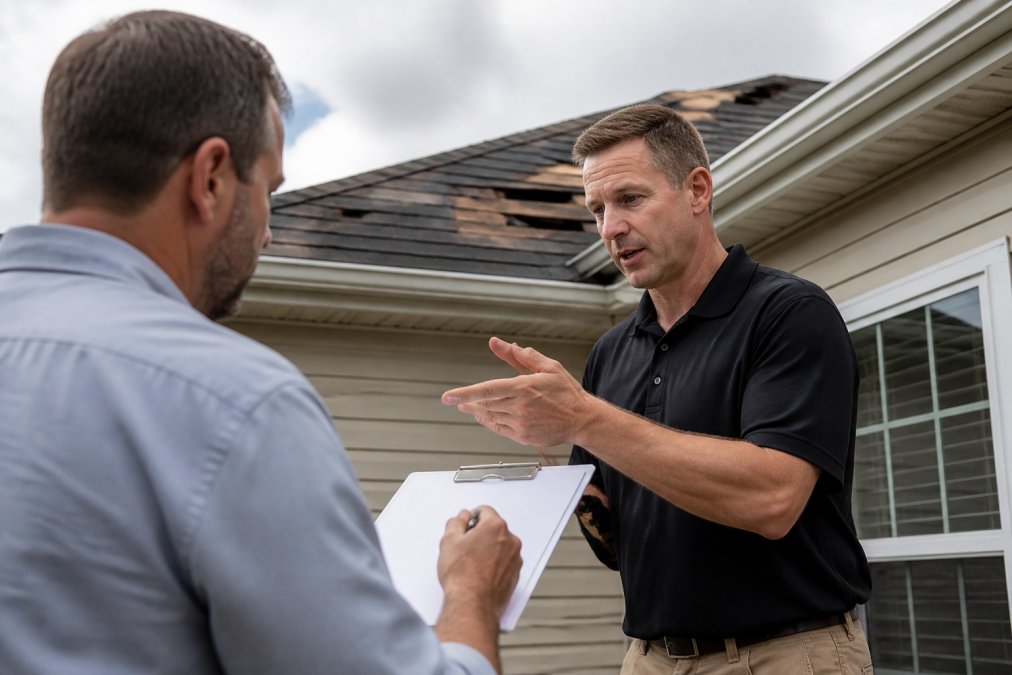
Thorough documentation is the strongest defense against a fraudulent claim filed in your name or against you. Whether it's a car accident or storm damage, start gathering evidence immediately.
For a vehicle incident:
- Call 911 and request a police report
- Photograph all vehicle damage from multiple angles, including the other driver's car
- Collect witness statements with names and phone numbers
- Note the time, location, weather, and road conditions
For roof or property damage:
- Photograph the damage before anything is moved or repaired
- Keep every receipt, estimate, and email
- Request the insurance adjuster's written report
- Save any dash cam or doorbell camera footage
Step 5: Protect Your Personal Information From Scammers
Personal information is the currency of insurance fraud. A scammer with your policy number, Social Security number, and signature can open claims, redirect payouts, and leave you fighting an investigation you never knew had started.
Protect yourself with these habits:
- Never give your policy number to anyone who calls you first
- Ask for a caller's license number and verify it with your state insurance department
- Use a password manager and enable two-factor authentication on your insurer's portal
- Shred documents containing account numbers before discarding them
- Check your credit report and insurance claim history annually for unauthorized activity
Step 6: How to Report Insurance Fraud to the NICB
Learning how to report insurance fraud to the NICB takes about ten minutes and can protect other homeowners from the same scheme. The National Insurance Crime Bureau maintains a toll-free hotline and an online form for tips, and you can submit anonymously.
To file a report:
- Gather your documentation, including dates, names, and any written communication
- Visit the NICB website or call their hotline
- Describe the suspicious activity in plain terms
- Submit your tip, with or without your name
Step 7: Recover After a Scam and Rebuild Your Claim
Recovery after an insurance scam follows a predictable sequence, and moving through it quickly limits the long-term damage. The first 72 hours matter most.
First 72 Hours: Stop the Bleeding
- Call your insurer's fraud unit, not the general claims line. Ask them to flag your file and place a temporary hold on new claims activity tied to your policy number. Get a reference number and the name of the person you spoke with.
- File a police report in the jurisdiction where the scam occurred. If the scam was digital, that's usually your local police department or the one where the fraudulent activity originated. Keep the report number, insurers and credit bureaus will ask for it.
- Place a fraud alert or credit freeze with all three credit bureaus. A fraud alert is free and lasts one year; a freeze lasts until you lift it. Both prevent new accounts from being opened in your name. Contact one bureau to trigger an alert with all three.
- Change passwords on your insurer's portal, your email, and any account that shares that email. Enable two-factor authentication everywhere it's offered.
Weeks 1-4: Document and Dispute
- Request a copy of any claim filed in your name. Under the Fair Credit Reporting Act, you're entitled to a free copy of your consumer file from each bureau, and you can request the specific claim records from your insurer.
- Submit a written dispute to your insurer if a fraudulent claim appears on your record. Include the police report number, the fraud unit reference number, and a short timeline. Keep copies of everything you send.
- Notify the FTC through IdentityTheft.gov if your personal information was used. The site generates a personal recovery plan and an affidavit you can use with creditors and insurers.
- Document all losses, including legal fees, time off work, and any out-of-pocket costs. These may be recoverable depending on your state's consumer protection laws.
- Work with a licensed contractor to get an accurate repair estimate for the legitimate damage, separate from anything the scammer touched.
The Psychological Side: Why Victims Blame Themselves
Scammers rely on three tactics worth naming so you can recognize them in hindsight, and in the next attempt.
- Urgency. "This offer expires today." "Your coverage will lapse if you don't confirm now." Urgency short-circuits the part of your brain that would normally verify.
- Authority impersonation. A fake badge number, a spoofed caller ID, a uniform, a clipboard. Authority makes us defer instead of question.
- Isolation. "Don't call your insurer yet, they'll raise your rates." "Let's keep this between us until the paperwork is done." Isolation cuts you off from the people who would catch the scam.
Rebuilding Your Claim and Your Confidence
Once the fraudulent activity is frozen, restart the legitimate claim. Re-open the file with your insurer, provide the police report and fraud unit reference, and ask for a new adjuster if the original one was involved. Get a fresh, itemized estimate from a licensed contractor and submit it with dated photos.
Frequently Asked Questions
What are the most common signs of a roofing insurance scam?
Watch for contractors who show up uninvited after a storm, pressure you to sign an Assignment of Benefits form on the spot, ask for full payment upfront, or offer to waive your deductible. A legitimate roofing contractor will provide a written estimate, a physical business address, proof of licensing, and a certificate of insurance. If someone cannot produce those items or rushes you into a decision, walk away and get a second opinion from a licensed local roofer.
Are door-to-door roofing contractors usually scams?
Not always, but door-to-door visits after a storm are a common entry point for insurance claim scams. Some out-of-state crews canvas neighborhoods, collect deposits, and leave before the work is finished. Ask for a local license number, a physical address, and references from nearby jobs. Verify the company with your state licensing board and check for a real online presence. If the contractor cannot answer basic questions about your policy or the claims process, do not hire them.
How does insurance fraud impact my premiums?
Fraudulent claims cost insurers billions each year, and those losses get passed to policyholders through premium inflation. When scammers file inflated repair costs or fake claims, everyone in the risk pool pays more. Reporting suspicious activity to your insurer and the NICB reporting hotline helps keep fraud out of your area. You can also ask your insurer whether filing a claim will affect your rate before you proceed, so you understand the trade-off.
What should I do if I suspect an insurance adjuster is acting unethically?
Do not sign anything until you review it carefully. Ask the adjuster for their license number and a written copy of their findings. If the estimate seems low or the adjuster dismisses clear damage as wear and tear, request a second inspection from an independent roofing contractor. You can also file a complaint with your state department of insurance and report suspected fraud to the NICB. Keep copies of all correspondence and photos of the damage.
Insurance claim scams thrive on speed and silence, and the homeowners who avoid them are the ones who slow down and verify. Leitch Roofing helps property owners in West Tennessee document storm damage, navigate the claims process, and get repairs done right the first time. Get a free estimate today and let our team handle the roofing side while you keep your claim protected.