 how-to
How Long Does a Roof Replacement Take? A 2026 Guide
Table of Contents
- How Long Does a Roof Replacement Take? The Short Answer
- Your Roof Replacement Timeline: From First Call to Final Inspection
- How Long Does It Take to Install a Shingle Roof?
- Flat Roof Replacement Time: What Changes With a Flat Roof
- What Affects How Long a Roof Replacement Takes
- Roof Replacement Preparation: What to Do Before the Crew Arrives
- Common Delays and How to Spot a Job That Is Actually Done
- Conclusion: Planning Your Project With Realistic Expectations
- Frequently Asked Questions
Last Updated: October 12, 2026
How Long Does a Roof Replacement Take? The Short Answer
Most homes take one to three days of active work, but the full project runs one to three weeks from first call to final inspection. This guide breaks down a realistic roof replacement timeline, plus the delays that catch most homeowners off guard.
A roof replacement is the full tear-off and rebuild of your roof system, from decking to ridge cap, not a repair.
A simple, low-slope asphalt roof on a small house can finish in a day; a steep, cut-up roof with multiple shingle layers can run four or five.
Want a firm number for your home? Only an on-site inspection can give you one.
Your Roof Replacement Timeline: From First Call to Final Inspection
The typical roof replacement timeline runs one to three weeks end to end, even though the crew is only on your roof a few days. The rest covers inspection, permits, material delivery, and inspections.
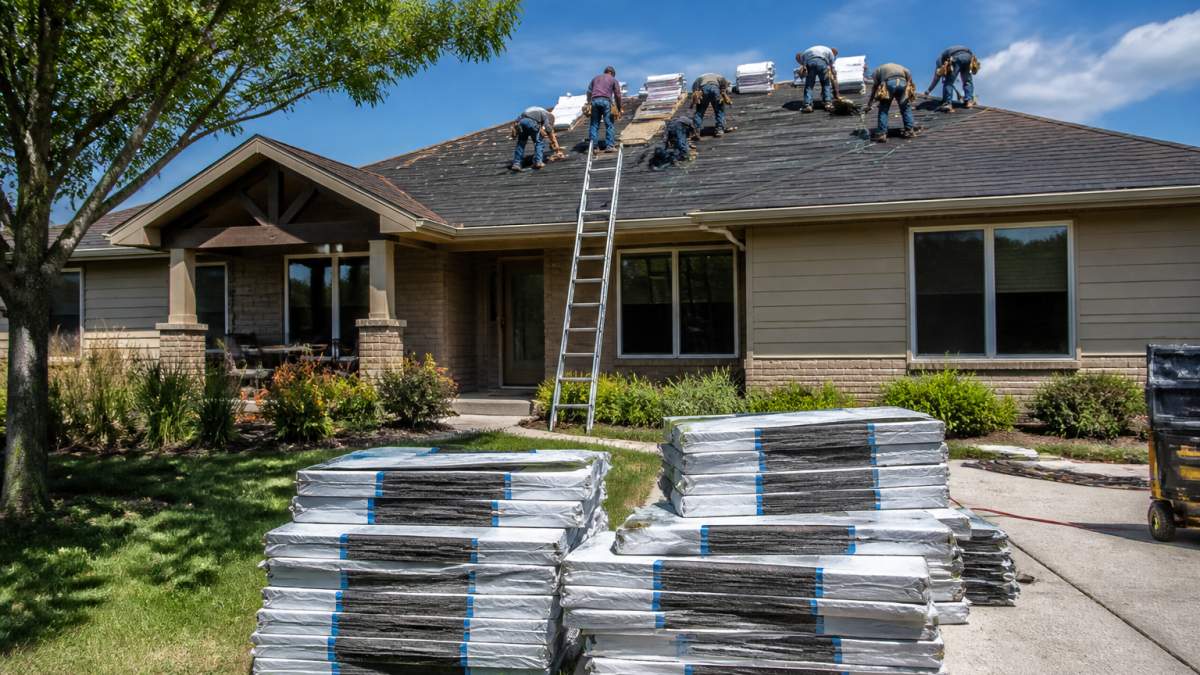
Here is how that time usually breaks down:
| Stage | Typical Duration |
|---|---|
| Inspection and estimate | 1-3 days |
| Insurance claim review (if filing) | 1-3 weeks |
| Permit application and approval | 3-10 business days |
| Material delivery and staging | 1-2 days |
| Tear-off and installation | 1-3 days |
| Final inspection and cleanup | 1-2 days |
The Day-of-Project Schedule, Hour by Hour
Most crews arrive between 6:30 and 7:30 a.m. to beat the afternoon heat. Trucks get staged, tarps go over landscaping, and the dumpster lands in the driveway.
By mid-morning, the old roofing is off and the decking exposed, your contractor should walk it and flag soft or rotted boards.
On a single-day replacement, cleanup starts around 4 or 5 p.m.
How Long Does It Take to Install a Shingle Roof?
Asphalt shingles are the fastest common roofing material to install.
Shingles install quickly because the material comes in pre-cut bundles, is light enough to handle without heavy equipment, and is familiar to experienced crews.
The clock changes with roof size. A small ranch home might finish in a single day.
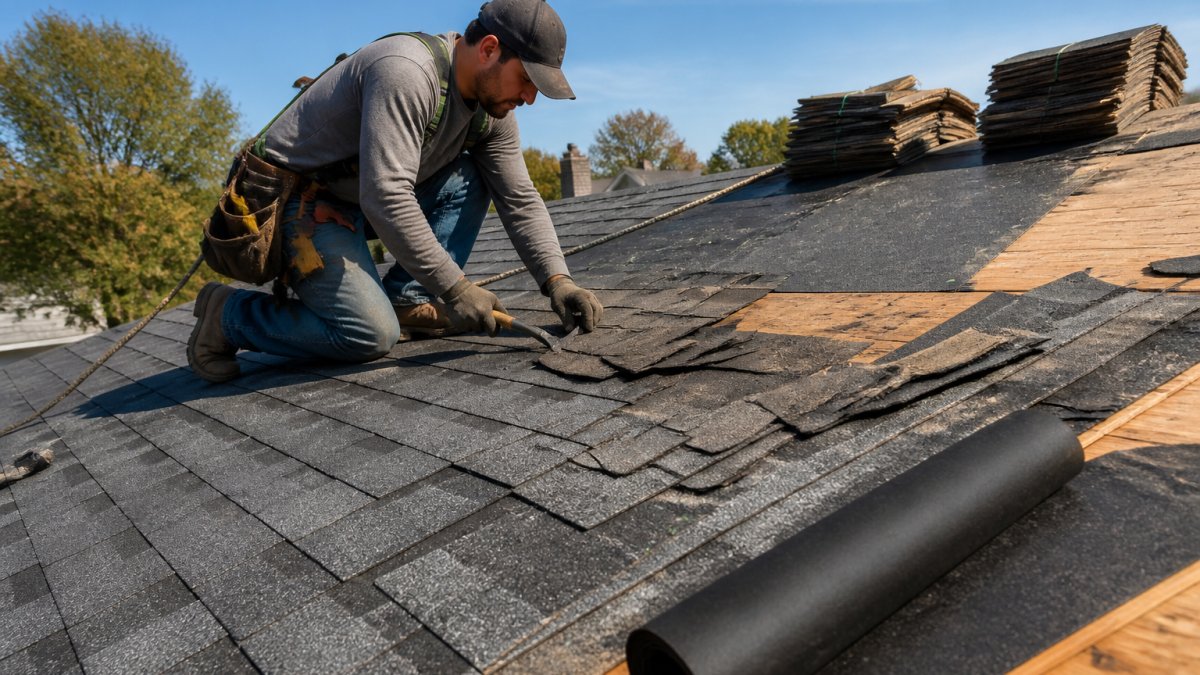
Layered shingles slow things down. If your old roof has two or three layers, tear-off alone can eat most of a day.
Flat Roof Replacement Time: What Changes With a Flat Roof
Flat roof replacement time is usually shorter than a pitched roof job, often one to two days of active work for a residential low-slope roof.
What drives the duration is the membrane system. Common residential low-slope systems behave very differently on the clock:
- TPO and PVC (single-ply). Rolls are laid out, seams are heat-welded, and the job moves fast. A typical residential TPO roof over an existing deck can be torn off and re-covered in a single day with a four- to six-person crew.
- EPDM (rubber). Also single-ply, but seams are adhered or taped rather than heat-welded. Installation is comparable in speed, though curing and adhesive setup can add a half day in cool or humid conditions.
- Modified bitumen. Applied in layers, often with a base sheet and cap sheet, and sometimes torch-applied. The layering and torch work add time, expect two to three days for the same square footage that TPO would cover in one.
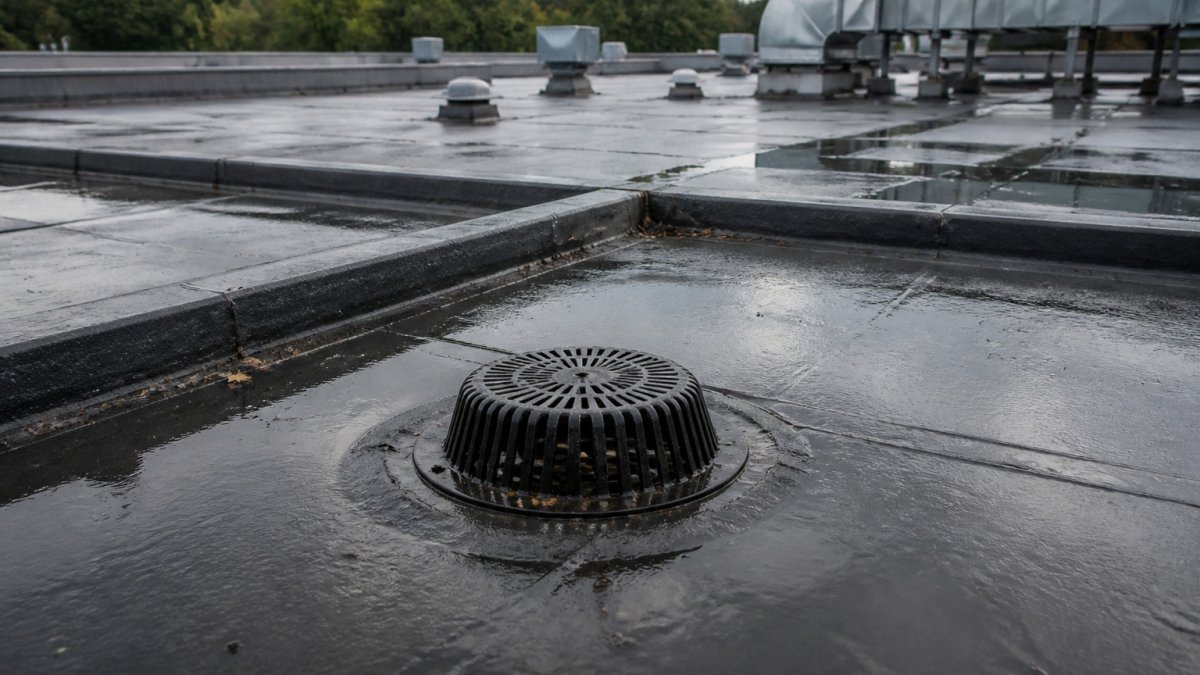
Drainage is the second big variable.
Access matters more than most homeowners expect. A flat roof on a low garage or single-story addition is easy to reach with ladders and a conveyor.
Commercial flat roofs run longer because of sheer square footage.
One more difference from pitched roofs: the final inspection often includes a water test or infrared scan to confirm no ponding or trapped moisture, adding a day or two to the calendar even though the crew is off the roof.
What Affects How Long a Roof Replacement Takes
No two roofs are the same, and no two timelines are either. Here are the factors that move the needle most.
Roof Size, Pitch, and Complexity
Square footage is the biggest driver: a 1,500-square-foot roof goes faster than a 3,000-square-foot roof.
Pitch matters just as much. A low-slope roof is easy to walk; a steep roof requires harnesses, roof jacks, and slower movement for safety. Crews cannot rush a steep roof, and should not try.
Complexity is the wild card. Every valley, dormer, skylight, and chimney adds cutting, flashing, and detail work.
Crew Size, Weather, and Hidden Damage
A larger crew finishes faster, up to a point. Beyond a certain size, workers start getting in each other's way. Most residential crews run four to eight people.
Weather is the factor you cannot control. Rain stops work. High wind stops work. Both can push a two-day job into a week.
Hidden damage is the other wild card. Soft decking, rotted fascia, or failed chimney flashing often only shows up after tear-off. Repairing it adds time, but skipping it means the new roof sits on a weak base.
Roof Replacement Preparation: What to Do Before the Crew Arrives
Good roof replacement preparation saves the crew time and protects your belongings. A little work the day before can shave hours off the job.
- Move vehicles out of the driveway and off the street in front of the house
- Clear the attic of anything stored near the roof deck
- Take pictures off walls on the top floor, since vibration can knock them down
Common Delays and How to Spot a Job That Is Actually Done
Most competitors list "weather, permits, and hidden damage" and stop there. The useful version is knowing what each delay looks like, how much time it adds, and how to tell a normal delay from a contractor who has lost control of the schedule.
Weather delays: what stops work and what does not
Roofing is one of the few trades where the work surface is also the weather surface. The conditions that stop work are specific:
- Rain. Shingles cannot be installed on a wet deck. Adhesive strips will not seal, and trapped moisture under the underlayment can lead to deck rot. A rain day typically pushes the schedule by one to two days, not one.
- Wind above roughly 20-25 mph. Shingle tabs lift, underlayment flaps, and crews cannot safely handle sheets. Most manufacturers will not warrant a shingle installed in high wind because the sealant strip never activates.
- Temperatures below about 40°F. Asphalt shingles get brittle and sealant strips may not activate without hand-sealing. Many crews switch to hand-sealing every tab, which roughly doubles install time on the affected days.
A good crew does not leave an exposed deck overnight without protection. Standard practice is synthetic underlayment rated for temporary exposure, with open valleys and penetrations tarped. If your contractor leaves bare decking exposed and a storm rolls through, that is a red flag, not bad luck.
Permit and inspection delays
Permit turnaround varies by jurisdiction, but the pattern is consistent: simple residential re-roof permits are often issued in a few business days, while permits triggering plan review or historic-district review can take two to four weeks.
Inspection timing is the other half. Most jurisdictions require at least one inspection, often after tear-off and decking repair but before finish roofing goes on.
Hidden damage: the delay nobody can quote up front
Hidden damage cannot be scheduled around, because it is only visible after tear-off. The common findings are:
- Soft or rotted decking. Usually found around chimneys, valleys, and penetrations where flashing failed years ago. Replacing a few sheets of plywood or OSB adds hours; a large section can add a full day.
- Rotted fascia or soffit. Often discovered when the drip edge is removed. This is carpentry, not roofing, and may require a separate trade.
- Failed flashing or step flashing. If the old flashing was installed incorrectly, the new roof needs it rebuilt, which adds detail time.
- Structural issues. Sagging rafters or a failing ridge beam are rare but serious. These require an engineer or framing contractor and can add days or weeks.
A contractor who finds hidden damage should stop, document it with photos, and give you a written change order before proceeding. A verbal "we found some rot, it'll be a bit more" is not enough.
How to tell a normal delay from a problem
Normal delays share three traits: the contractor tells you before you notice, the reason is specific and verifiable, and the new timeline is in writing. Problem delays share the opposite: silence, vague reasons, and a moving target.
How to verify the job is actually complete
Active work ending is not the same as the project ending. Use this checklist before you make the final payment:
- Walk the yard, driveway, and landscaping with a rolling magnet to catch stray nails, this is the single most common post-job complaint
- Confirm all flashing around chimneys, vents, and skylights is new, not reused
- Check the ridge line is straight and fully capped
- Confirm the contractor pulled the permit and that the final inspection has passed
Conclusion: Planning Your Project With Realistic Expectations
The honest answer to how long a roof replacement takes: one to three days of work, one to three weeks of project. Anything shorter usually means corners were cut; anything much longer usually means something went wrong.
If you are staring at storm damage, an aging roof, or an insurance claim you are not sure how to handle, you do not have to figure it out alone. We offer a free estimate so you know exactly what you are dealing with before you commit.
Get a free estimate today and get a real timeline for your roof.
Frequently Asked Questions
Can a roof be replaced in one day?
A one-day roof replacement is possible only for small, simple roofs with good access and no hidden damage. Most homes take two to three days of active installation. The full roof replacement timeline, including tear-off, decking repair, underlayment, flashing, and cleanup, usually runs longer than the installation days alone. Contractors who promise a single day on a large or steep roof are cutting corners somewhere.
Can you live in a house while the roof is being replaced?
Yes, most homeowners stay home during a roof replacement. Expect noise from tear-off and nail guns, and keep windows closed to limit dust. Move vehicles out of the driveway, cover attic stored items, and keep pets and children inside. If you have infants, elderly residents, or anyone sensitive to noise, plan to be away during the loudest hours, usually the first morning of tear-off.
What can delay a roof replacement?
Rain and high winds are the most common delays because crews cannot safely work on a wet or windy roof. Material delivery backlogs, permit approval, and hidden damage found under old shingles also add time. A flat roof replacement time can stretch further if ponding water or insulation damage is discovered. Ask your contractor how they handle weather days and whether they schedule buffer time into the project.
How do I know the roof replacement is actually complete?
Walk the property after cleanup and check for stray nails, damaged siding, and dented gutters. Ask for the final inspection sign-off, a written warranty, and photos of the decking, underlayment, and flashing before they were covered. Confirm the crew removed all old roofing material and that attic ventilation was reinstalled correctly. A contractor who documents each stage is easier to hold accountable if a problem shows up later.